

2026 Lecture Series
Sponsored by the Eurasia Foundation (From Asia)
With 60 percent of the world’s population, Asia is not only home to the world’s oldest civilizations, it also represents cultural and economic vitality. Asia has a major role in manufacturing, technology and investment markets. Non-governmental organizations specializing in economic development, healthcare and environmental protection are also active throughout Asia. This series will provide a rare opportunity for students and the community to develop a better understanding of the cultural, political and economic forces that have shaped modern Asia by hearing from esteemed international scholars.
This lecture series will be presented as part of HUM3401 Asian Humanities throughout the Fall 2026 semester from 12:00 – 1:15 p.m. on the designated dates. Those not currently enrolled are welcome to register for in-person attendance via the link below.
Register to AttendContact
Lanlan Kuang
Lanlan.Kuang@ucf.edu
Schedule
All lectures will be held 12:00 – 1:15 p.m. • UCF Classroom Building 1, Rm. 0212
Tuesday, August 25, 2026
Opening Remark: Asia and Global History in American Higher Education
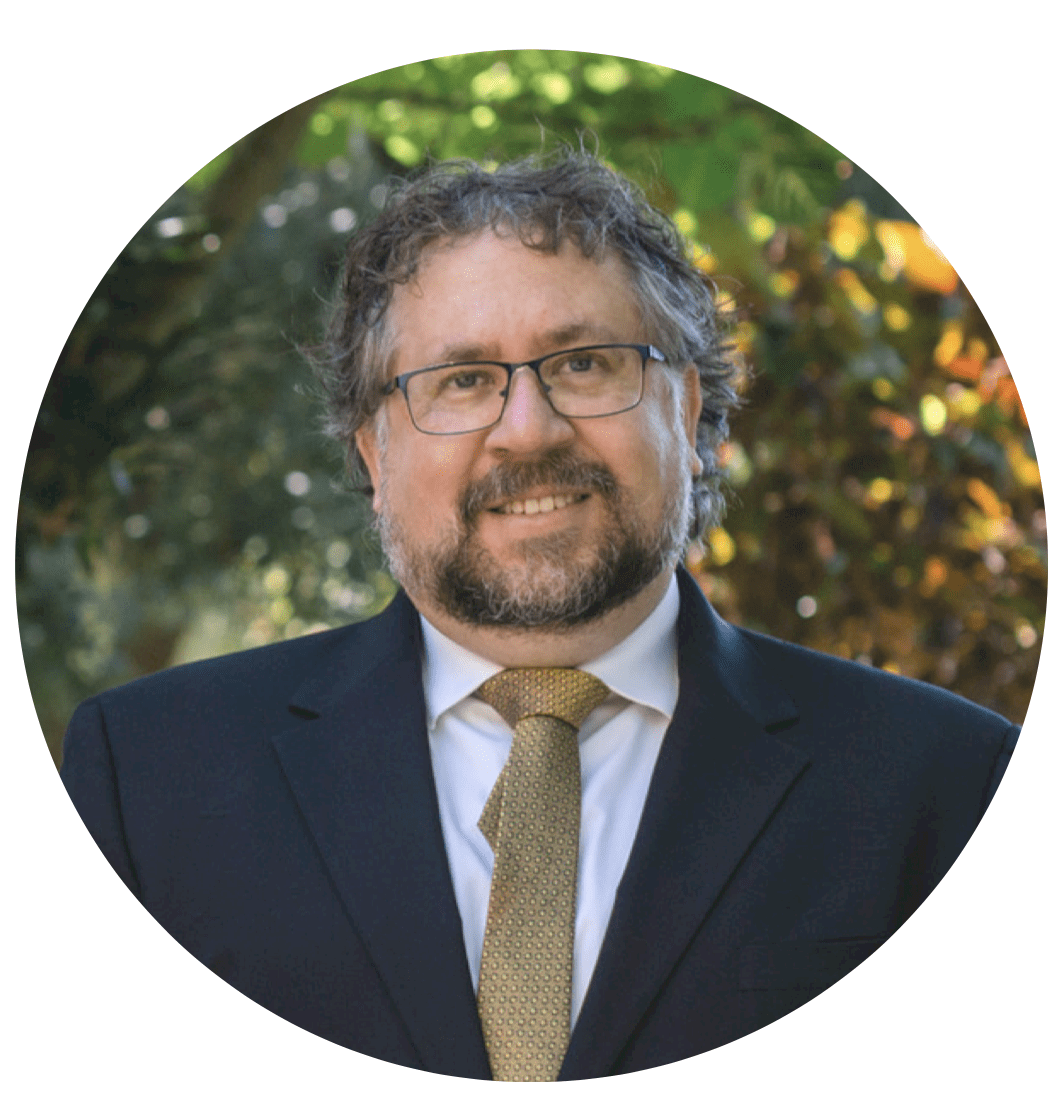
Peter Larson
Professor of History and Associate Dean for Research & Creative Activity, University of Central Florida
Dr. Peter Larson earned his Ph.D. in history from Rutgers in 2004. His most recent book, Rethinking the Great Transition: Community and Economic Growth in Durham, 1349-1660, was published by Oxford University Press in 2022. His new project is a long-term study of commercialization in northern England. Larson joined UCF in 2006 and has been the chair of the Department of History since 2016. He has been Associate Dean of the UCF College of Arts and Humanities since 2023.
Thursday, August 27, 2026
The Necessity and Possibility of the Asian Community
Chung Joon-Kon
Chief Researcher, Eurasia Foundation (from Asia), Japan

Thursday, September 17, 2026
The Forgotten Nobel Laureate: Tagore’s Literary and Musical Internationalism
Amrita Ghosh
Assistant Professor of English, University of Central Florida
Amrita Ghosh is Assistant Professor of South Asian Literature in the Department of English at UCF. Previously, she was a researcher at South Asian Center SASNET, Lund University in Sweden. She has also worked on a postdoc at Linnaeus University, Center of Concurrences in Colonial and Postcolonial Studies in Sweden (2017-2019). Ghosh is the author of the monograph Kashmir’s Necropolis: Literary, Cultural and Visual Texts, Lexington Books, 2023. Ghosh is also the coauthor of India’s Imperial Formations: Cultural Perspectives, FDU Press, 2024.
Ghosh is the co-editor of ReFiguring Global Challenges: Literary and Cinematic Explorations of War, Inequality and Migration. Brill, 2023. Apart from that, Ghosh is the co-editor of the anthology: Tagore and Yeats: A Postcolonial Reenvisioning (2022), published by Brill publications. Dr. Ghosh has a PhD in Postcolonial literature and theory, specializing in Partition Literature, from Drew University, New Jersey, USA. She has had a fellowship at Cornell University, Critical Theory School during summer 2008. Dr. Ghosh has been published in the field of postcolonial studies, Kashmir studies, colonialism and representation, and border studies, especially the Indo-Bangladeshi borderlands and enclaves. She also is the co-editor of Cerebration, a peer-reviewed, biannual literary journal that strives to bring in academic and nonacademic circles in an exchange through significant topics in a transcultural space.

Tuesday, September 29, 2026
Atatürk in Chinese Imagination in early 20th century
Giray Fidan
Professor and Chair, Chinese Translation & Interpreting Department at Ankara Haci Bayram Veli University, Türkiye
Giray Fidan is a Professor of Chinese Translation and Interpreting Department at Ankara Haci Bayram Veli University in Ankara, visiting professor at Zhejiang Yuexiu University and distinguished expert at Beijing Language and Culture University World Sinology Center. He received his B.A., M.A., and PhD. in Sinology from Ankara University and studied at the Beijing Language and Culture University and the Min Zu University of China. Fidan conducted research at Princeton University as a visiting scholar. His research interests are Sino Turkish, China Near Eastern relations, Chinese perception of the Ottomans and Republican Turkey.

Thursday, October 15, 2026
China Through American Eyes: Early Depictions of the Chinese People and Culture in the US Print Media
Wenxian Zhang
Professor and Head of Archives & Special Collections at Olin Library, Rollins College
Wenxian Zhang is Professor and Head of Archives & Special Collections at Rollins College’s Olin Library. He is also the college’s liaison librarian to the Anthropology, Archaeology, Asian Studies, Environmental Studies, Mathematics and Computer Science Programs. A member of the Rollins faculty since 1995, Zhang is a recipient of the Cornell Distinguished Faculty Service Award, and Arthur Vining Davis Fellow at Rollins. He has also won the Patrick D. Smith Award for his academic work with Dr. Maurice O’Sullivan on A Trip to Florida for Health and Sport (FHS Press), the Community Service Award from the Orlando Chinese Professional Association, and the Award of Excellence from the Society of Florida Archivists.
In addition to articles on library information studies, historical research, and Chinese business management, his recent book publications include The Biographical Dictionary of New Chinese Entrepreneurs and Business Leaders (Edward Elgar, 2009), A Guide to the Top 100 Companies in China (World Scientific, 2010), The Entrepreneurial and Business Elites of China: The Chinese Returnees Who Have Shaped Modern China(Emerald, 2011), A Winter in Sunshine (Shanghai University Press, 2012), China Visualized by Americans 1840-1911 (Peking University Press, 2017), China Through American Eyes: Early Depictions of the Chinese People and Culture in the US Print Media (World Scientific, 2018), and China’s Belt & Road Initiative: Changing the Rule of Globalization (Palgrave Macmillan, 2018).
Thursday, October 22, 2026
The Way through Tea: Daoism, Cosmology, and the Body
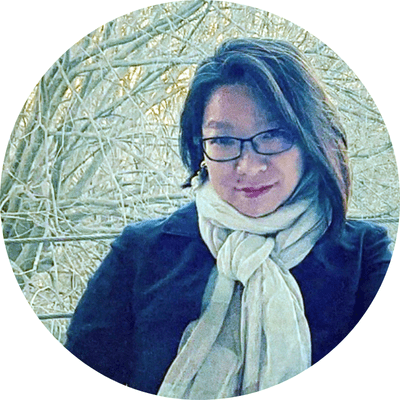
Lanlan Kuang
Professor of Philosophy, University of Central Florida
Lanlan Kuang is Professor in the Department of Philosophy at the University of Central Florida. She holds a Ph.D. in Folklore and Ethnomusicology from Indiana University, Bloomington, and was a Fulbright Fellow in China (2008–2009). She teaches and researches cross-disciplinarily in aesthetics, Asian arts and humanities, and folklore and heritage studies. Her research appears in Gastronomica (2017), Music and Consciousness 2 (Oxford University Press, 2019), The Cultural Politics of Food, Taste, and Identity (Bloomsbury, 2021), and Culture as Text (2026). She is a Visiting Research Fellow at the Dunhuang Academy, with fieldwork extending across Eurasia along the ancient Silk Road.
Her first monograph, Dunhuang Performing Arts: The Construction and Transmission of “China-scape” in the Global Context, appears in the Pishu series published by the Social Sciences Academic Press, the top think tank in Asia according to Foreign Policy magazine. Her second, Staging Tianxia: Dunhuang Expressive Arts and China’s New Cosmopolitan Heritage (Indiana University Press, 2024), draws on two decades of fieldwork to examine how Silk Road performing arts — music, dance, theater, and multimedia productions — are staged into a modern Chinese worldview alongside contemporary readings of the historic “tianxia” concept. Kuang has directed and produced ethnographic documentaries since 2004, has served as Chair of the Florida State Department’s Folklife Council and President of the Florida Folklore Society, and sits on editorial boards of peer-reviewed journals and book series internationally.
Tuesday, October 27, 2026
From Ancient Texts to Future Medicine: How Historical Analysis of early Chinese texts can Shape the Medicine of the Future
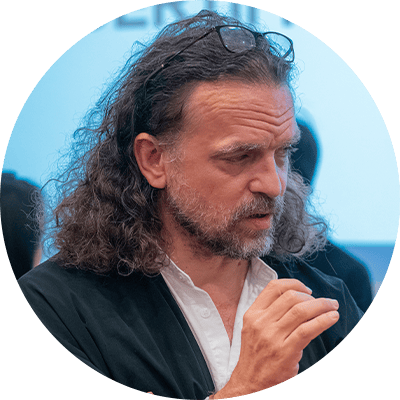
Michael Stanley-Baker
Associate Professor of History and Medical Humanities, Nanyang Technological University, Singapore, and President of the International Association for the Study of Asian Medicine
Michael Stanley-Baker is an Associate Professor in History and the Lee Kong Chian School of Medicine at Nanyang Technological University Singapore. An historian of Chinese Medicine and Religion, he also has a clinical degree in Chinese medicine. He uses traditional philology and modern Digital Humanities approaches to research the intersections of Chinese medicine with different knowledge cultures, whether religion, botany, local communities, or modern bioinformatics. His editorial projects include: – the Routledge Handbook of Chinese Medicine, –Situating Religion and Medicine in Asia (Manchester University Press) -the Encyclopaedia of Health Humanities (Palgrave) among others.
His monograph, Medicine and Religion in Early Imperial China, situates practices within technical communities to sketch out the dynamics of medico-religious practice in the Six Dynasties period (220-589). His Digital Humanities project, Polyglotasianmedicine.com, includes digital maps of early Chinese pharmacopoeii, full-text historical archives and links traditional medicine with modern science.
He serves as President of the International Association for the Study of Asian Medicine (IASTAM), and as the co-chair of the Healing Arts at the MIT Centre for Comparative Global Humanities. Most recently he consulted for the WHO at the Second Global Summit on Traditional Medicine on historical representation and on data management and governance.
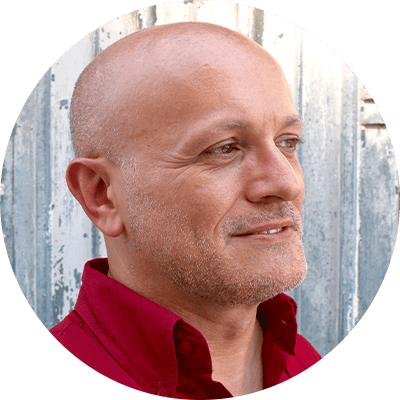
Thursday, October 29, 2026
Food Heritage in China: Tradition, Tourism, and the Marketplace
Fabio Parasecoli
Professor of Nutrition and Food Studies, New York University
Fabio Parasecoli is Professor of Food Studies in the Nutrition and Food Studies Department at New York University. He studied East Asian cultures and political science in Rome, Naples and Beijing, and earned his doctorate in Agricultural Sciences at Hohenheim University, Germany. His research explores the cultural politics of food, particularly in media, design, heritage, and international affairs. Recent books include Al Dente: A History of Food in Italy (2014, translated into Italian, Korean, and Chinese), Feasting Our Eyes: Food, Film, and Cultural Citizenship in the US (2016, authored with Laura Lindenfeld), Knowing Where It Comes From: Labeling Traditional Foods to Compete in a Global Market (2017), Food (2019, to be translated into Chinese), Global Brooklyn: Designing Food Experiences in World Cities (2021, coedited with Mateusz Halawa), Gastronativism: Food, Identity, Politics (2022), Practicing Food Studies (2024, coedited with Amy Bentley and Krishnendu Ray), The Pierogi Problem: Reinventing Polish Food for Cosmopolitan Appetites (authored with Agata Bachórz and Mateusz Halawa, 2025), and Food Heritage: Critical Perspectives (2026, coedited with Loïc Bienassis). He has been quoted in The New York Times, The Washington Post, National Geographic, The Guardian, and ARTE Channel. His writing has appeared in Foreign Policy, the MIT Technology Review, and Tank magazine, among others.

Tuesday, November 3, 2026
Study of Cultural Tourism in Sabah, Malaysia
Flory Gingging
Associate Professor of Film and Performing Arts, Sunway University, Malaysia
Flory Ann Mansor Gingging is an associate professor in the Department of Music and currently Programme Leader for the BA (Hons.) in Contemporary Music (Audio Technology) programme. Before joining Sunway University in April 2026, she was an associate professor in the Faculty of Music and Performing Arts at Universiti Pendidikan Sultan Idris (UPSI) in Tanjong Malim, Perak, where she also supervised PhD students in ethnomusicology. In addition, she served as Chief Editor of the Scopus-indexed (Q1) Malaysian Journal of Music until her departure in March 2026 and continues to contribute as a section editor.
She earned a PhD in Folklore and Ethnomusicology from Indiana University Bloomington. Her doctoral research, conducted on a Fulbright-Hays scholarship, examined Kadazandusun identity in Sabah, a Malaysian state on the island of Borneo. She also holds a master’s degree in musicology from Michigan State University, as well as undergraduate degrees in music and English. In addition, she has a CELTA (Certificate in Teaching English to Speakers of Other Languages), accredited by Cambridge Assessment English, part of the University of Cambridge. Prior to joining UPSI, she taught English at a range of levels in Thailand, Malaysia, Switzerland, and the United Kingdom.
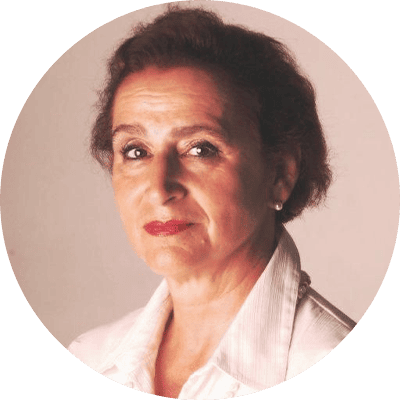
Thursday, November 5, 2026
The Birth of Japanese-Turkish Relations
Selçuk Esenbel
Professor of History and Founding Director of the Asian Studies Center, Boğaziçi University, Türkiye
Dr. Selçuk Esenbel is Emerita Professor of the History Department at Boğaziçi University, and the Founding Director of the Asian Studies Center at the same institution. After studying at International Christian University Tokyo and George Washington University, she obtained her Ph.D. in Japanese history from the Columbia University. Since 1982, she has been teaching Japanese and Asian history at Boğaziçi University, where she is also the Academic Coordinator of the Asian Studies Center, the pioneer founder of Asian History, the Asian studies graduate program, and Asian language courses. Esenbel has published many articles in various professional journals as well as a number of books on the history of Asia with a particular focus on modern Japanese history. Her research interests cover Japan and the world of Islam, Japanese pan-Asianism, modernization in Japan and Ottoman Turkey, peasant uprisings in Meiji Japan, and Japanese-Ottoman/Turkish relations.
Prof. Dr. Esenbel is the recipient of various awards, like the Order of the Rising Sun, Japan Foundation Special Prize for Japanese Studies, Japanese Ministry of Foreign Affairs special award for the promotion of Japanese-Turkish academic relations, Fulbright Senior Fellow, and the Alexander von Humboldt Foundation George Forster research award.

Thursday, November 12, 2026
New Sounds in an Old Place: Remaking the Meaning of Korean Palaces through K-pop
CedarBough T Saeji
Associate Professor of Korean and East Asian Studies, Department of Global and International Studies, Pusan National University, South Korea
CedarBough T. Saeji is an associate professor in Korean and East Asian Studies in the Department of Global Studies, Busan National University. Saeji has previously held positions at Indiana University, University of British Columbia, Korea University, and Hankuk University of Foreign Studies. A scholar of Korean performance who analyzes everything from popular media to traditional performance, from mask dance dramas to museums, Saeji’s research is concerned with Korean cultural policy, tourism, and representations of tradition in a modern world.
Saeji is active in the larger Korean Studies scholarly community as the chair of the Committee on Korean Studies (the largest Korean Studies academic organization in the world), co-editor of the Asian Dance Journal, editorial board member for Korea Journal, and gives dozens of guest lectures and media interviews per year. Saeji can be reached by email at thekpopprof@gmail.com, and sometimes skeets on Blue Sky (@thekpopprof.bsky.social).
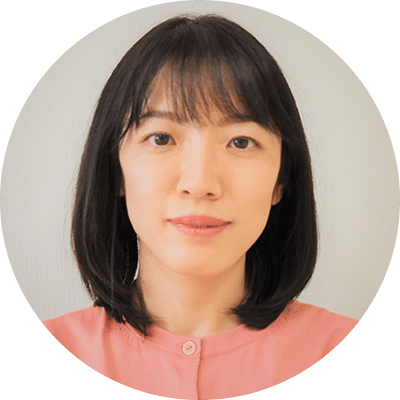
Tuesday, December 1, 2026
Resounding the Environment: Alternative-Material Instruments and Cultural Meaning in Japan
Mitsuko Kawabata
Vice President and Professor of Music, Kyoto City University of Arts, Japan
Mitsuko Kawabata (Ph.D.) currently serves as Vice President and Professor at Kyoto City University of Arts. She is an ethnomusicologist whose research focuses on the intersections of music, society, and cultural meaning, with a particular emphasis on performance, sound, and social interaction in contemporary contexts. Her scholarly work is grounded in extensive fieldwork on Latin American music, centered on Argentina, as well as contemporary Jewish youth musical cultures, exploring how music serves as a site for negotiating identity and cultural resilience.
Building on her expertise in cultural hybridity, Dr. Kawabata has recently expanded her research into eco-ethnomusicology. She currently leads a project funded by the Grants-in-Aid for Scientific Research (KAKENHI), “A Foundational Study of Alternative-Material Instruments from an Eco-Ethnomusicological Perspective.” Her research addresses the growing development of musical instruments made from alternative materials in response to the depletion of natural resources.
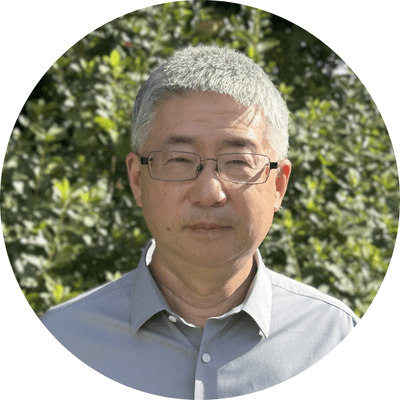
Thursday, December 3, 2026
Tea in the Garden Literature of Qing China
Hui Zou
Professor of Comparative Architectural History, University of Florida
Dr. Hui Zou is a Professor of architecture at the University of Florida. He teaches architectural history, theory and design and supervises graduate theses at both master and PhD levels. His research fields include architectural history, garden history, theory and philosophy, comparative cultural studies, Chinese architecture and gardens, and Eastern aesthetics.
Dr. Zou is a former Fellow of Dumbarton Oaks (Harvard University) and the Asian Cultural Council (New York). He is the author of the monograph books A Jesuit Garden in Beijing and Early Modern Chinese Culture (2011), 碎片与比照: 比较建筑学的双重话语 (Fragments and Mirroring: The Twofold Discourse of Comparative Architecture) (2012), and the Chinese translation 建筑在爱之上 (2018) of Alberto Pérez-Gómez’s book Built upon Love. Dr. Zou’s research explores in-depth hermeneutic meanings of architectural history regarding the fundamental relationship of poetical dwelling, nature and culture. His current research focuses on an interdisciplinary study of genealogy, poetry, and architecture of Qing-dynasty China.
Thank you to the following organizations for their support!
- UCF Global
- The India Center at UCF
- UCF Philosophy Department
- UCF Department of Modern Languages & Literatures
 Funding for this special lecture series was provided through a grant from the Eurasia Foundation (from Asia). Any views, findings, conclusions, or recommendations expressed in this program do not necessarily represent those of the Eurasia Foundation (from Asia) or the University of Central Florida.