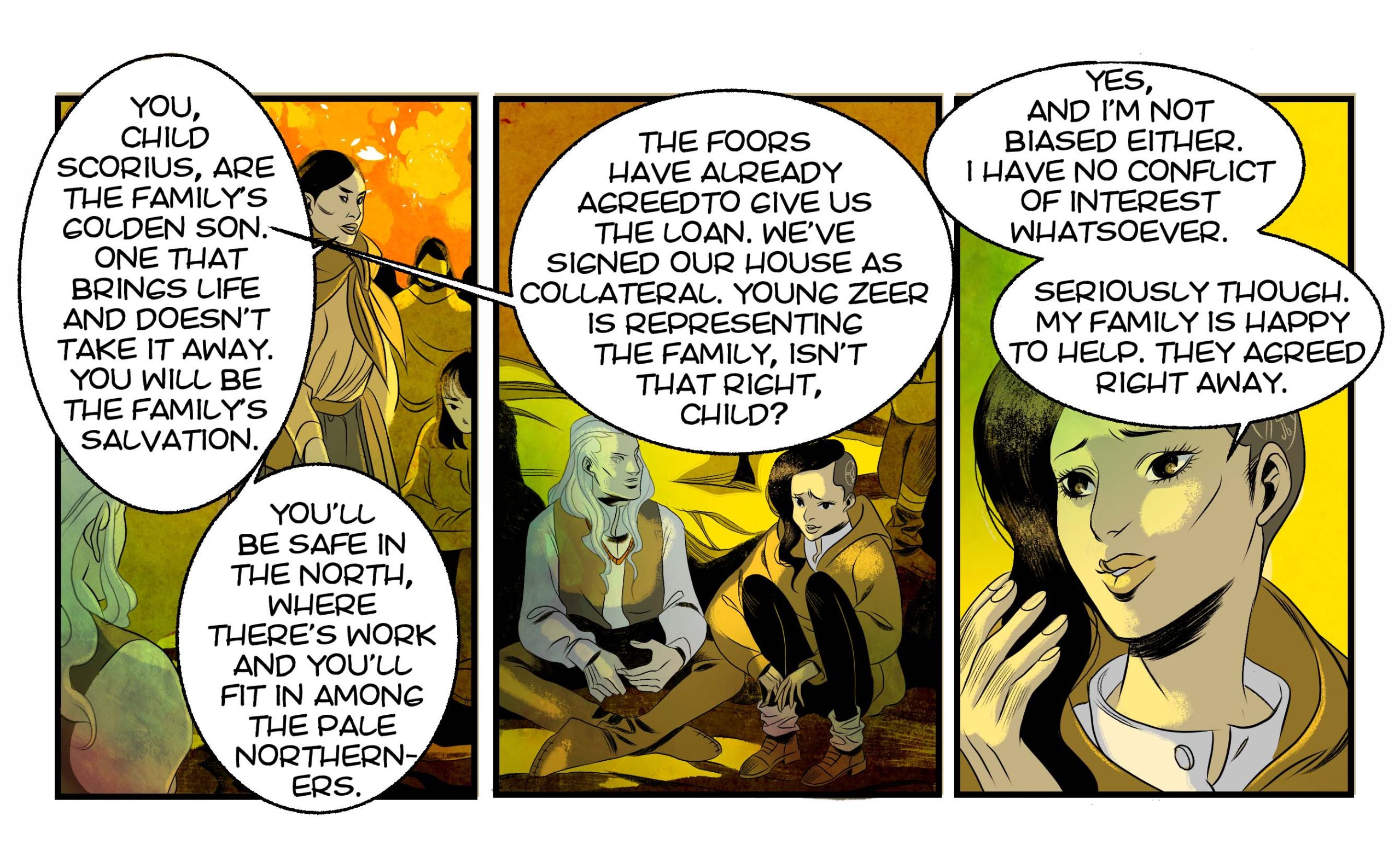
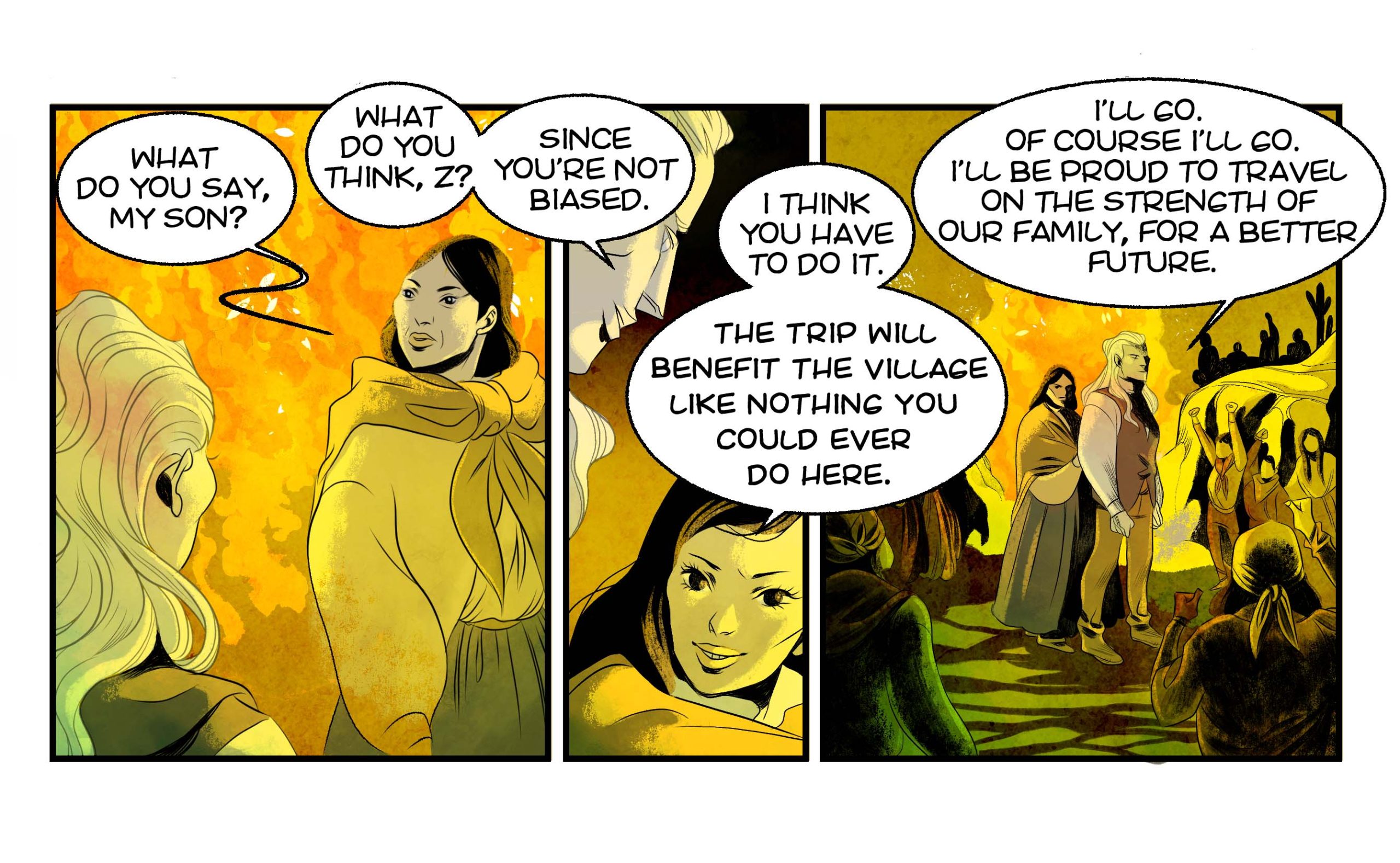
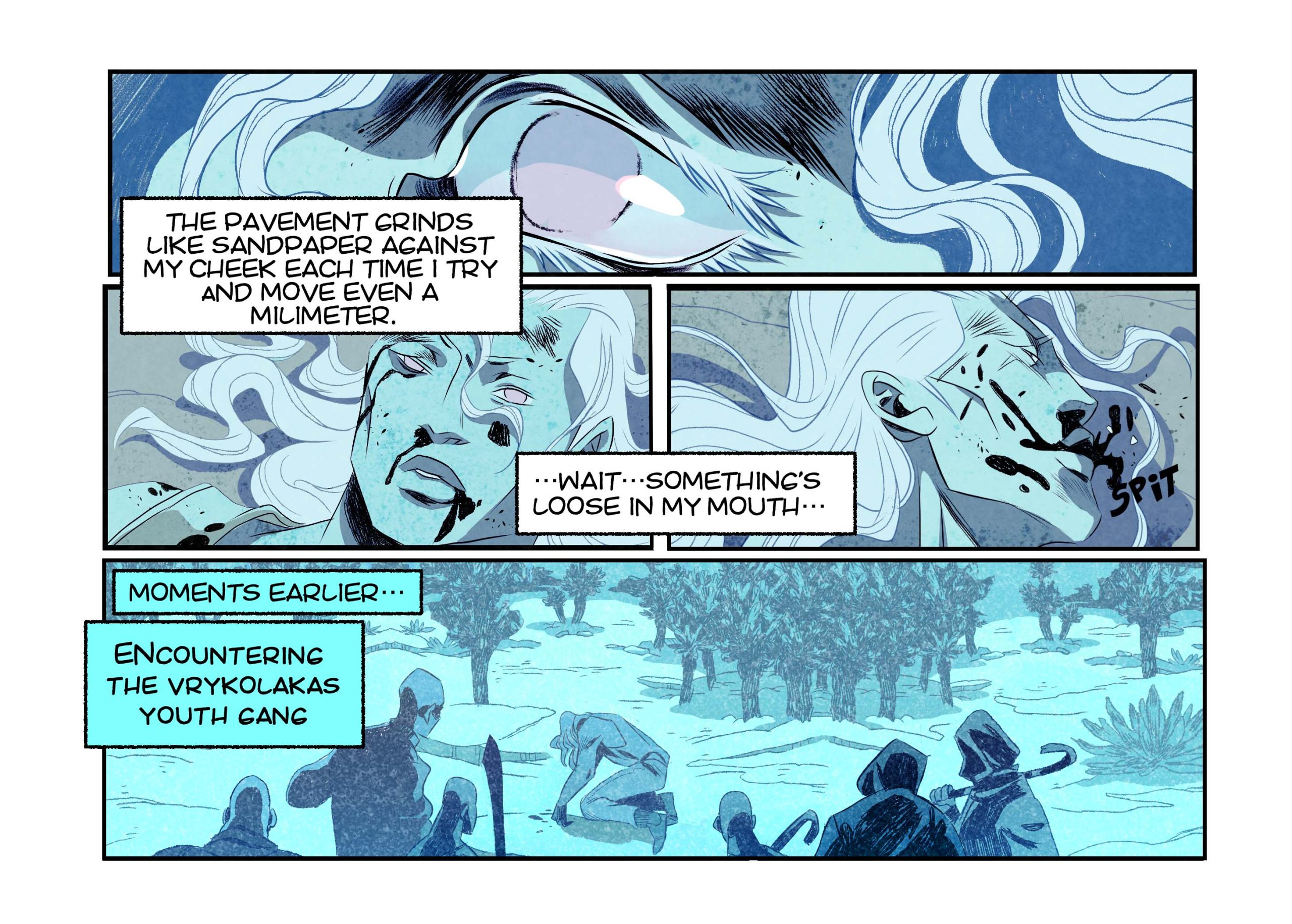
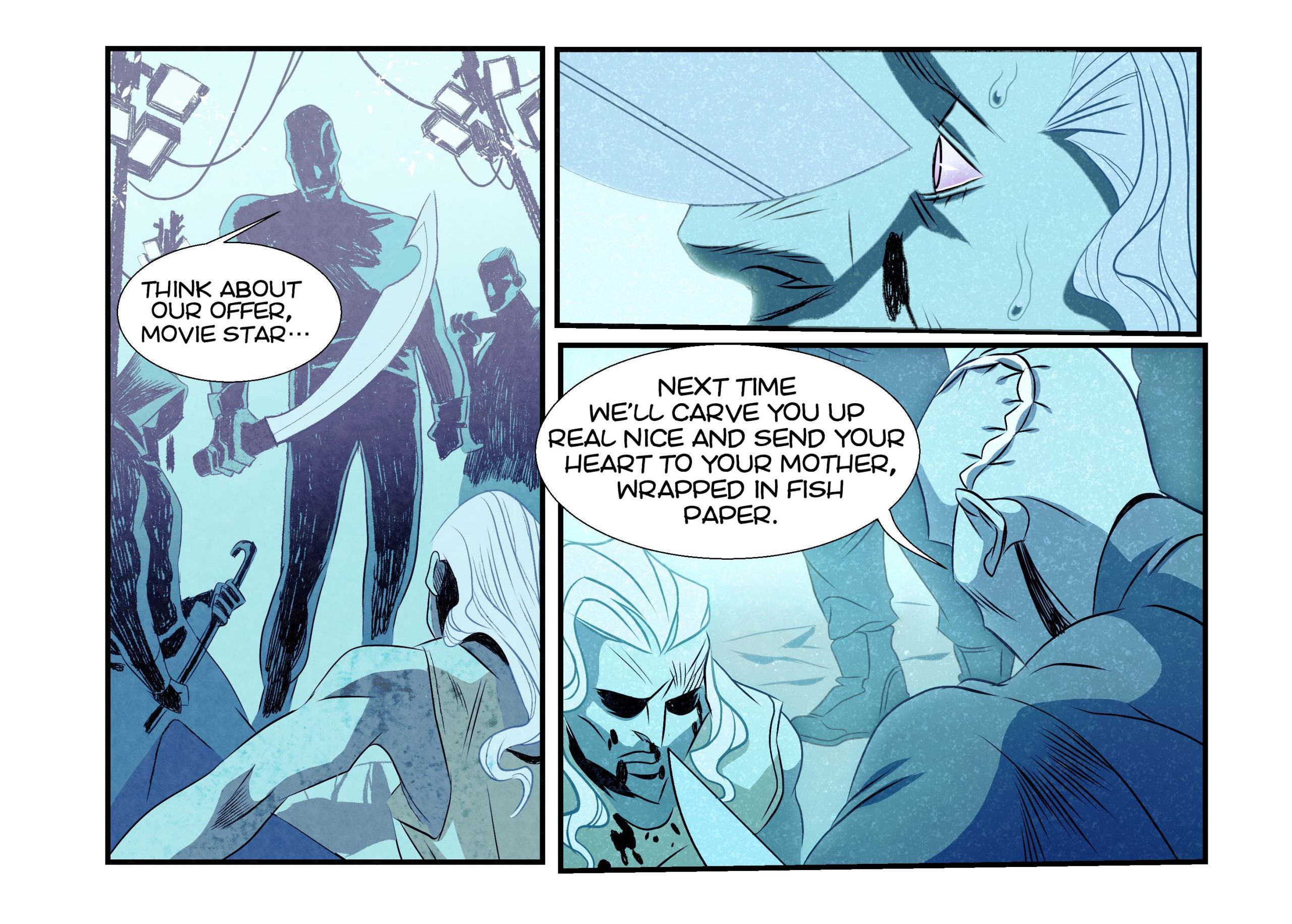
Maps

What do I do now? There are no maps


No brushstrokes gesturing to where I could have gone,


Whimsical curlicues pointing my way.


No celluloid images flickering my history at me.


“To become who you were meant to be, you have to kill the past.”


Is that what I have done? No phone calls with my parents for nine years.


Who gave me the right, one other human children never had, to


Sever that bond? To act like I’m made of metal, wielding a light


Saber that manufactures their consent. How many years


Am I allowed to stay this light? No burden


Other people roll their eyes and put up with. “Oh, Dad.” “Mom, please.”


When she decided nothing could stop her pulling me


Into her bed. When he explained how I would always deserve


Being cursed. “Beyond the pale?” But what if we were always


Too far behind the dark? Dark behind dark,


Moving where people couldn’t see.

Share

Reverie of Gratitude

I would like to invite you over for butternut squash soup. I am excellent at making this soup, and I leave out the heavy whipping cream, but you won’t even miss it. The recipe recommends using an immersion blender, but I’ll tell you that my regular blender works just fine. You make batches. The color is burnt orange. It is pure autumn, the brand that Keats promotes, though whenever I read that poem, I think, it could end after the first stanza. That it doesn’t: a giant bonus. I would like to invite you over for mashed potatoes. I did not skimp on decadence this year, after Ken made his with low-sodium chicken broth. It would be nice if those were worth eating, but I fear they are not. I don’t like to pretend. I am aware that Thanksgiving is a problem: the pilgrim narrative can’t hold up much longer, what with Columbus’ reputation gone south. My job ignores him, altogether. That’s alright: I like my work. I even like cooking on a morning like this, when time is not a Harley driver with a doctored muffler in my blind spot. On the other hand: the noise makes me aware of their presence. To all the Harley drivers: I would like to make you butternut squash soup. I think it would cause less lane-splitting for it is a patient soup: close to a puree and distant from a broth. A friend once said of a clam affair: more a bisque than a chowder, which represented his general state of disillusionment. I do not feel that way. Certain things have gone egregiously right to balance out the egregiously wrong. The word reminds me of Spanish for “y”: i griega. Why oh why oh why oh. For the month approaching Thanksgiving, we receive emails from the local rescue mission, reminding us how little it costs to provide a family a meal. I give $180. My husband gives $250. I give another $180. It is a quiet competition. There are worse contests. I cannot invite everyone over for butternut squash soup and mashed potatoes, though I have enough of the latter for 24. The recipe called for 10 pounds of spuds. This year, I am following recipes. My son is now making a key lime pie. He will zest his knuckles within a moment or two, with 007 in the background, making love to a supermodel. He asks if I watched James Bond movies as a child. I said, they were too sexy for me. Twice today I drove inland and back to the coast. Both times the sky was whole driving east, and in tatters as we drove west. My approach to the fat content in my potatoes was ecumenical: one stick butter, one package cream cheese, one cup milk/heavy cream. Fair is fair. Tomorrow, a feast. I would like to invite you. My mother would say: “Genug shoyn.” Enough, already. As I peeled the 10th pound of potatoes. Seriously. We have more than enough. Be here close to noon, as my sister-in-law makes an artichoke spinach dip that disappears quickly.

Share

Cocoplum

The neighborhood used to be a beach.

The streets run with clipped grass and trash


and potting soil when it rains—

a network of temporary rivers.


The landfill passes for real land most of the time

but fat Floridian storms bring up the truth


about the sea level and a neighborhood built

for families growing faster than the city.


The trees were planted to hold the ground.

The coastal forms are highly tolerant of salt.


The place is big and cold, with stiff rooms

for a quiet mother and two sisters living


in too much house, the space that’s left

from a bigger family. The father is dead.


The rain pulls ferns in through the cracks

in the white stucco. The kitchen blooms


while exhausted pool floats fill with water

and then with tadpoles. The hammock grows


green mold in the crosses of its ropes

and leaves wet diamonds on their backs.


The dog is tied to the stove.

The heat steams the jalousie slats.


The doors swell too big for their frames

but the girls never try to leave anyway.

Share

The Cut-Through

Over Cobb salad and mushroom ragù our youngest son tells us he was pulled over by the LAPD, their guns drawn as they approached his 1994 faded turquoise pickup.


He delivers this news while we are finishing up Sunday dinner at a local French bistro on Green Street in Pasadena, a small town just east of Los Angeles where the wide boulevards are lined with palm and oak trees and former Rose Bowl Queens reside.


I put my fork down, look at him sitting across from me.


“Where did this happen?” I ask.


“On Alameda, right by Chinatown, at 4:30 in the afternoon.”


I know this stretch of Alameda, on the edge of LA’s Chinatown. The tracks of the Gold Line subway looming high above. This is an isolated spot, a cut-through where a young man could be killed and the story never told.


My son looks away like his eyes are being drawn back to an afternoon memory of officers with guns.


“They came up to my truck and asked what I was doing.”


I can only imagine what went through his mind. Did he think of us? Did he remember my departing words, “be safe and I love you,” said each time he walked from my door? Did he think of his father, a teacher at a high school a few miles away from where two LAPD cops have guns pointed at him? I know he must’ve thought of those other Black boys—Michael Brown, Tamir Rice, Trayvon Martin…gunned down, gunned down, their blood flowing in America’s streets.


“What did you do?”


“I put my hands up. I didn’t want to get shot.”


“What did you say?”


He waits until the waiter fills our water glasses and leaves before he answers.


“I told them I was moving a sculpture from my art show. Then I said, ‘What’s up, dude?’ They were young, young like me, Mom.”


Our son is an artist; his rebellious nature and questioning mind was subdued that afternoon in front of officers with guns drawn. Perhaps it was the “What’s up, dude?” his hands in the air, but guns were put away. My son was told to go on, no ticket written, no violations, only by the LAPD. Somehow his Black body is a threat, his Black body can be violated, his Black body still must bow down, even now…yes’em, master.


The waiter returns and asks about dessert. Crème brûlée, flourless chocolate cake and a raspberry tart.


What does one order when your son is telling you about having guns drawn on him?


“Just two coffees, please,” my husband says. The waiter leaves.


“Were you afraid?” Such an obvious question, but it needs to be asked.


The answer is yes, but now anger and confusion fills the table. His voice becomes louder. His fist comes down near his plate. Water spills and a couple behind us look up. This is what he knows: his white friends never have this happen. They never are pulled over for no reason, lives threatened, their mere existence questioned.


When he was a baby I would kiss him over and over again, telling him how beautiful his dark skin was, it was the best. He believed me and as a boy always thought this skin, his skin, his deep dark blackness, his fine mind were blessings, something to be honored and praised. He now stomps around our home, declaring that young Black men are engaged in an endless battle, “They are trying to kill us, Mom. It’s a war.”


Each death is personal to my boy.


“It’s worse since Obama was president!” he says. “A Black man was president, and they still can do this shit to us.”


My husband says he understands. “I used to get pulled over all the time back in Boston. The cops always said a car that looked like mine was involved in a robbery. I drove a silver vintage 1965 Mercedes. There were no cars like mine.”


The waiter brings the check. A credit card is placed down on a silver tray.


“When did this happen?”


“April.”


It is now December.


“Why didn’t you tell us then? Why did you wait?”


My son looks at me now.


“Because, Mom, you already worry enough. I didn’t want to scare you.”


So this is what it looks like when you unpack this oppression, this seemingly bottomless pit of racism. He carries the responsibility of protecting himself, of calculating how to walk safely in the world that often doesn’t see his worth. In his America, where he knows his education and class sometimes protect him, his “What’s up, dude?” might have saved his life, this time. He feels he has to shield me from this.


“You should have told us then. Maybe we could have done something.”


These are hollow words, seem empty as they leave my mouth. I wonder what we could have done. Two armed police who left no visible trace. They hadn’t killed him after all, only drawn guns. What harm in that, easily erased, never recorded?


Dinner is over. The table is cleared. We make our way towards the door. The restaurant is more crowded now. The hum of conversations mixed with laughter and a mother soothing a crying baby fill the air. On top of each linen-covered table is a small candle, giving the restaurant a soft amber glow. Most times I would have been comforted by this place, by a good meal out on a Sunday night, knowing we have earned membership in this world of candle-lit dinners, chilled wine, and crusty bread pulled and delicately dipped in seasoned virgin olive oil. Yet, tonight this restaurant with its seemingly polite people dining on carefully crafted plates feels like a surreal tapestry, weaving itself around me as I try to find my way out.


In front of me I see a white middle-aged couple with their adult son. They are laughing. The mother reaches out and rubs her son’s arm tenderly. Clear long-stemmed glasses filled with deep ruby-colored wine are raised in a toast of celebration. The mother glances up at me and smiles. She thinks we are the same, out on a Sunday evening with our grown sons. She looks like someone I could have been friends with once. We would have shared a carpool, arranged play dates, worried over how to set limitations for our little boys while we organized a fundraiser gala for the PTA. I would have been her one Black friend. Yet, we would never truly talk about how my concerns for my little boy might be different than hers. She would never ask, and I wouldn’t reveal the things that divided us. I have no smiles for her tonight, no balm for my own rage. I look away and follow my son’s lead out of the restaurant.


I pause at the glass door, waiting for a moment before stepping out into the night. There are little sparkling white lights strung outside along the restaurant’s wrought-iron patio railing. Beyond the lights, I see my son and husband standing side by side. These two men, one young, the other older, sharing the same American story. My husband reaches up, hugs our son in a deep embrace.


It is winter in this desert. A cold chill sweeps across my face as I step outside. My son puts his hands in his jeans’ pockets. I’m standing next to them now.


“I love you, son,” my husband says.


“Me, too.”


My boy is lighter now, the dinner conversation behind him.


“Where are you heading?” I ask.


“Over to Echo Park to meet some friends. It’s still the weekend, you know, Mom.” He smiles.


“Okay. Be safe and I love you.”


He grabs me around the shoulder, kisses my cheek and then makes his way down the alley towards his truck.


My husband and I watch as he walks away from us. We don’t say anything, just watch his tall thin frame in black skinny jeans and a blue oversized jacket go off into the night.

Share

Delta 15: The Definition of a Circle in a World without Geometry

The Rycoffs have planted blood-red batface along the edge of the walk.
They will get all the hummingbirds and butterflies

Next year. Push play. Of course I have to mention how my mind
Does not want to mention

This entire night, underscored by Wilco’s lines
“I’d always thought that if I held you tightly /
You’d always love me like you did back then”
Omits, as Mayakovsky would call her, the target.
My son, Bay, and I, walk past Thing 1 and Thing 2.
How many ballerinas

Does one expect to see walking the streets this late at night?
Death is always on the prowl: the near miss of Rusty

By the Home Depot truck in New York City
Brings the near misses back today:


My idea of the soul is a dance party with palm trees
Wrapped in foil. Dancing is flying and the music

Always sounds like the first time you heard the Talking Heads
Combined with the second time you listened to Velvet Underground’s
Self-titled album all the way through.

My third eye takes naps. Nods off without warning.
Right now, I am asleep with two eyes open.

The hunchback of Notre Dame answers the door of the house

At the corner of Harbor Cove and River. The inmate, in his prison
Stripes, holds his one-year-old son, also in prison stripes.

The scantily clad prison guard swings her billy club.
Oh never to be stuck in commuter traffic again.

We all learn, eventually, “don’t read the comments.”
Minions have taken over the neighborhood.

A witch doused in gauze cackles

From her corner of the walkway; a skeleton sits on our bench
Doing its best impression of William Logan, right leg
Crossed over left, right arm stretched out to the right, skull
Tilted to 11, chin and right toe pointed to 4.

A bottle of hand sanitizer, almost empty, cranes its neck
Over the edge of the second edition unabridged Webster’s
New International Dictionary, 1958.

Paul Manafort walks by dressed up as a train engineer.

The Rycoff family, dressed as the knights of the round table,
Ring the doorbell of the largest house in the neighborhood.
The head of the HOA, a former porn star, shows up at the party
As a 2007 IRS tax audit of Jeff Sessions. A guy with a bonfire
Wheel in his driveway hands out Heinekens. Push stop.

The definition of a circle in a world without geometry
Sources its etymology from the fleeing prisoner, innocent
Despite all the charges, born in Candé, France, a short drive
From the Collège de Combrée where he learned

How to love an older woman. Where she and her sister
Took him after the school day was over, but time allowed.

“Never trust the living,” said Juno, played by Sylvia Sidney,
In Beetlejuice.

The line, a set of lines, intersecting Sumi lines, outline

The idea of the face of a ram, ink drops like mistakes, like eyes,
Like the image of planets in a solar system, like orbits,

Like the beginning moment that determines the weight of a line:
Samhain, the stray red balloon, the “somebody start something.”

I dressed as a wolfman, Bay, a wolfboy. We howl because we howl.
This is the root of how the moon turns us. The skeleton in the red shawl
Escorts us to the courtyard. There in the 18th card, an owl in the tree
Sees two wolves calling down the partial moon.

There in the distance the Sierras wait all winter.
A mastiff dressed in a tuxedo walks by, pauses.

Share

Good Pressing

[1992, Nevada County, California]

Grandma takes my beating heart in her warm hands and holds it until it softens, until it knows it is safe to open. She sings stories so it will remember things it has never felt. She lulls its redness with her touch. When the heart opens she pours in all her love and all her fears with it. She pours in all her dreaming and her bruises. She touches its tissues to her swollen lips and weeps. The muscle grows bigger with her tears. The muscle grows tender, skittish to the touch. She sets a kettle on the stove and stirs in possibility, measuring out worries in her palm before sprinkling them in. She ladles the brine into a bowl and serves it with oyster crackers. She spreads the heart with a butter knife on toast and tells me to eat, to help myself to more.


Since age five there has been one constant: transit. Joint custody, foreign exchange, weekly commutes, overseas living. I left the home I knew because there were no other options for a girl who picked up the scent of rotting bodies buried in the women around her, who saw despair seething out tiny pores and ragged cuticles, the bloodied carnage piled high from generations before her, around her, closing in. Wasted. All this utterly wasted human capacity and the lethal rage it breeds. The biting perfectionism of the frustrated woman. The broken women who break babies the way they break mustangs. At twelve, I signed a pact in blood with momma swearing I would not marry or have babies. It was a pact with myself to remain human. At the first chance: a high school exchange program in Colima, Mexico. Free, except for airfare. Only two students per semester in a school of three thousand. I applied. Anywhere. Anywhere but here. I saved money for the ticket from an afterschool job. I was sixteen. Because the violence of gendering was not taken seriously, I could not call myself a refugee. I could only say: Mexico, New Mexico, Arizona, Madrid, Sacramento, Chicago, New York, Brasília, Rio. I could only see my smiling white face in brochures and on billboards across Mexico advertising the international school I attended for free in the exchange. I could only say: I was privileged. I could only say: I was lucky enough to get away.


[August 2001, St. Louis University, Madrid campus]

I made it to college. I read Alice Walker’s recollection of three gifts her mother gave her when she left home and went off to study. I underline one gift – a sewing machine – and the rationale for it: that it was the one tool she could use to make anything she needed so she wouldn’t have to depend on anyone else. It stuck with me: the image of that sewing machine being part of feminist theory in an academia in which I felt so alien. I spent a day and a night in that basement apartment scrubbing the tile walls of their years layered in oil spatters, and in those hours, instead of the familiar shame, I felt proud of my mothers, my grandmothers. Of the practical skills they had gifted me. Of all they could give.


[September 2013, Rio de Janeiro]

I grew fascinated with language because language was the thing used to contain, to beat me into smaller pieces so that I would be easier for my family and my culture to masticate. They were busy. They didn’t have space for the room I needed. So, I studied the words, the syntaxes. I kept a spiral notebook where I composed rhyming poems, copied down strings of letters I didn’t understand and looked up their definitions. I made lists from a thesaurus of words to use in future rhyming poems. I turned to paper when punished for speaking. Dish soap and thumbs down my throat, the larynx closes. Be seen, not heard. Be accommodating and sweet. I was told terrible stories about myself, explanations for why I was so strange, so troublesome and mean. I became a bully who was bullied. I had no other way to say things. Bad words were off-limits but bad words turn toxic when kept inside a body. They eat away at the esophagus, erode the trachea. The difference between Brazilians and United Statesians, between those raised male and those raised female, it seems, has something to do with the way words are held and released.


It is strange to use text in this quilt, to employ written language in a tradition developed largely by silenced ones: the slave, the wife, the woman. But this is my reality now: writing, the privilege of my education. This is my contribution to the tradition, then. An expansion, not a breaking.


Bringing quilting into writing, integrating it: the only way this work is real. For it to exist only as Roman script on white paper would be a false making. Forced sterilization.


On paper, I cannot move my pen in a straight line. I have tried and it is terrible. Some would say good, but that’s not true. Things move sidewards. Lines round, contain too many hyphens, rests, commas, internal rhymes, refrains.


I give my head to clear thinking

My heart to greater loyalty

My hands to larger service

For my club, my community, my country, and my world.

– 4-H Pledge


[2003, California State University, Sacramento]

I design a Special Major in Chicano/Latino Literature & Art. It is not the novelty of an assumed cultural “other” that I find engaging, but the histories and articulations of rural, working class and Far West experience otherwise absent in academia. I resist the narrative that culture only travels East to West, North to South because I have seen it move in all directions. I know Indigenous America and Africa have had extensive influence on U.S. and European cultures. I know that Country & Western ballads are just boleros sung sideways and that cowboys are adaptations of Mexican vaqueros. I rebel against the cultural hegemony of an English Major. I study the ancient civilizations of this land, the Silk Road and the Islamic Empire, how Africa made its way through Portugal and Spain and into the so-called New World in ways our national narrative does not allow. I study how plants native to the Americas became the base for contemporary Italian cuisine because Italians were the only Europeans willing to experiment with fruits and vegetables new to them. I study the undocumented intermixing of our One Drop heritage, and the ways languages change and adapt just as readily as culture even in spite of institutionalized racism. It is through the language of Chicanismo that the Eurasian aunt who raised me and I can speak about our family: my Dust Bowl kin who call themselves White who were once High Germans who shame Low Germans who lie about Gypsies who marry poor Mexicans who marry poor Swedes who marry poor French Canadians who lie about any kind of Indian who marry poor Nicaraguans who marry poor Blacks who marry poor Blackfeet who marry elite Japanese who marry wealthy Englishmen who marry whomever the fuck they please. It is in the overlaps and blending, in the mestizaje I feel most at home.


[2012, Rio de Janeiro]

I cross the street to the pharmacy. The military police are outside yielding assault rifles, occupying the entrance to the favela down a side street. Rio has just secured its bid for the 2016 Olympics. I notice my visceral response to assault rifles on men in uniform is different from other passers by. I notice myself as foreign in this instance, as gringa hailing from the radical left and libertarian hills of Northern California: my response is terror, then rage. Milling around me are faces that convey we are used to this. This is normal. I mask my reaction. I enter the pharmacy, buy toilet paper, toothpaste. Commerce drones on down the boulevard: un suco de abacaxi e um pão de queijo, por favor.


[2013, Rio de Janeiro]

Apathy in a year’s time has turned to outrage, action, political mobilization. Protests one million strong all across the country finding solidarity in a global network of anonymous sites, authors. There is deep fear in the daily proof that life here is not valued. But there has been enough. Basta já! There are reverberations of Brazil’s past revolutions, of the Arab Spring, of Occupy. There is no face, only moving.


[2013, São Paulo]

We set up our table at Feira Plana, the largest artist publications fair in the country. Makers are enflamed. The medium itself again becomes an active one, full of nuance and risk. R staffs our table while I hop from press to press examining new work, swapping samples and talking shop. I return to staff our table while she tours the fair. We have become part of a traveling band of independent publishers in a place where independent publishing was long illegal. Until the mid-1800s, printing in the colonies was forbade; all published materials had to be printed in Britain and then imported from the Portuguese crown. Brazil was the last country in the Americas to acquire a printing press (Mexico was the first), let alone to legalize publishing in the colony. This is part of the reason we have found it hard to buy paper or print books locally: there is no strong tradition of papermaking or printing, and, by extension, a limited number of well-trained printers. There are letterpress printers from the Cordel tradition, but not much by way of commercial printing. Our small press had to limit a recent edition to 750 copies because that was the maximum quantity of a particular paper to be found in all the country. The past is present is not philosophy, but economics. Today at Casa do Povo, we are part of a blend of small presses, fine art presses, self-publishers, poster makers, book artists, artist-instructors, cartoonists, zine makers and poets. Many print with the aid of salvaged technologies that allow hands to smudge ink: letterpress, silkscreen, risograph, Xerox. The immediacy and resilience of our mediums are especially resonant now. Again.


You repair the thing until you remake it completely.

Louise Bourgeois


It is the compulsion of the Western fine art tradition to break from that very tradition. We call this Innovation and True Art and deny that it came from anything but Pure Genius. We are often blind to the continuity, even the continuity of the impulse to make it new.


It was not until age thirty that I could write in first person plural. It was not until age thirty that I felt entitled enough to write using the word “we,” to claim myself as part of a larger cultural conversation.


I resist the act of writing to be fully present in my body – stitching, making, moving. This need makes the shaming come alive: you are lazy, too feminine, too poor to be smart, too rural. A bumpkin. But if I keep moving, if I stay in this wordless making, I soak in its power on its own terms. I am released from the peculiar colonization of the written word upon my flesh.


[April 2014, California]

I begin sewing a welcoming quilt for my new nephew from scraps of worn-in clothing from each member of his family. Sometimes we must make a thing only for our love of the person receiving it. I am pulled to make him something to touch, something to hold over his little boy body when it feels fragile or alone or battered by this world, something to remind him he is loved. Something to protect him from the particular brutality this world holds for his little boy body.


The making of his quilt takes months away from my studio practice, places me in the bedroom with a fold-up table, sewing machine, chair. I love this making. It returns me. But, I cannot help but feel plagued by the notion that turning my making toward a loved one minimizes my work, places me back in the world of country crafts and women’s work –quilts, scrapbooks, embroidery. I have swallowed the myth of male genius, too, despite my body’s attempts to reject it. It poisons my love of other ways of making, insisting that I am less of an artist when I care for those around me, when I hold the capacity to hold them close and give.


I refuse this. I see all around me a world of makers, many of them women, equally adept at committing to their own making and at elevating those around them. I slash open a vein to drain the poison. I suck out the altered blood and spit mouthfuls on the ground. I cauterize the breakage, begin interviewing makers who also make space for others. I make plans to publish a series of these interviews, then a book.


In their most active years, members of the Royal Chicano Air Force —originally called the Rebel Chicano Art Front— did not distinguish between those who secured the grants, organized the events, repaired the engines, and those who made the artwork. This act of denying divisions was a conscious subversion of Eurocentric frameworks of art and life and culture. Or, as Dr. Ella Maria Diaz writes, “An important component of the RCAF’s creation of a Chicano/a mural environment was their collapse of artistic hierarchy in opposition to the idea of beauty and artistic genius as the realm of the individual artist.” In the tellings and retellings of their story in the popular press, however, this ideology is downplayed and the more conventional story of the RCAF as a core group of visual artists becomes History.


How does one convey a different narrative to a reader unwilling or unable to read any other way than the one they already know? The widespread exclusion of historically marginalized voices from prominent venues of culture is attributed to this unwillingness to think beyond convention.


People who have survived atrocities … witnesses as well as victims are subject to the dialectic of trauma. It is difficult for an observer to remain clearheaded and calm, to see more than a few fragments of the picture at one time, to retain all the pieces and to fit them together. It is even more difficult to find a language that conveys fully and persuasively what one has seen.

Judith Herman, M.D., Trauma and Recovery


Everywhere I carry my North American body – Brazil, Mexico, Spain, Greece, Japan as reconstructed inside the Sacramento home of my WWII-surviving great-aunt – there is a physical layer I must shed in order to be in that place. I am made acutely aware of a covering I carry in the place I most often call home, a shield crafted against the daily violence of life there. It is a different kind of shield than the one I carry in Rio on my way to work where the violence is honest – armed robberies, murders, looting. There are other kinds of violence, too: class warfare, threats of another military coup, hate crimes, rape. And yet my body remains open in particular ways as I walk the street aware of very real danger. I am guarded, yes. I am hyper-vigilant all the time. Watchful. Weary. It is exhausting. The artist Alma Leiva crystallizes this feeling in her installation-photograph series Celdas (Prison Cells), in which she recreates the interiors of homes in San Pedro Sula, the second largest city in Honduras and a narco-city now infamous for being the most violent in the world. Leiva brings outside elements such as playground sand and teeter-totters inside, giving the intimacy of home space the weight of the prison cell it becomes in a city where the danger outside seeps into everything. In her essay, “The Other Side of Fear: Alma Leiva’s Prison Cells,” Dr. Tatiana Reinoza writes, “Home spaces are records of embodied and situated knowledge that allow viewers to connect the private with the collective sphere of experience.” Reinoza goes on to cite the work of Amalia Mesa-Bains, María Brito and several artists in diaspora whose work focuses on intimate space as sites of violence and memory. These troubled intimacies are more common than we care to admit.


We drink excessively in Rio. Drinking allows dance and laughter, but the weight of history and its consequences is left unaccounted for, untended. The body doesn’t close, but it craves numbing, a safety. We spend our days off from work indoors, attempting to unravel. When I am designing Leiva’s exhibition catalog years later, the sight of her photographs causes blood to rush to the surface of my skin. The feeling that radiates from the pixels haunts, finally distilled.


In the United States, it is the body that closes. It shuts in on itself to ward off the myriad micro-assaults to the senses: separation, subdivision, the aggressive insistence of a thing called personal space, the sound of English in the way we speak it, the threat of white male terrorism that knows no consequence: mass murder, serial rape, shootings by police. My skin braces for the chill of contact: the handshake, the monotone speech that inquires about what I do for a living, the askance looks at any slip into vulnerability, desire, feeling. There is little space to be human here unless I am alone. And while solitude can be cause for elation, the prolonged isolation of one human from others causes the heart to stop. It incites death by a slow, steady calcification layered upon the flesh. This subtle closing is not the same as one that threatens immediate survival, of course, but it threatens survival all the same. The body only breaks more slowly.


And what happens when intimate space itself is a warzone? Where does the body break then?


In empire, violence becomes a proud part of family narrative. We are sons and daughters and grandchildren of heroes who fight in wars to protect our freedom. We absorb the trauma of the soldier. We treat their pain as elevated, as honorable and just. And yet our domestic homicide toll accounts for more of our own deaths than all the soldiers in all the wars we’ve fought, but we do not honor these sacrifices or their repercussions. Violence becomes a comfort when tied to home life, like the scent of vanilla or a wood-burning stove.


[1992, Nevada County, California]

Grandma dresses me in a button-down shirt, pressed with starch, dried by the fireside. She talks me through the binding of a tie, pointed at the end like my father’s, knotted perfect. Don’t you never kiss no man’s foot.


Share

Saying Goodbye to Your Body

Throw it in the forest before it starts to spoil.
Let birds shit it to obscurity.
It won’t be missed. Not by you and not
by the man on the train whose hand
you grabbed by accident. The lights flickered
and you let yourself get carried away by fear.
I don’t know you, the man said, excused
himself away from you. Everyone forgets eventually.
Even the boy whose disappointment you captured
on parchment paper and hung in your bedroom
for years. His body is far gone from your bed
and slowly yours will be too.
Think of it as an extended vacation,
a sweet Valium dream.
You’ll be reborn, a swamp-monster,
slick and diamond-tough.
You’ll tear into an avocado and eat it,
pit and skin and all. And you will have forgotten.
That’s the only way to keep living.

Share

No te metas

As hard as she can, Griselda pinches the skin between her thumb and pointing finger. The pain is a distraction. Earlier today, her dad grabbed her heavy metal t-shirts, favorite black hoodie, and smelly socks and stuffed them inside a black suitcase. The suitcase now stands by the open front door, and Griselda can see her dad. He’s outside by the yellowing yard with his head tucked under the hood of a fender-dented Ford pickup. Griselda sits on the couch while her dad fidgets with Craftsman tools. He’s trying to get his truck started by working on the carburetor, which Griselda hopes he can’t fix.


Her mother left them eight months ago. Since then, her dad has gone weeks without bathing, days without eating.


After an hour of tinkering, he tries turning on the ignition. The engine flutters. It’s a false start, and Griselda is relieved. She breathes deeply, tilts her head back, and gazes at the sparkled popcorn ceiling. The music coming out of the truck’s speakers reminds her of when her dad, in exchange for a powerful sound system, put several crisp fifty-, twenty-, and ten-dollar bills in the palm of a vendor at the Roadium open-air swap-meet that had once been a drive-in theater.


Singing along to his music, Griselda is dismayed that she knows all the words to “No te metas con mi cucu.” She didn’t know she had that in her, and she hates herself because the song’s corny rhymes embarrass her. She’s sixteen, after all, and won’t admit that she likes the song, so she shakes her head as if the sudden movement will scare off the Spanish lyrics.


Her dad steps on the gas pedal, revving the engine. Griselda presses her lips together, tightening and rolling them into a thin line. The rumble of the motor intensifies, but soon, it peters out. Griselda relaxes. Her shoulders droop down, and her lips return to their normal, full shape, with an undefined Cupid’s bow. Getting off the couch, she closes the door, sticks a mixtape of Metallica and Iron Maiden songs into the home stereo system, and turns the dial to ten. The cassette is a gift from Sergio. He’s the scruffy-looking teen who wears a black Misfits t-shirt, rolled up at the sleeves.  He’s the only boy in tenth grade that has a tattoo. On his left arm, there’s a black and grey skull, which looks more like a deformed mushroom. Griselda likes Sergio’s badly done tattoo mainly because she likes him.


The speakers throb with fast, angry, and loud sounds, vibrating the floor and walls surrounding Griselda. She bites her teeth and digs her nails into her palms. Once the truck gets repaired, Griselda knows her dad will come in, wearing his blue trucker hat, motor-oil-stained jeans, brown work boots, and smelling of cigarettes and liquor. Despite any outbursts from her, he’ll grab her suitcase, toss it in the rear of the pickup, and take her away. Seven days ago, he told Griselda he was moving back to Méjico, where things were simpler, but that he wasn’t going to take her with him. Griselda had felt her body, especially her chest, tighten.


The bottom tip of her nose is red, slightly swollen, and stings when touched. Yesterday, without her dad’s knowledge or permission, she took all the money he had out of his wallet. And with her best friend, Sylvia, encouraging her, Griselda got her septum and navel pierced. She also wanted to get her tongue and eyebrow pierced but couldn’t afford it.


Standing in front of the mirror, Griselda yanks off her green army boots, and slides out of her black jeans. She walks in her underwear and makes her way into the kitchen and grips the sharp knife her dad uses to cut his carne asada on Sundays. Griselda kneels to where her pants lie and starts stabbing and scraping. Her jeans become frayed, almost destroyed. Metallica’s “Ride the Lightning” comes to a stop. Outside, the truck engine maintains its roar. It doesn’t stop. The edges of her eyes turn red. She drives the knife into the floor, leaves it sticking up, and pulls her pants to her waist.


Griselda goes to the bathroom and finds her father’s beard trimmer. She holds it for a few seconds and then begins to shave her head. Long, thick hairs clog the trimmer’s blade, and Griselda has to keep removing them to clean it. But even with the blade cleaned, the trimmer doesn’t always cut all the way through; instead, it pulls the hairs. Griselda likes how it feels and pushes the blade hard against her head, inflaming the skin.


Her father walks in and leans on the doorway. He lifts a beer that perspires little, wet beads and sips it. Grime blackens his hands and streaks his cheeks and forehead. He looks like a zombie, she thinks. After he glances at the messy floor and sink, he observes Griselda. She smirks. And he says, “Jesus, Gris, you really want to piss off your mother, don’t you?”


Griselda’s smirk disappears. She wipes her eyes, and over her mouth she smears the heavy-black lipstick she took from the Rite Aid on Redondo Beach Boulevard. Looking at herself in the mirror, she says, “No. Not really.”


“You missed a spot.” He reaches to touch her buzz cut, but Griselda moves, avoiding his hand. She takes a hard, wet-sounding sniff and places the trimmer over the sink’s countertop.


He shrugs his tired shoulders. “Orale. Vamonos ya. Your mother’s waiting,” he says.


When she stomps out of the bathroom, her shoulder digs into her father’s chest. It feels hollow to Griselda, and she tells him, “About time you got that piece of shit to work.” She carries the suitcase outside. It’s heavier than she’d expected, but she’s still able to toss it in the back of the pickup. Before her father jumps in and pulls the Ford away, Griselda ejects his Sonora Dinamita cassette out of the truck’s in-dash stereo and plays her mixtape instead because he hates esa musica. Stuffing his cassette into her pocket, she’s not too sure what she’ll do with it. As he sits, buckles up, and drives, Griselda’s forehead, covered with bits of hair, thumps the glass on the passenger side window and rests there. They pass houses, cars, and she stares at the white lines on the freeway. Picking up speed, the truck shakes and screeches, and the lines become a blur.

Share

The Painted Skulls, Held by Wings, Glistened in Rain

 There is shadow
 of a sparrow
 left on the window ledge
 weeks after the poor bird
 had been removed.


The sun melted
 a permanent silhouette, tufts
 of feathers, and a faint point
 of beak still visible
 with three days of rain.


 Something is wrong.


 I had a dream
 where I said
 this is a dream.


 I’m certain
 no one noticed
 except my father
 who knew I’d try
 the salted rhubarb
 and pomegranate seeds
 that wept on my fingers.


 Beets turn
into sugar sweetly
 on the verge of burn and
 I am guilty with happiness
           of a kind,
 where I survive


 as a bird,

 an egret
 strange and white as my
 father’s mustache, a telltale
 for his murdered brother.


I don’t say
 I’m happy,
 a sort of guilty luck
 that I love because it fleets
 never follows, ripe to the point of rot.


 What if nothing moves
 still as sleep and my breath
 is not enough?


 I dream I am
 as steel as a swallow
 brazen head near bow and drink
 its forked tail a salute
 between death and habit.
The definition of egret
 is wrong,
 if I don’t hold
 the long legs in absolute stillness.


 Tonight, I find a cat
 near the shore. Let him eat,
 he will eat, he will return to
 animal, not pet. I say, here
            kitty, kitty. He reveals his belly
 to me and all who continue to pass.
 I have met people like this.


 Three egrets stretch
 above me in an arm full of rain
 I am older now than my Uncle
 dead at 36
all of history caught
 in those white wings.
 He too was killed for his
 feathers, a plume of decoration
       in a woman’s hat.

Share

My Abuela, the Puppet

I have been a fan of metaphor since I learned to read, first in English and then eventually in rusty, copper Spanish. This is not a metaphor. My grandma has become a puppet.


It would be a good metaphor if the circumstances were slightly different. Her body had started to change in the past few years and, though she stayed human, her physique lent itself to a description of her as a marionette. She had clunky, white orthopedic shoes that looked oversized and cartoonish when she took her small, concerted steps. Abuela’s back was permanently hunched over, appearing as if she were being suspended by invisible strings at the shoulders. She lost a lot of weight, and the lack of fat in her face combined with her wrinkled skin made her head look huge like a Muppet’s. But Abuela was still herself then, flesh and bones and dust.


Then she become a puppet and no one knew what to do about it. Papi wouldn’t admit it, but there were signs that her metamorphosis was coming, and it wasn’t just those dreadful orthopedic shoes.


For a long time, Abuela lived in an apartment by herself. Her relationship with my Abuelo had been another precious thing lost to migration, and she’d never bothered to date again. She had her children, who joined her in los Yunai Estais after she’d been cleaning houses, theaters, and embassies for nearly a decade, for nearly minimum wage. But, of course, Papi and his siblings had grown up and left Abuela in that musty-smelling apartment building.


We visited her one afternoon and couldn’t avoid the putrid smell that’d snuck into her home. The whole building smelt of old-person. In less kind words, the carpet and walls smelt of dying. But that morning Abuelita’s apartment did not smell just of dying, but already of death. In the fridge, there were rotten casseroles and the unquestionable stink of not-so-fresh queso fresco. Papi managed to save five slices from the loaf of bread, but everything else went into the trash.


Abuela claimed that she hadn’t smelt the food going bad. Her nose hardly worked anymore, she told us in an attempt to gain our pity. So, we went with her the the supermarket and bought a fridge full of groceries. Two weeks later, they sat in the fridge, largely untouched and mostly spoiled. My grandma had begun to lose weight, but she was still human.


Eventually, Mami convinced Papi to let Abuela move into our home in the suburbs. Abuela said they were being ridiculous, that she was fine in her apartment, that she was happy. But Mami was worried that she’d fall one day, and that no one would be there to help her. The weight loss also worried Mami.


Abuela had a large gut throughout my childhood, the kind that makes you wonder what would happen if you tipped her over and tried rolling her down the street. But by the time she moved into my old bedroom, her gut was gone. If you tipped her over, she’d plop onto the sidewalk like a plank of wood.


There’s a purse that Abuela loves. It’s a knock-off Louis Vuitton that she picked up in MacArthur park a year or so before the rotting fridge fiasco. When she became a puppet, a  version of the bag was stitched to her side, though it was made of felt and with less details than the original. But the purse sticks to her side, even as she lays tossed on the ground when there’s no one to hold up the wooden operating cross.


Before she was a puppet, Abuela swung that purse around and hit Papi straight across the cheek, leaving him with neck pains he’d complain about for weeks. She was accusing him of stealing money from her purse. Papi assured her that, no, he hadn’t taken anything from her, but she continued. She remembered putting a stack of twenty-dollar bills in the small pocket of her purse, and now she couldn’t find them. Papi had stolen them, she yelled, the ungrateful son of his father and then she pulled back her flabby arm and took aim.


In his shock, Abuela made a run for it. She pushed past me, with a strength that her limp marionette arms no longer possess. That the woman who sang me lullabies about baby chicks and coyotes would lay her hands on me without any of the tenderness I was used to nearly brought me to tears. It left me immobile as she opened the front door and ran out into the  rain-soaked neighborhood with her Louis Vuitton fake.


Mami and Papi got into the minivan and went out searching for her. They spotted her through a sprinkled windshield, waiting at the wrong bus stop. Her plan, my parents would tell me after I’d wiped the bags under my ears dry, was to ride the bus back to her apartment. She had forgotten the bus route to get there, though she’d ridden it often for nearly a decade. It’d slipped her mind that she no longer had a lease on that musty pink apartment.


The home we moved Abuela into after the 75-year-old runaway situation didn’t smell of dying. It was sterile, and the hallways of doors where hers stood was fenced off from the rest of the living facility. A brass gate separated those who could remember and those who couldn’t. A nurse would press a four-number code into a small keypad, and the door would open up to let us through.


Abuela lived in the section for people whose memories were turning into small wisps, ready to float away from their temples and into the clouds. Each of the tenants had their own room, but they’d take all their meals in a large, open-floor dining area. The nurses would go knock on Abuela’s door when it was dinner time and she hadn’t arrived to eat. Her mind was a lost cause, but there was no reason her body had to be as well.


Every visit gave us a clue that we ignored, opting for silence the way Papi had taught Mami and Mami had taught me. One day, Papi asked her how she used to make Christmas tamales. Being the man’s man that he is, he’d never stepped in the kitchen to actually make the dish. But he knew the steps well enough to know that his mother had forgotten them completely.


A professor had assigned an oral history project, so I’d decided to interview Abuela about the war and the way it had affected her migration. She began telling me the story, and the most graphic of details were sharp and clear. She recounted how an army soldier took a machete to a pregnant woman’s stomach because they feared that her baby was a communist. She told me that the guerilleros befriended her favorite cow and three days later murdered it for the meat.


When I prompted her to tell me her immigration story, she’d have to correct herself. Papi, who was sitting just few feet away, eventually led her along, reminding her that she’d gone to Puerto Rico before moving to Miami. He’d stayed in El Salvador for the first two year she’d been in San Juan, he told her, the hurt reverberating in his voice.


Soon she didn’t know our names. She called us all “mijo” or “mija.” Eventually, she opted to simply use “linda,” regardless of the gender of the person she was speaking to. Slowly, we became nearly strangers to us. My grandmother treated us the way she’d treat the mail man or a friend’s relative she was meeting for the first time. There was a sense of trust, but nothing more.


In the months before her metamorphosis, she often repeated a single phrase, over and over. He jaw falling unhinged, then rising again, and then down again. It wasn’t a coherent phrase either, but rather a string of muffled noise. Now, I’m realizing that maybe Abuela was speaking a clandestine language puppets speak when a ventriloquist isn’t pulling at their lips.


Though Abuela was human on all of those trips, I pretended that she wasn’t. Like the other people in this caged home for the forgetful, she’d lost her stories. I’d smile a hollow smile at them, tell Abuela that I loved her even though I knew she didn’t recognize me, and then slink away to a corner of the room.


When she became a puppet, my resentment for her grew. Papi and Mami refused to bury her. She’s not dead, they’d insist, pointing to the place where fish-wire strings met her joints. Mami grabbed my hand and pressed it against Abuela’s skin. The new texture of felt was kinder than the soggy, old leather Abuela’s skin used to feel like, but I still pulled my hand away quickly.


Abuela the Puppet hung in my parent’s home for years. Not wanting to be disrespectful, she watched over us from a hook in our living room–hovering as we watched TV, ate dinner, got into loud arguments. Abuela was the only one who saw when when I snuck a man into the house when I was visiting one Christmas break.


Most days she just hung there, but one weekend, when I was visiting in my few free days from graduate school, she began to sing. Her voice was stronger and clearer than it had been for years before her transformation.


“Ay, ay, ay, ay, canta, y no llores. Porque cantando se alegran, cielito lindo los corazones.”


It was my favorite song as a little girl, so I knew she was singing it just for me. My parents stared at me with a concerned look when I told them. When I tugged at Abuela’s strings and moved her mouth up and down my hands, trying to prove to my parents what I’d heard, she didn’t budge. My grandmother remained limp and unmoving. My father placed a wrinkled hand on my shoulder and told me that it might be a sign that I had that memory-denigrating termite Abuela suffered from for so long. It usually skipped a generation.


Mami and Papi died a year-and-a-half apart, leaving me to deal with my grandmother. I hated her. I hated her so much for taking so much space for so long, for forgetting my name, for making a fool of me with her lullaby. I hated her for the termites she’d left in my brain, and for all the pain she was going to put my children through. At church serves, a very seldom occurrence in those days, I’d prayed for death. God, diosito lindo, please don’t make me a puppet.


Online, I found a company that stored family members in Abuela’s condition indefinitely. They’d bought out an old lot of storage units and repurposed them to accommodate rows and rows of human-sized puppets. Most of the puppets were of people who’d formerly fled countries ravaged by wars funded in part by the United States, so when I dropped Abuela off they placed her in the unit marked CENTRAL AMERICA, with the other shrunken caramel grandmothers displaced from the isthmus. As the door to the storage unit closed, Abuela’s jaw twitched. No sound came out. The shell of a woman disappeared into the dark, silent once more.

Share

The Doctor Laments

For our kidneys cratered

 like the swollen moon


For the way time hangs

 on our bones


For our confused lungs, blooming

 white and yellow destruction


For our exhausted hearts, roused

 to expansion by want and need


For the loss of the ancient stars

 in our blood and marrow


For the mines of our bodies

 that generate iridescent crystals and stones


For the dark shadows shifting

 in our souls


And our inability to escape them

Share

Two Poems from “open pit”

These poems are from Villarán’s forthcoming collection open pit.


he likes to stare at walls

you were born in davis

in a small inflatable pool

in april


during those first weeks, you would often wake up crying

in the middle of the night. without really knowing how

i would pick you up from the crib and hold you tight against

my chest, until you calmed down, and fell asleep again


i liked staying like this for a while

staring at the darkness

that would become the wall


the world is waiting in line / at target

imagine us in the car a sunny day the windows down


driving to the beach 88.3 driving and all those cars next to us driving

always in movement the highway is always full because the more

lanes we build the more cars are attracted to the smell of concrete

and white arrows painted over seemingly endless black surfaces:


the original infrastructure of future battlefields


imagine thousands of small highways running inside of you


all those cars driving somewhere taking something someone like us

perhaps to the beach with your mother so we would have the cooler

and the tent the umbrellas and the surfboards imagine all those cars

going somewhere taking something driving someone imagine all that

movement all that continuous movement the displacement dislocation

bodies inside metal vehicles on black surfaces running


imagine thousands of small really really small


a huge conveyor belt a network of swollen arteries imagine an open pit

an open wound the skin rupturing imagine your leg imagine your arm


imagine my leg imagine my arm


a big bag of tendons and ligaments necrotic tissue a bundle of nerve

tissue imagine bags of plastic inside your stomach lining your

intestines and climbing up your esophagus through the larynx

the lack of oxygen


imagine these huge pond type structures with plastic geothermal

liners stretching across the mountains dissecting the mountains

becoming the new mountain the only landscape leaching ponds laid

out in endless geometrical patterns


imagine every single muscle every fiber every synapse every neuron

needed for you to type with your right index finger:

n. n. n.
the letter n


imagine thousands of small highways pulsating inside of you


imagine it never stopping


thousands of small highways and the cars and the people and the things

and the places they want to take those things to because that’s what we

do we go places with things and we use metal vehicles that travel on

seemingly endless black surfaces just imagine all of this happening all

the time all the time happening all the time always


this highway


 there’s no outside


this open pit


this wound this rupture this crevice inside body this highway all the time

always


what i’m trying to say miqel is:


just imagine thousands of small highways always running inside of you


imagine everything that’s needed for this to happen


all the time


always


now imagine an open pit a large open pit in the middle of a valley

surrounded by fractured mountains


i think that’s how it works


we have that pit


we keep running: faster faster faster


birds die and their stomachs are filled with plastic


whales die and their stomachs are filled with plastic


the united states economy gets a billion-dollar daily shot in its arm


imagine your arm


i’m thinking of mine


we have that pit


and we fill it with these things


we keep running faster always faster


now imagine us at the beach, imagine it being sunny again but not

too hot, imagine the sky punctuated by a few curious clouds, your

mother would be smiling, she’s beautiful when she smiles


it’s still happening


i don’t know what it is


i’m not sure what to do about it either


but i know it’s happening, all the time, always, relentless


we have that pit, it’s open, really open


and things are exploding and people are breaking and burning and dying


and we’re distracted


because we love the sand

the salt in the water

the cool air

Share

A Warning

The water edges closer, and there is nothing she can do to stop it. Nowhere she and her daughters can go.


Once at the very rear of the property, fenced in by sedges and cypress trees, it has risen past its own borders and laps at the ground only a few feet away from the back porch. Funny how the pond itself reminds her of her daughters, neither girl held anymore by the boundaries of childhood, of dollhouses and that insatiable little-girl-need to nurture families of stuffed animals and generations of digital pets, and, yes, occasionally, an actual baby doll with a permanent marker black eye. Now they too have risen, both girls taller than her, their curved bodies full, overflowing jeans that were once baggy, spilling out of bra cups that were once collapsed. It’s time they knew.


On this overcast day of no wind and no fog, the earth has slowed its breakneck spinning to a crawl. Inside the house, the girls are silent as usual. Lately it seems only their bodies belie their presence—the shuffle of bare feet, the hiss of hair and fabric. She calls them now, leads them outside, shows them the water.


“See?” She points. For the first time the water, usually cloudy and a green so dark that it’s a color without a name, is perfectly clear. They can all see it. Past the snails that are close to the shore, past the reedy legs of the wood stork, past the coral rocks and sandy beds of the bluegills, they can all see the dark, see the place where the bottom has given way. It is there that two eyes shimmer at the edge of darkness and rows of teeth as wide as trees, as sharp as razor grass, open and close slowly, and yet the surface of the water is undisturbed, still as death.


“This is here,” she tells them. “Even when the wind blows across the surface and makes glittering waves and swirling eddies and whips your hair across your face and rustles leaves so that all you hear is that seductive call to shhhhh. Even when the sky is bare of clouds, a blue so blue, it penetrates the murk, fools you into seeing some other color. Even when the water is so still and the sun is so bright, you can gaze down and see yourself and the sky together. Even when you are smiling down at your own pretty face and at your very own cloudless sky. Even then.”


She tells them, “Beware.” The girls nod solemnly, and they all go inside. But it’s much later, when the night has come and the winds returned and the earth has gone back to its delirious spin, that she hears them.


They are laughing, giggling, just as they once did and always seemed to do. And yet their laughter is different, and that difference stops her, hands suspended over the fish she has just fileted. She listens, her fingertips on the delicate feather of spine and ribs the knife has exposed.


“Now it’s my turn,” the younger of the two cries out. “You sit here, lie across the floor, and I’ll crawl to you.” And in a moment, there is a roar followed by a scream.


“I am caught, I am being pulled under, there’s no saving me.” The girls’ cries are filled not with terror or sadness but with ecstasy, pure delight.


She takes a deep breath, tries to calm down, tells herself there’s time before the water gets too close, before it sinks down into the earth, undermines the ground beneath them, swallows everything up in one satisfied gulp. But before she can stop herself, she is pounding on the door to the room the two girls share.


The girls go quiet, but she can’t help herself. She is shouting, telling them it’s much too late for screaming or laughing or playing of any sort, crying out that the time for all of that is over, and all that is left for them to do now is go to sleep, even though it is early still, even though she must still cook their dinner and watch them eat the fish she prepared, urging them with each bite to take care not to swallow any bones.

Share

Levitations

My father dies in the morning

& a candy jar


in the middle of the house

wants also to be empty


objects in our living room

float like hot flies,

blue couches clutch the ceiling

& the coffee table whispers into the wall


The people, the fallen people,

the loved ones, my loved ones

sitting in the patio

we still laugh at the joke

about the giraffe.


We may cry in our fluorescent rooms,

when no one is looking.


We may be strong, we may, we may

but first we will tear our own

skin from our own skin

first can we go find

the other side where he went

find that place is not empty too.

Share

Sunday

A long car trip to the desert in the outskirts of Juarez. A Tecate in a coozie between my dad’s legs and my mom’s arm outstretched, her hand caressing his neck.


Loud Mexican music plays on the car radio, either Pedro Infante or Luis Miguel. Depends on their mood.


My brother and I look out the window at the cotton fields and abandoned farmhouses.


My dad turns on to an unpaved road and keeps driving. Dirt hits our face in the back seat.


The car stops. The dust settles and reveals we are on the edge of a mesa. He gets out of the car and we follow.


As far as the eye can see: coarse sand, spirited tumbleweeds, a sunset like an erupting volcano.


My dad takes one last sip of beer and looks down at me. With one swift move, he launches the bottle into the virgin desert.


“Don’t litter, kids,” he says dryly.


I roll my eyes, and he erupts in laughter, loud and piercing in the open space.


It was the decade AquaNet was eating away the ozone layer and I, an impressionable pre-teen, had been very vocal about recycling. I thought he hadn’t been listening.


“Vamonos,” he says but I stand on the precipice a bit longer, the humiliation cementing itself into my consciousness.


In the car, he snaps open a fresh bottle of beer and my mom resumes her pose in the passenger side, playing with his hair. The drive back home is darker. Not even Luis Miguel can break the silence.

Share

On the Megabus from DC back to New York, 7:00AM

Newly conscious in Union City,

that so-Jersey place with all-Spanish signage

my parents grew up in and around.

We drive by a huge blue-logoed highwayside gym

that used to be a Toys R Us.

My brother and I often begged to go

when we still lived nearby. That spot

housed all our dreams.

Here my eyes clock

the person next to me’s left knee against my right one,

its tenderness

a babe

of our mutual rest.

How rare to feel cozy with a man neither friend nor fuck,

face half-viewable, stubbly, his skin a few shades lighter

than mine, a small, thick left hoop earring

I think is diamond.

I imagine his mother wears

or wore similar ones,

that he respects women.

I imagine we are two brown queers sharing this row.

How we might otherwise have met awake

at Papi Juice

Bubble T or some other

Brooklyn brown queer party.

Man and his are, of course, projections

much huger than the rest;

also can’t recall if I saw them wearing two earrings

when they first sat beside me in DC,

or which ear is the gay ear. Still asleep, their legs shift away

and our babe slips down the gap.

Share

Only Tourists Remember the Alamo

She doesn’t know why she gets into the car, but she knows why she’s alone. Jonas broke up with her in an email: On the things that matter, the things that really count, we don’t see eye-to-eye. He’d switched the font to Lucida Handwriting, blue, as if to soften the blow. She’d seen it coming. They’d argued about evolution at the foot of the Tower of the Americas. He pointed at a duck and asked in what universe does something whittle down to that?


One with a sense of humor, she said, but he didn’t laugh.


Darwin was racist, Juliana, he snapped. Darwin said terrible things about black people. Did they teach you that in AP Biology?


Did they teach you that at Jesus Camp? she’d retorted, but only when he’d begun to walk away. He couldn’t hear her over the children screaming in the dry fountain. San Antonio was in drought, like always, so the waterfalls modeled on Mayan temples held no water. Kids in slip-on sneakers raced from bottom to top and down again. She was sure their game would end in bloody mouths, broken teeth, but no one fell.


She knows why she boarded a southbound bus after school. She wanted to go downtown. Her bills were too wrinkled for the token machine, but the driver waved her through with a nod. There were no other students on the bus, not even after the Trinity stop, just a few unsmiling women who glared at the hem of her tartan kilt but wouldn’t meet her eyes. She sat by the window near the back, tucking her skirt beneath her legs so her thighs wouldn’t stick to the vinyl, and watched the sidewalks for someone she knew. Down the North St. Mary’s strip, where bars and clubs beckon the underage. Not yet dark, no one drinking. Day drunks stick to the River Walk. There she’d once witnessed a pink-faced man in a balloon hat relieve himself into the brown current on a Tuesday morning, that summer she served breakfast and lunch at an Italian restaurant where every dish was pre-prepared, microwaved.


This is why I keep you on breakfast, Julibaby, the manager had said, nudging her. There’s a lot more of those groserias at dinner.


A lot more tips, too, she’d considered saying, but she didn’t want him to think she was a complainer. She’d barely earned enough to pay for the tricolor tie he insisted she wear in the 100-degree heat.


She didn’t go downtown to get drunk. No: she is terrified of drunkenness, thinks of it as roving hands and burst capillaries, a sickness you choose. A disease of weak will, the way her mother speaks of it, vergüenza; they’re better off without her father. So Juliana doesn’t drink, not really. She’d tried. The girls said it would mellow her, but at a party with the Central Catholic boys she’d panicked after two Mike’s Hard Lemonades and called her mom to come pick her up.


I am out of control, she told herself as she waited in the front yard. I am out of control. It felt good to say it, even if she knew it wasn’t true.


I didn’t raise you like this, her mother said in the car. Sneaking around. If you need to sneak around you’re ashamed of your life and who are you then, Juli?


I’m the virgin who gets scared and calls her mom, she thought. I’m Shirley Temple. She giggled. Her mother stiffened behind the wheel.


She got off the bus at a downtown plaza, pushing against the current of tourists toward the river. She was numb, blind to the designer chocolate shops and trinket stands and smear-faced kids begging their parents for food and air conditioning. Sweaty strangers but still she’d seen them all before, people set on remembering the Alamo, people who buy t-shirts and ice cream and indulge a history that makes them feel good. She was fixed on something Jonas said the night of their first date: I’m so glad you’re not like everyone else. She kept herself from asking how, letting his words swell in the silence like confession. He didn’t try to touch her, not then. He waited in his car until she’d closed and locked the front door of her house before he drove away. He waited until she was safe.


Dusk hit. The bald cypress trees along the river were mobbed with grackles, their clipped wails piercing the tourists’ din. Not their song, Jonas said—the slick brown-black birds were just trying to echo the downtown crowds. Their real call is much quieter, he once explained, less desperate. They sound almost like songbirds on their lonesome. He was homeschooled; he used words like lonesome. He had a small chip in his right front tooth. He was in a band, played guitar. She wanted to lick the calluses on his fingers until they were soft.


She doesn’t know why she gets in the car, but she knows why she took a pledge of abstinence for True Love Waits: Jonas asked. He came to Incarnate Word High School during assembly with homemade pamphlets and a promise ring on his finger and before a dusty green chalkboard she said yes to God, along with a handful of freshmen and Hilda Rios, who would probably remain a virgin the rest of her life, pledge or no. He wrote his number on her pamphlet, right next to a clip art vision of a smiling bride.


Call me if you want to talk about the promise we’ve made, he smiled.


I’ll be a born-again virgin if I can chill with him, some girl snickered after he left homeroom.


True Love Waits, but she didn’t have to. He invited her to bible study at his church that same week, offering to pick her up at her two-bedroom house on one of the sadder streets in Alta Vista and drive her all the way out to 1604, where box churches beamed search lights into the sky. On the drive she asked if he was paid to recruit virgins. She’d rehearsed the line a few times at home, hoping it struck the bohemian evangelical chord just so.


No, he laughed. It’s more of a volunteer gig. My calling, I guess.


Then, quick like he knew her next question: You’re the first recruit I’ve ever asked out.


He introduced her to his friends at bible study, boys with names like Chad and Tucker who tucked button-downs into belted jeans. Is it Joo-lee-anna or Hoo-lee-anna? one of them asked, and she blushed and shrugged: I respond to everything. Jonas pronounced it wrong but she hadn’t wanted to correct him. Their names sounded better together his way, anyway.


When she left the river, mounting the limestone steps toward the street, a crush of men in chino shorts cheered from a hot pink barge behind her. They lifted their beer mugs in approval; someone screamed nice skirt.


The girls at Incarnate were jealous of her, for once. They noticed her compulsively checking her email in the library between classes. Did you fuck him yet? they asked, poking her waist, laughing. Does he keep his ring on when he feels you up?


No, she snapped, but he does make me wear a crown of thorns. The girls laughed harder, impressed.


He didn’t touch her, not at first. They were never alone in a room. They spent afternoons in youth group in deep, circular discussions about holy desire, how true love is anchored first in faith. They sometimes brushed arms, sitting close enough for her to memorize his smell: Tide detergent and chew. A month before they held hands, six weeks before he kissed her in a dark theater. And then it was an urgent tumbling, a humming thrill that didn’t stop when he stopped (and always, he stopped). She reasoned it was okay, the wanting, because it felt pure. Like something she was created to do. Her body’s own glorious mystery.


Why are you doing this to me? he asked one night his hands in her hair his mouth on her ear.


She expected to find men on Commerce Street, men who bared gold teeth at her as they drove past, slow. Jonas asked about these cars once, early in their courtship: what’s the deal with y’all’s lowriders mang? He used a Southside accent when he asked questions like these. He asked more often those nights his tongue had been inside her mouth. He never waited for her answer. He never asked why she didn’t introduce him to her mother, either. Her house was off limits, he seemed to understand. He might have been relieved.


She didn’t tell her mother about him. She kept her grades up, still went to mass, was home, always, before the end of her mom’s shift. No need for questions.


Why are you doing this to me? he asked again and again breathing into the hollow of her collarbone why won’t you stop me?


Because I don’t want to, she wanted to say. Because you don’t want me to.


Instead she’d kiss his forehead and eyelids and pray he felt it too, the longing that followed her for hours after they touched. In mass, as she pushed the papery wafer against the back of her teeth, she’d close her eyes and meditate on the patch of hair beneath his lower lip. She’d come to crave her own faith, its private, solemn ritual. At Jonas’ church everything was hands in the air, flashing lights, the devoted weeping as they sang.


They’d meant to explore Mission San Jose the night he confronted her about ducks and evolution. She’d thought the majestic limestone church would please Jonas—he was a Texas history buff, could recite Davy Crockett’s monologue from the John Wayne movie on request—but the grounds closed at five o’clock.


How very Catholic, he sniped. Like the Lord operates from nine to five.


That’s not fair. Every church has operating hours.


Worship me from one to three, he sang. After seven, there’s no heaven.


His voice was thin. He couldn’t get it to tremble the right way.


Clever, she said. She reached for his hand but he shoved it in his pocket.


I guess it’s easier to break the rules when you have a million of them, he said. If you think about it, it’s like the Pope expects you to fail. Like he’s setting you up for it.


She didn’t know what to say. In the dead pause she remembered something a Taylor or a Travis had said to Jonas after bible study: How’s that spicy mission work coming along? You still a sucker for lost causes?


On Commerce Street she has a clear view of the Tower, watches its glowing glass elevator ferry diners to the revolving restaurant at the top. She’s never been; only tourists see the city from that height. They sip margaritas made from cheap mix and try to spot the Alamo, where men died for Texas, where their favorite myth was born.


She waits. She carries no purse, no phone. So when a man whistles at her from a cherry-red Camaro that sparkles like candy, she climbs into his passenger seat knowing people won’t find her if this stranger doesn’t want them to. She isn’t scared. It has to be irrevocable, what comes next.


The man talked a big game when she was on the sidewalk, some nonsense about her schoolgirl skirt, but he’s quiet when she enters the plush interior of his coupe.


What are you doing? he asks.


You said you had something to teach me.


He looks all around the car, everywhere but her face. He’s breathing hard. A drop of sweat glides down his jawline.


You don’t belong here, baby girl.


How do you know?


You’re a good girl. You don’t know what you’re doing.


True, she says. But I’ve got to learn sometime.


That’s not how it works, he says, but he lets the car roll forward without pressing the gas.

Share

The Body Riddled with Bullets: A Five-Part Pastoral

for Emmett Till

On September 23, 1955, less than a month after Emmett Till’s lynching,
his killers (who would later openly admit to the crime) were acquitted
by an all-white, all-male jury in Sumner, Mississippi. Those killers
died in 1980 and 1994 without ever serving a day of time.
Nonetheless, we can still convict them here.

i.

You don’t remember, except the most
Significant crickets,
Sway, clack, clack
Till was still in the high blue grasses along the Tallahatchie River
Along the Mississippi bullfrogs mark
The browning rust of bullets: drown out the night by organs of earth:
Groaning, moaning, under weight of blankets of glimmering worlds.

Tiller of men, women
waves from the swamps drown out scratching hands clank, clack of shovels
“Emmett Till did more than whistle at Carolyn Bryant”
Look: there is nothing not even mud to rub
into my eyes, into the ashes, among reeds and resurrections of night.

We float down the river, on principle,
toward hives of higher ground
The wastes devour him from Glendora Mississippi
to the Freedom Trail highway
Down in the dark water, under the dark trees
Like a spiritual homing
There is no double jeopardy in the swamp.


ii.

From Greenwood, MS, to Money, MS, signs travel
And I reach for the moon
Among the dark vines—
In the buffalo clovers, in the prairie fringed orchids,
Bleating from prairie chicken shrill
Asking heaven to bury the dead.

The dead never sleep.
They stare at small fires.
They stare in the miles of prairie and contemplate steel shells like embers
Gleaming in the moonlight.
At uninhabited grassland, the dead dance
And wait outside houses of horrendous men.

The dead are far off in the mountains.
The dead grow native tongues and cause men to commit suicide
Among shot up placards and sleepless nights, drinking,
And shiver in the bluegrass
Like stolen placards
Kidnapped in gunsmoke
With lutes of tallgrass.

From Heaven, tears of white women and cries of black boys,
The final preparations are made
In the hollows and big bison creeks.
The dead keep the culprits, their souls broken like body,
Ridden in damnation
He’s never gone.


iii.

heavy cotton gin fan tied
to the ten-year-old’s neck with barbed wire
floating down the dark church of the Tallahatchie River
Down in the dark water, under the dark trees

“Bye baby” and “Bye baby” outside the candy shop
Dragged delicately about
The black water skiff hulks and sandy shoals
In the Memphis night he, years later,
Would resurface
As not guilty, preening as a Meadowlark
Calling to be released in the tallgrass
In Ferguson, Missouri, hijacked
Outside a candy shop, “bye baby”
For Michael Brown, “I cant breathe” the air was too thick for Eric Garner,

The grappling hooks behind the gin mill
Could not even clasp the body
He’s gone.

“Bye baby,” the police are probing tonight,
For bodies of black children in the waters of suburbs
Outside, they won’t let me in,
A shiver in the tallgrass: Indian bluestem, Kentucky Bluegrass,
A marker rooted in justice against racism,
The sign vandalized

A white drunkard stares at the open casket,
They won’t let me in.


iv.

in cellars of haunted houses
no one talked about it

the cool dark green moss
subsumed the secrets

the diamond-backed watersnake
whips and dissolves a whisper of water

walter scott was stopped at a traffic light
no one heard the pops

the cellars of haunted houses
are like ancient cities of civilizations that crashed

built on brutality in Saint Paul, in Baltimore,
in McKinney, Texas,

in cellars of haunted houses,
whispers are drowned out by clank and crush of the cotton gin

like Eli Whitey’s patent, or Fones McCarthy’s invention
fallen on big heaps of black men’s backs

no one talked about it


v.

she recants
sheriff promises those things hunted down
nothing he ever did
could justify the blood of Emmett Till

only after nightfall, boys lie awake
wondering, wondering

Share

Three Poems on the Anniversary of Hurricane Maria

The Room I Cannot Enter

The game show host announces the doors to our cultura are

language and food        las puertas

son lenguaje y comida


y no tengo las llaves                 brain locked down when anyone speaks

Spanish too                  suddenly


In Puerto Rico, I want to crack myself open

an inside-out coconut, let español spill over my beloved island

where I learned to eat my plantains sweet


San Juan, Sabana Grande are where I see my face reflected back at me

in each shop, la playa, bars

near-perfect replica of my mother’s


In Panamá, when she was a child, our familia called her fea—

ugly girl, with our afroboricua smile


that is the mouth I want to know, the Spanish I stretch lips to reach


try

 my friends urge


no sé la palabra para try                but maybe

my mother kept the keys from me so each blade-

shaped word

could not cut through


forged me as Latina Jeanne D’Arc

her naked back a constellation of stab wounds


No Matter Where I Go, I Carry You With Me

On Sundays when the children’s bodies are dragged from the Rio

Grande


they are reborn


 yucca flowers, baptized in cool blue morning broken

by

 dolor


is to run through the fence, barbed

wire laced in your gut,


no tetanus shot to back you up. As the doctor re-inoculates

me, decade since my last shot in the arm


 raw with hubris, one more defense


against


desert borders,

bare feet

 my choice


When I ask, how do I ready this womb          to deliver another,

she says,                    you know this means you can’t go home


Si, I reply, lo sé,

I know,

 there is not enough Spanish in this poem.


Ode To My Latina Machete Heart

If my torso is the transfomer toppled in Coamo by la tormenta

que comenzo todas las tormentas, pole splinters, sundered


lines wrapped around my neck, then my heart is the machete

mi hermano takes to the debris, hacks his way to power


once more. If my mouth is the cage closed on our stolen hijos

e hijas from El Paso to New York, then my tongue is the machete


struck to stone for one spark to ignite the final fire. If my feet

are the desert floor jagged with rock shards and sand scorch,


then my legs are the machete that have held mi madre up since San

Salvador, breaks through brush, past helicopter-light hunt.


If my arms are the closed gate between mi hermana and refuge, then

my hands are the machete, handle bashing down the lock.


This is how I bear this body forward, weapon honed by the white

man since I was una niña pequeña and now they will pay


homage to my machete heart, corazón de machete, your crimson

insurgent beats, those booted steps, you do not bleed, you burn—


your only stillness the song between, breath before the slash,

then the salvo, la fuerza,         when they broke through the front door,


you were already gone.


Share

Orchidaceae

I—Orchidaceae

It was the way he tended to the orchids that let me know papi still held love inside him. The way he gently held thin branches between thumb and index finger, the way he cusped newly bloomed flowers in the palm of his hand, how he clipped slowly and with care, the fear of irreparable damage plain in his eyes. It’s the only thing he did with care anymore. Nothing else in life seemed to be permanent or irreparable.


II—Bulbophyllum

I tried not to let myself cry in front of him, a difficult task for one as young as I was. Children crave company when in misery. Wanting an audience while you cry seems to be something we just eventually outgrow.  The few times I couldn’t help crying in his presence, his face went sharp, all lines and angles, and he said the same thing, “A llorar pa’l cuarto,” Go cry in your room. This must have been the seed which turned into the weeds that still hold me in solitude whenever I’m feeling blue.


At least the man practiced what he preached. There was a night during those days right after it happened in which I stumbled out of bed, my small bladder tight and bursting, only to hear muffled whimpers and moans coming from his room. What a sad, terrible sound that was.


III—Epidendrum

Papi’s garden was all colors, bright and blinding; all scents, flamboyant and proud; all life, all hope. Papi’s garden was everything he was not.


IV—Dendrobium

The house on my walk to school. The house, as papi and I referred to it. As if the “the” had some kind of accent mark. Thé house with the garden, with the Rotchschild’s orchids and the Saffron crocus. Papi always believed they had a Shenzhen Nongke orchid hidden in there somewhere, a plant so expensive he assured me multiple times was worth more than our house. He could not afford any of the plants in that garden because keeping me around wasn’t cheap. He looked at those flowers with longing. I looked at them with disdain.


V—Terrestrial Pulmonate Gastropod Molluscs or Papi’s Tiny Nemesis

It frightened me how easily he stepped on snails, how hard he stomped on them, how he swiveled on his heel from side to side, an act of dominance—unnecessary and cruel, seeing that you could crush a snail with the palm of your hand. Once, I suggested moving the snails, collecting and transferring them somewhere else, and in an attempt to sound cunning—hard, maybe—I even suggested transferring them to our neighbor’s backyard. Papi didn’t like our neighbor, he said the neighbor hugged his kids too much, that he was a little too nice, if you know what I mean. I never knew what he meant, but I would always nod silently, trying to imagine what it would feel like to be hugged too much. Surprisingly, he agreed to my plan, he said, “Vamos, tratémoslo,” Let’s try it out.


It was the hardest I’d ever worked in the garden. I wanted to collect and save as many snails as I could and as quickly as possible. I feared papi would change his mind. I plucked snails like grapes from the vine, one by one, delicately and efficiently. After about an hour or two my hands were caked in mud, my face brown—browner than usual—with dirt. I was proud of the haul. I felt like a hero.


If you are an adult, as I am now, you can see where this is all going, you—same as I—have experienced enough, seen enough in life to know that people don’t change just like that, that parents are sometimes harder than they need to be, even when they believe they mean well, when they believe they are teaching lessons.


I cried myself to sleep that night.


VI—Pleurothallis

Some days I wished I was a snail, able to disappear within myself at any moment. Papi would have hated knowing that.


VII—An orchid with no light will grow, but not bloom.

Maybe it was the snail thing, how I couldn’t stop thinking about how easily they cracked and popped beneath my feet, how the sound lingered in my head like a song of death. Maybe it was the fact that mom and I used to pick out snails from that very garden and race them.


I pulled those orchids from the ground like they were bad weeds. I pulled hard, with determination. Some of them I pulled using both hands, the way I had to pull on the lawnmower’s chord to get it started. I ruined the orchids, but only the orchids, because we both knew those were the ones my mother loved the most.


When I was done I ran straight to my room. I got in bed as I was, covered in dirt and mud, covered in sweat and an overwhelming pain my young body had never felt before. A llorar pa’l cuarto.

Share

Clauses

when asked to get into it
when told not to care
 when the committee asks
 if I’m planning to have
 children before
when told to speak up
when told to take it easy
 when asked why
 do I care
 so much


when taken aside
 when asked
 (in a whisper)
 if I was offended


when they don’t ask me to join
 just because


when a man uses air quotes
around feminism


when a friend asks the barista
to make her iced coffee the color
of my forearm,
not the lighter inside—
the outside, it’s perfect.


when a friend asks about ass fetishes and Latinos
when the editor asks me to tone it down
when the editor asks me to spice it up


 when asked if I’m okay


This poem begins our month-long celebration of
Hispanic Heritage Month here at 
Aquifer.
Watch for our print feature in the fall issue as well.

Share

Silence Is a Language I Cannot Reset

The Mycelium of Memory

The announcement comes over the intercom as I am spelling out words at my desk. Or it is a math quiz. Or it is a blank paper. I am in the front row of the classroom and when the principal’s voice comes pinging into the room I stare up at the bright yellow and royal blue borders that adorn the bulletin boards. Her name is Mrs. Jones. I put my pencil down because everyone must pay attention when the principal speaks.


“There has been an attack against the United States,” Mrs. Jones says.


The pencil on my desk has absurd ridges, and I feel them with my fingertips. Metal and rubber and wood are all tastes my tongue knows. I put the pencil in my mouth.


The teacher rolls in a boxy TV on a tall metal cart and we watch the towers smoking. This does not happen, but the images of the towers smoking, of the planes crashing into the buildings, of the towers falling inundate the media for the weeks to follow. It drenches the surrounding time and leaves imposing stains. Many of my memories hold metal shrapnel and ash.


My memories of that time also contain Tyler. We are friends when the towers fall. He is the boy who lives down the street. Friends well before; for as long as I can remember. In the spring he plays baseball; I played soccer once in kindergarten but was too shy to take the field. We play whiffle ball in the gas line easement across the street from my house or in an imagined triangle in his backyard. I am a year older, but I happily do whatever he says. There is a hierarchy to our friendship, and my role is the slavish sidekick, servile, always with a yes on my tongue. I am a mother doting on my child, attending, supporting, yielding. He is spoiled and easily riled. I do everything I can to keep him appeased.


We play videogames together in his basement and mine. We have Nintendo 64s and we play Diddy Kong Racing and Mario Cart 64, blast each other with egg-shooting birds on Banjo-Tooie. We ride bikes through the neighborhood, pass through the forested short-cut, and buy sodas from the Wal-Mart vending machines.  A friendship large like skyscrapers, encompassing my childhood; monolith never expecting crash.


Introduction to Life Simulation

In 2002, I live with a purple Nintendo Gamecube controller in my hand. Nine years old and one year into the post-9/11 world my mom buys my brothers and me a copy of Animal Crossing. It comes out just four days after 9/11 in Japan, but it doesn’t hit US shelves until the next year.


On the front of the box, there is a two-story house: animals lean out of each window waving, and a human pops out of the front door. A sign above the house reads: Welcome to Animal Crossing. Inside, there is the small Gamecube disk and a limited-edition memory card with a sweater-clad cat.


Animal Crossing is a life simulation game. You are a human who moves to a new village populated by humanoid animals. You buy a house on loan and pay it back slowly. You can chat with your neighbors and do favors for them. You can collect shells, furniture, fossils, fish, bugs, paintings. There are special visitors who come every week. The seasons change: it rains, it snows, the trees bloom pink in spring. There are things to do—almost an infinity of them.


It is a single-player game, so my brothers and I have to split our playtime. One person plays while the others watch with varying degrees of impatience. Our mom bequeaths her stove timer for the purpose of resolving any disputes.


In the town I share with my twin brother Jared, I make a male character named Justin and choose the house with the yellow roof for him. The male characters wear round hats with horns coming out the sides. The hats change color and design to match the shirt you wear. Justin likes to collect fossils and display them in his house. He also likes the Spooky Series (a matching, pumpkin-themed furniture set, carpet, and wall paper), the Blue Series, and fruit-shaped furniture.


The first memory card I own for myself, I make another Animal Crossing town and populate it with all female characters: Hannah, Lily, and Anne. The women’s hats are conical like a princess’s costume prop. They have round brown eyes with long lower lashes or sparkly black eyes with wingtip lashes. They love the Citrus Set, tulip chairs, fish from dainty pop-eyed goldfish to giant coelacanths, and the Green Series with its cute check patterns. For all the characters I restart the facial feature selection process until their eyes and faces are just right. I want them to perfectly embody me. I love being all of them, though Hannah is my favorite.


Tyler also has Animal Crossing and my brother, Jared, and I go to his house and play in rotating shifts. There are some in-game NES consoles that can be played with two players, and we switch between the three of us. Or, sometimes, it is just me and him and we switch on and off. I like to be helpful. I clean his room once while he fishes in the large, river-fed pond, imagining that I am cleaning up an Animal Crossing house.


His mom comes downstairs and sees the cleaned room and gives me a complimenting smile. “Wow, what a good friend!” she says. She is always friendly, and I want her approval. “I could sure use your help around here.”


I want to be her perfect son. Her perfect daughter. The perfect child.


We plant flowers. We swap fruit. We sail to a tropical island on the dingy of a crusty sea turtle.


I am so excited for life. There are no ash clouds. There are no towers falling. I spend summers playing how I want to live.


Animal Years

I tell myself I am a red snapper aficionado. Jared rolls his eyes. I fish five of the seven fish out of the ocean against the algorithms’ odds. They are worth 3000 bells a piece. I collect gyroids, K.K. Slider songs, fossils I have dug from the star-shaped marks in the ground. My most prized possessions are my collection of turkey-themed furniture with matching wallpaper and carpet.


I spend hours a day during the summer playing Animal Crossing. There are bugs to catch, rare clothes and art to fill wardrobes. The kitchen timer goes by the wayside. I spend three hours hounding the neighbors for favors to do, I clean out the town dump, check the lost and found at the police station, sell fruit and shells. I walk around and around with nothing to do. My eyes ache from the brightness of the screen. The timer’s beeped three times, but I refuse to forfeit my controller.


The September 11 attacks change things before I know any different. A disparity between the life simulated in Animal Crossing and the life represented on TV begins to open. Years pass and the United States begins undeclared wars against countries in the Middle East. My oldest brother starts locking his things away behind a closed bedroom door. He is diagnosed in the 99th percentile for anxiety, something my parents say I must never speak of. We are all uncertain. I begin to quiet. There are mechanisms in my life that are moving beyond my comprehension and control. But, being a simple, quiet cog is manageable, expected. It is easier for everyone.


Around this time, Animal Crossing codes begin appearing in issues of Nintendo Power which my oldest brother has a subscription to. The codes unlock exclusive Mario-themed furniture décor. But neither Jared nor I is allowed to bother him in the slightest. And we are definitely not allowed to go in his room.


The call of the codes is too alluring. From reconnaissance I know he keeps his Nintendo Power magazines in the bottom of his closet. I wait until he is playing videogames downstairs and my parents are not lurking about to sneak into his room and prowl through the pages.


His room is dark with the blinds drawn during the afternoon. On the walls is a constellation wallpaper. I creep across the dark wood floorboards, halting when one creaks. The closet doors open like theatre curtains. On the floor, there are a few magazine organizers. I sift through the magazines with a constant eye on the door. The codes section is toward the back and I look for the familiar yellow text box. The first magazine is one I have already harvested the code from. The next one, too. I fumble through them, heartbeat racing, the breath caught in my throat. I find the latest magazine with a brand new code. I print the letters and numbers plainly on yellow, lined paper. With the secrets in hand, I sneak out and close the door behind me.


Later Jared and I take turns unlocking items from Tom Nook.


Tom Nook says: “Then tell me the password.”


I whisper the tedious codes to Nook, twenty-eight characters each.


“I see, I see,” he says.


Out of his pocket he pulls wrapped presents and passes them to me. The small boxes contain impossible wonders: huge flagpoles, glowing stars, fire flowers, coin blocks, bullet bill cannons.


After we claim our prizes we destroy the codes, tearing them into tiny pieces.


The US declares war in Iraq. I wonder if it will still be going on when I am old enough to be drafted, if I will have to kill people, if I will be killed. I am not aware enough to wonder about the people who have already been killed by military action so far away from the stability of Kentucky. Thousands of civilians killed in countries that, in my ignorance, I can’t even find on a map as life carries on here just the same.


The Infinity Pocket

Your pockets store a ridiculous quantity of items in Animal Crossing. You can carry thirty six-foot long living coelacanths or thirty ebony grand pianos or thirty four-poster beds. The pocket is a mysterious place. You walk around with tons of items without any sign of distress. When you put anything in your pocket it transfigures into a green leaf.


You can mail impractical items in envelopes, too. If you want you can slide a fishing rod or a pink kitchenette into a standard envelope and mail it to your neighbor.


The media reports that the United States is at war, but not officially. It is Afghanistan. It is Iraq. It is whatever country, whatever group we are fighting. It is a fierce debate what we are fighting for. In the eighth grade, our parents have to sign a permission slip so that we can watch a documentary on 9/11. We sit in the classroom, gathered around a TV on a metal cart.


I remember clearly the pixilated blobs tumbling out of the building, down and down. I see the hovering bodies stuck mid-plunge, their faces obscured, choked with smoke, flushed suddenly with all of that fresh, breathtaking air. The Falling Man appears, their human body signing a four or a nine. The body has a mouth with a voice lost in vacuity of falling.


Tyler has a friend who lives at the end of his street named Hussain who we play with sometimes and ride bikes with on his street. His family is the only Muslim family I know living in our neighborhood. On Halloweens, they have their front porch light on, but on their door they have a sign explaining that they are a Muslim family and that they do not celebrate Halloween. The Halloweens after 9/11 their front porch light is never on. Hussain never comes to play at Tyler’s house. Their entire family retreats as if into the infinity pocket. I imagine now the fear they must have felt in the sea of white faces. And I, a white child, fail to ask a single question. I recognize now the privilege and racism holding my tongue. Silence is a complex, intersectional language that reflects dynamics of power. Already I knew the weight of silence, but to the detriment of those around me I hadn’t realized how I too could wield absences of sound.


Tyler and I never talk about Hussain. We never speak about 9/11 or the war or what the United States is doing to countries in the Middle East. In Animal Crossing, I start a campaign against Dotty, a rabbit who wears a blue check dress. She is programmed to have a peppy attitude, and I have tired of her constant positive vibes. I wield an axe and approach Dotty. Tyler is there, next to me, watching. I go up to her and press the A button, hoping to swing. The game initiates a conversation instead. I try again and again. I just keep talking to Dotty, hearing her inane catchphrase: wee one. “I’ve seen you a lot today, wee one!”


I try other implements. The fishing rod, the shovel. Finally, I try the net. I sprint toward Dotty and fire the A button. The net falls, clunking Dotty in the face. Her eyes widen as if she has been caught off guard. Tyler laughs at the ingenuity of this tactic. The approval invigorates me. I do it again and again. After the third time, Dotty becomes sad and dark clouds crowd her skull. I want her to move out, I want her to be sad. But I am also scared. Who am I trying to imitate? Tyler’s approval in this act unnerves me.


This is a life simulation. The worst you can do is bonk your neighbors on the head with a net, but in real life there are no limitations to suffering.


There are things concealed in my pockets I do not want to touch. I do not want to contemplate the edges of the dark leaves lurking; I do not want to uncover profane items I cannot display in my house or sell to Tom Nook.


What is a human capable of carrying within them without someone noticing? Our pockets are deep. Our feelings are a torrent of green leaves. All of this baggage is so inexplicably light.


The Cost of Wishes

The waters of the Animal Crossing Wishing Well reflect my face. I am sitting on the cool flagstones in the town square, peering into the water. The face floating on the surface of the water is mine, but from when I do not know. It is shifting from me at twenty-three recovering from years of awful buzz cuts to me at eight clutching my stuffed pikachu to me at twelve with a mouth sewn shut with a bitter thread. The great tree behind the Well rustles quietly in a dark breeze. It is night, a full moon.


I am here to apologize to the Well and to ask it for forgiveness. I do not have an undeliverable item as is required by the program. I am here to apologize to the twelve-year-old me for delivering a story I promised never to tell.


In the Well is my reflection. The water obliterates the face. Always it appears an unrecognizable smear. I remember what they wanted. They wanted to be a masculine little boy—they feel the safety of it now. They know inherently it will protect them.


The moon hangs in the Well alongside spent-coin wishes and an old reflection with bubbles streaming from deep below the water and a living body staring up with wobbling, wide eyes.


Placing my hands in the Well, I reach down to you, Justin. At the bottom of the Well, you hope the darkness of the night and the water will protect your story. You have yet to learn that even silence has a language to tell its story.


Obsession

Animal Crossing is a life simulation game where there is always something to do. But after playing for three hours straight, seven days a week for a year and a half, the neighbors repeat their programmed lines. The fruit and the fish are sold. My house is redecorated and all the items in Tom Nook’s store are bought. There is nothing to do.


I have a vision of an Animal Crossing avatar standing in the middle of an acre with nothing to do, nothing to say. Every task and chore has been resolved. The avatar stands there, holding its breath. There is no need to breathe in a life simulation.


I start playing other games with Tyler. We fall heavily into Phantasy Star Online: Episodes 1 & 2. It is a completely customizable RPG with different classes of humans and androids in which you can select clothing, facial features, hair, and more. We replay the levels again and again, playing through Hard Mode, Very Hard Mode, and eventually, our crowning achievement, Ultimate Mode. I have two characters: Zelda, a FOmarl female wizard with a blue dress and long brown hair I eventually dye blonde, and Robot Version 2.0, a HUcaseal who is a tiny female android with a mighty purple body. She wields scythes and blades twice her size. Zelda is the perfect support unit who also has well-rounded weapons. Robot Version 2.0 is of the Hunter class and, being a robot, she cannot cast spells to help her team out. She dives singularly into the fray, dealing massive damage, taking devastating hits.


Something begins to shift in the dynamic between Tyler and Jared and me. He has hit us before, has yelled at us in anger. It has been our responsibility not to make him mad, not to win too many times in video games, to accept whatever he says to us without response or critique, to acquiesce. We are older; we have to be more mature. We are part of this world of anxiety, paranoia, war, and rhetoric of violence and we seek understanding for Tyler’s behavior. His tempestuousness must fit somewhere in this unrest. And if we just stay silent, the violence will stay far-off.


The eggshells we’d been tip-toeing around are all broken. Our bodies are beginning to change. Tyler demands more attention from Jared and me, but he plays Runescape and Maple Story for hours while we stare mechanically at a board game spread on the floor of his family’s computer room with sparse rotations.


Tyler’s brother is throwing balls at us while we ride bikes in my driveway, and we are throwing them back at him and at each other. We pedal away to go to Tyler’s house. I drop a ball that I’m holding, and Tyler runs over it on his bike. When I turn around, he is on the ground crying. His arm is broken. “Maybe it’s not broken,” he says through the tears. But it is swelling, and I know it is. He gets a blue cast put on it and says time and time again that we broke his arm and when he and I are alone that I broke his arm.


Tyler’s mom brings him takeout for dinner while we are playing in his basement. He thrusts his food into my hands to hold while he fishes in the paper bag for napkins. I am hungry. His dog, who I thought was outside, is too. She jumps up into the air from behind and gulps down a portion of the quesadilla. He punches me hard in the side of the head, demanding to know how I could have let that happen. I want to cry, but I can’t in front of Tyler, so I turn my head down and mutter some apology.


We are playing whiffle ball in Tyler’s backyard. His brother pitches hard and beans Jared in the eye with the ball. Jared drops the bat and begins to run home, crying. Tyler tells him to come back, that it’s not that big a deal, that it doesn’t hurt that bad, that he shouldn’t be a baby, a pansy. I run home after Jared, and Tyler and his brother follow and stand in our front yard saying they’re sorry, saying it won’t happen again, saying it was an accident, saying that it wasn’t that bad, saying we just need to come back. I hide in the house and don’t answer the door.


You Cannot Reset

Tyler moves his bedroom into the basement of his house so that he and his brother can have separate rooms. We are all getting older now and need privacy. I have to share a room with Jared so I am jealous. There is nowhere else in our house for us to sleep. Tyler has his own light wood furniture and a TV of his own. We play video games sitting on his bed.


Sometime after Jared and I have harvested all the Super Mario codes, I bring my memory card over to Tyler’s house and we sit in the basement, and I show him my Animal Crossing treasures.


He loves them. He wants them, too. He asks how I got them.


“I got the codes from my brother’s Nintendo Power magazines. I had to steal them.”


“Hey, I want them, too.”


I don’t want to upset him. But the codes are gone. Shredded up. My oldest brother has stepped up security. The last time he found me in his room, he chased me out and kicked me senseless on the floor.


“I don’t have them anymore. Jared and I got rid of them.”


“C’mon, I know you’ve still got them,” Tyler says. “Give me the codes.”


I am speechless. What else can I say? The codes are twenty-eight characters long: I don’t remember any of them let alone more than a dozen. I spent hours stealing them from my brother. I am not about to repeat that process.


Tyler views this silence as insubordination. “What do you want for them? Huh? What do you want?”


He is too physically near, so I shift away.


He punches me in the arm, grabs at my shoulder. I stand up to leave, and he pushes me. I turn in the air and land on my back. The back of my head hits the ground. I try to stand.


He pushes me to the ground again. “Is this what you want, huh? Is this what you want?”


He pulls down the front of his pants by the waistband, exposing himself repeatedly. The shorts are blue or red or white. I am scared. I do not know anything about my body. I have brought this upon myself. My head hurts from the impact with the ground.


“Huh? Is this what you want?”


If you reset without saving in Animal Crossing, you are punished the next time you play. Mr. Resetti, the vitriolic mole, springs from the ground as soon as you exit your house and berates you for irresponsibly resetting without saving. If you reset too often, he takes away your money and later he strips away your eyes and mouth leaving gaping holes where your features used to be.


I am begging for him to stop. To let me go. The wood paneling on the basement walls is dark. The carpet is white and thin. “You’re hurting me,” I say. “You’re hurting me.” The back of my head vibrates. He steps back for a moment, and I am up and scrambling, darting past his grasp, up the stairs. His mom is in the kitchen preparing a snack. I shove my shoes onto my feet, huddled by the backdoor. She says something to me, but how can I respond? I run all the way home and say nothing.


I do not think about this event. The blank space of my mind is where I place every failure I feel I made in our friendship. Every issue I have instigated.


I am his friend, silently, for two more years. Then I stop trying all together, and I let the phone calls ring when I see his number on the caller ID.


In the weeks after, before I blot the event out completely, I wonder if he would have done this to anyone else. Members of his baseball team? His brother? I am not certain. Did he recognize the subtle dissonance in my presentation way back before even I knew? Something he could comfortably victimize?


I try to reset that afternoon for a decade in my head. But Animal Crossing is a life simulation. You are conditioned not to reset. There are things that cannot be undone. Navigating the immutable programming of the past, you must adhere to the limitations of the coding.


Mr. Resetti is always there, wating, face red, ready to yell. Ready to take away my mouth.


Credits Roll

I go to school. I sit at my desk I take notes. I study. I don’t study. I smile. I deserved it. I am quiet. I am loud. I eat quietly at dinner. I am changing. I get detention and conduct referrals. I forget, I say. I deserved it. I feel my parents cannot handle what has happened—they have so many other things to worry about. I am something they do not understand now. I must be their normal child. Their child without problems. The one they confide in. I deserved it. I start running track and cross-country at school. The miles wear down my mind. My body. I deserved it, but it is forgotten, I say. I forget.


How could I be so silent?


It is strength.


It is shame.


It is incredible, incredible naivety.


Time-Travel to the Beyond

In Animal Crossing, it is 31 December 2030. I have started time-traveling, passing through multiple days in a matter of hours, mining them for their valuable interactions. Check out the furniture in Nook’s shop, scour the land and seas for fish and bugs, fossils. Track the special visitors. And then I move on to the next day. It is life in fast-forward. Days and weeks passing by in the span of an afternoon.


In this scope, life is full, teeming, hectic, demanding. The town is overrun by weeds. The villagers count the days since I last spoke to them, yellow waves of shock springing from their heads when I speak to them. It is easy to brush past them.


Peaceful, busy day after peaceful, busy day.


If life is boring, skip forward. If you need money, skip forward to summer when the bugs and fish are plentiful. If you start to think too much, skip forward and chase the next exciting thing. If you want special furniture, skip to holidays. If you want to celebrate your birthday, skip to your birthday. Celebrate decades of your birthdays. Celebrate the same birthday time and time again.


If you want a neighbor to disappear, skip forward years without speaking to them until they move out.


Open up their goodbye letter.


Do not read it.


Shred it quietly between your fingers.


Animal Crossing is a life simulation, but it is not. Under such pressure, the game falls apart, becomes tedious. I skip to 31 December 2030 because it is the last day Animal Crossing is programmed to simulate. I watch the game clock tick toward the New Year, closer and closer to the great mystery of the beyond.


What will happen on the last day when the fireworks go off? I survived Y2K. I have lived in the post-9/11 United States of America. I am paranoid. The animal neighbors are all gathered together, singing, smiling. They are either unfazed by their impending doom or unware of it. Life, even in simulation, can be cruel.


The bell rings, the announcement is made, the fireworks boom. The clock shockingly reads: 1 January 2031. Is this an unprogrammed continuation? I am amazed that something exists after.


The air is full of smoke. Tiny embers and ash flutter down. The fireworks cease. The game becomes a wintered quiet. I shrug and save the file. I open it up again. The clock reads 1 January 2030. A reset. This is the farthest extent I can run. There is no more time.


I will have to live this year again and again and again.

Share

Reunion Ode

Do I know you, old friend? You were taken

off our asphalt ballgame expanse

where Sorrento and Parma roads met

before we were ten, to the North,

Edmonton, off my map of the world,

before Oswald shot Kennedy. Then,


you’ve told me, it was 40 below

when you landed without a coat, and found

that town’s kids could be heartless

as Philly’s where I stayed with Robert’s

and Elliott’s fists in my face. No escape

for either of us. Maybe you had more


boredom up in that numbing cold,

a near-paralytic stillness of frozen

lakes, cruel monotony of conifers

far as the mind could wander, a father

who knew only to quietly toughen you,

thicken your hide, and couldn’t. Maybe


I wound up more anaesthetized

by barrage, the din of the Market

Street pinball arcades, the ringing

thunder of bowling balls smashing

the pins under 54th Street, under

the roar of the one massive hungry kvetch


in the delicatessen above the lanes,

the howl of the great complaint

that was the real American anthem,

deafening song of never enough

belonging. I’d drift to its screech

refrains on the El down to 69th. How


was it for you? And do you know me,

after all these seasons, your silences

lonely as endless tundra, my screaming

riots of rights marches and acid rock

horror shows? Can we be the friends

we are? You’ve welcomed me


into your house, I see the boy

in the lift of your brow, that considerate

set of your mouth you learned

from your mother, and how you wait

for the kid’s heart to come out and color

the keys when you’re about to play


something for us on piano. You must

pick up on my frightened original

innocence in the blurt-and-pause

of my city-punk talk. And yesterday

when we ambled along the shore toward the old

observatory you showed me, I heard you


wonder as purely as who you were

when we sat on the swings in my yard

and joked, both of us already lost

forever, bedazzled alike under sky

wider than thought, secretly jazzed

to be recognized by one another.

Share

The Void Witch

Erin knew that her only recourse was to lie. Her minimum-wage job usurped the term papers, extracurriculars, and the part-time gig scanning microfilm at her college library. It became the reason she woke up and then, later, didn’t sleep. It became a chemical gratification tethered to the smallest silver spiral in the tip cup, even as she found herself in the freezer hyperventilating over round egg patties, or rebuffing the advances of shift leaders, who cornered her against the donut display to talk about all the things their wives wouldn’t do.


Her housemates played golf and made bony, lowercase poems for course credit. They sprawled over their desks and whispered about the cock sizes of  “townies,” very careful not to say black. And when Erin came home, fingers sticky with jelly and powdered sugar, they asked, why don’t you just quit?


The answer was a one-bedroom apartment in Albany where her mother worked as a freelance seamstress and hospice-care associate, and where her father, just a year before, left for a doctor’s appointment and never returned. The answer was a flirtation with the poverty line, unsubsidized student loans, and a reckless impulse to double major in two areas that were expensive exercises in vanity. Her housemates thought she was slinging crullers for club cash, but she hadn’t donned a pair of heels since junior year.


Her academic advisor called her into his office and steepled his fingers and she could see it on his face, all the plates she’d left, teetering on sagging sticks. They looked at the steady decline of her grades and apologized to each other–she, because she was one of eighty-four black students and naturally felt a responsibility to represent well the totality of her race, and he, because of a mutation of white guilt that made her personal failure his personal failure.


The college was semi-elite but a little insecure about itself, and so prone to manic email blasts about notable alumni–all of whom were white men in suspenders who made bank on conservative news condemning the scourge of black Santa.


To afford this college, and perhaps one day spoil its reputation on the strength of some minor feminist accomplishment, she cleaned the guts of the milk machine, brewed arabica until she couldn’t remove the smell from her hair, donned white gloves in the basement of the college library, and scanned old, flaked film. It was all for something. But in the middle, between the unread assigned books, the betrayal of every genus of alarm clock, and the slack bullshittery of class presentations on dopamine inhibitors and Lewis Carroll, a central part of her personality became negotiable.


That is, her long and sexless history of being a know-it-all, the sort of coy, homework-loving show-off that bummed out her own parents, who though terribly mismatched were united in their desire for a daughter who might go out at night, do some sweet, illegal thing, and bring home a boy they could hate.


So she was a smart girl. And it was on this assumption that she rationalized all failure elsewhere: the social awkwardness, the general unluckiness with boys. But it meant nothing when customers pulled knives or wrote online reviews about her stinginess with the hazelnut syrup. It meant nothing when her coworkers–locals from the damp hollows of Hyde Park—decided that she was bougie, the kind of black girl that comes from the suburbs with shiny, respectable cheeks.


It was easy to be fired because it was easy to be replaced, so she couldn’t just be sick. She couldn’t just want time off. A family member needed to die, and that family member was going to be her father. It was almost the truth. In her fevered sleep, her mother’s voice emerged, husky through a length of telephone wire. The voice said simply, your father is gone. And though her mother was pathologically calm, there was a note of panic in her voice that made Erin resolve to never forgive her father—so inconsiderate, he couldn’t skip town under the standard guise of going to get cigarettes. And now in her senior year, her father, a liar, was going to become the lie that would get her out of work.


“Comic-con,” she whispered to Alexander, a customer (medium cream, no sugar) and art school dropout who sold frosty, hydroponic weed. The first time he crashed her nightshift with his halfway smile, they were already in the middle of something. Out of his eyes circling her face as she frothed milk came a candidly transactional dynamic in which his five-dollar joe became a two thousand percent return on blueberry kush. And occasionally, her body beneath his, pliant and stoned. Initially, he spent a great deal of time trying to get her into his car, which was, she thought, the kind of car drug dealers should avoid—a monstrous, candy-painted, German exercise in masculine panic. But as she slid into a smooth, heated seat, she was charmed. By the crooked cigarette hanging incidentally from the corner of his mouth, by his haywire strawberry blond hair, nimble rolling fingers, and the almost ugly collection of consonants in his protracted, Slavic surname.


So she became a customer of her customer, and this was not an insignificant factor in the disorder of things. It was work, school, smoke, sleep. It was the sudden redaction of sleep, kind professors pulling her aside to talk about the necessary recycling of T-cells, about the sunken pupil bombing reasonable midterms with unreasonable, fever-dream scrawl.


Her mother, a rehabilitated addict, had given her a speech before her freshman year. It was all about the family history, the bright, narcotic predisposition, laced between the hemispheres of her brain. So when she got high she felt guilty. Her housemates ate the donuts she left for them at night and complained about the haze around her room. Alexander came over, rolled sticky satori in sweet grape papers, and fucked her with his shoes on.


It was Tuesday when she told him about comic-con and the lie she planned to tell to get out of work. There was a contortion of his face she thought she understood: the you fucking nerd of it all. The very palpable change in a cool person’s regard when you admit investment in the fictional, your otaku-ness becoming a sudden strain of leprosy. But they’d talked enough about video games for her to expose herself, and for him to show that he was unbothered, if not forgiving of her off-putting excitement about the old school magic of turn-based systems.


His reaction was in fact the beginning of the end of the strictly casual nature of their relationship. It happened so stealthily that she didn’t realize until he was pulling a sketchbook of unfinished drawings out of his backpack, or she was in his car on break, trying to calm down after some minor disobedience of the espresso machine. No doubt the seriousness between them was a bit of a buzzkill, but it could not be stopped. And now, after telling him about her master plan, he said, all too casually, that his mother had a very aggressive kind of lung cancer.


She was unprepared, caught between hollow words of condolence and their post-coital radioactivity, and so she said to him, wow. She said, that sucks. Ultimately, the choice of words was significantly less weird than the fact of it coming out like a question. It was a phonetic contagion that spread like wildfire throughout her sorority, a dubious, lingusitic beckiness that she’d absorbed from the campus eyebrow gods.


It was lucky he didn’t seem to be looking for any particular reaction, and as he slung on his jacket and gathered his keys, she got the feeling that it almost didn’t matter that she was there, that the objective of his confession was a thing of tongue and teeth and throat, merely an effort to see how the words hung in the air. Still, when he started avoiding her, she was secretly relieved.


She got to work on her costume. It was a cosmetic exercise that became an existential one. She came home with the tulle, spandex, and paint, and studied her naked body in the mirror. Despite the smoking and the donuts, she was somehow in the best shape of her life. In her teenage years she’d attended a handful of local cons and marveled at the diverse set of acned girls in Lycra, their colorful synthetic wigs, the unabashed cant of their hips. She’d envied their confidence, watched as they pouted and smiled for pictures, unconcerned about the girth of their thighs.


It was why Erin took the new-fangled, network-approved idea of geekdom so personally. It was why she simply could not abide the fake glasses of sexy, square-jawed men. The cachet of the outsider had evolved to include her dopey subset of pit-stained, rough-thumbed gamers and anime freaks. But it was wholly antiseptic, and the reason why was because of a complete oversight regarding the terrible, squalid shame of the thing.


There was no ghoul in a letterman jacket to mock her fanart or douse her in pig’s blood. There was simply a tacit understanding about the things you did not talk about if you wanted to be invited to parties. Fandom became an interior endeavor, and in her cowardice, she began to resent the outliers, the ballsy few with their acrid D&D cologne and keen topographical knowledge of Gotham City. But to be a girl meant your bonafides were always questionable.


And if you were a black girl, there was a daisyed hellscape between the unimaginative and the well-meaning, a cognitive dissonance too ingrained to parse, requiring both peacocking and frantic camouflage. It was a series of rooms in which she was unwelcome—musty multi-console gaming rooms at dinky local cons where fedoras turned in unison to appraise the errant antigen, put-upon homunculi offering unsolicited education about the finer details of canon, hoping to show her up as a fraud. The general feeling of having nowhere to relax into her native tongue and release all that uncool, earnest ooze. But when she looked at herself in the mirror in her skimpy, badly sewn cosplay, for the first time in her life, there was no shame. The shame she felt now was reserved for a more current indulgence in make-believe: the successful mimicry of extroversion.


It happened like this: She came to college wanting to be someone else, and via a series of forced club outings, compulsory one-night stands, and soulless extracurriculars, she’d become a shadow. She was in pursuit of what all black girls were supposed to be born with—a jovial, ironclad self-esteem, a sense of rhythm, and a witchy finesse with jojoba and coconut oils.


She was in pursuit of that inalienable right to say whether or not someone was, in fact, down. So she went out and shouted over the music at dull, drunk boys. She socialized with her classmates, who gazed into the middle distance instead of at her face, coming alive only to disparage their parents who dared buy them used cars and ask for help with Microsoft Word. She joined a sorority, the college paper, the student-run literary journal, and, for reasons she did not want to investigate, the college gospel choir. She fell in love with any negging techie who emerged with an axe to grind about the fineries of sub and dub. She travelled to lonely Hyde Park churches and sang wan renditions of “Amazing Grace” in exchange for deep pans of post-service ziti. She checked for missed calls from her father and found none. She mixed with her sorority sisters—a band of leathery tanning fiends whose most distinct characteristic was being proud of being from New Jersey—and learned the right vernacular to pass off her casual bitchiness as truth. She took an editor position at the literary journal, where she met black student #57, her co-editor—an owlish neurotic in green-colored contacts who practiced calligraphy, approached her at a party simply to declare that he preferred Asian women, and who then tried to sleep with her to embarrassing avail.


Over poems about birds, menstruation, and heavy-jowled trees, he apologized about not being able to get an erection. At a mixer with a fraternity, she met black student #73, a rich, deeply fine Black Republican who was himself physically excellent proof of their race having once been bred for fields, but who frequently fawned over the administration of the elder Bush. When they slept together, it was a battery of punishments: the iron heft of his body and smug, brutish use of his mass, and the ebb and flow of sympathy and disdain.


At times he seemed human enough to share that old inside joke of having pulled off the improbable trick of thriving in white space. But then he’d fasten his belt and suggest she chemically straighten her hair. And when she somehow became vice president of her sorority, vetting new girls’ scared renditions of the Greek alphabet like the dictator of some lawless, Mediterranean Sesame Street, she knew she wasn’t in on the joke either.


She was a fraud, loyal to no particular version of herself. So maybe this is why it was easy to march to the registrar and demand—in the unlikely event of her graduation—that her diploma reflect a revision of her hyphenated name. And on the day she received confirmation that she could remove her father’s name, Alexander reappeared at her dorm with carnations and a black eye.


Here, he said, shoving them into her arms. And there was homework and a shower she needed to take but he was already shrugging off his jacket, rolling a j, and licking the edges, and she knew all of her lines. There were things she could do without too much calculation—harmonize, turn a cartwheel on the grass, reach through a wall of smoke and hook herself onto a man. But sometimes it was overwhelming, and every uncool word clamored up her throat, earnest and wet. She was smart enough to press her teeth together. She’d never become wily enough to control the ugly spasms of her face.


Black student #73 liked to use mirrors. He liked to say, look at yourself. And she would look, hoping to find something powerful, the way women held mirrors under their skirts and found in those mouths a crass new vocabulary. But when she looked at the way ecstasy rearranged her face, she only knew that she never, ever wanted to see it again. So it felt like a cruel moment of telepathy when Alexander, with his pretty half sneer, asked her to stop making that face, and also that when she smoked, she was too tight.
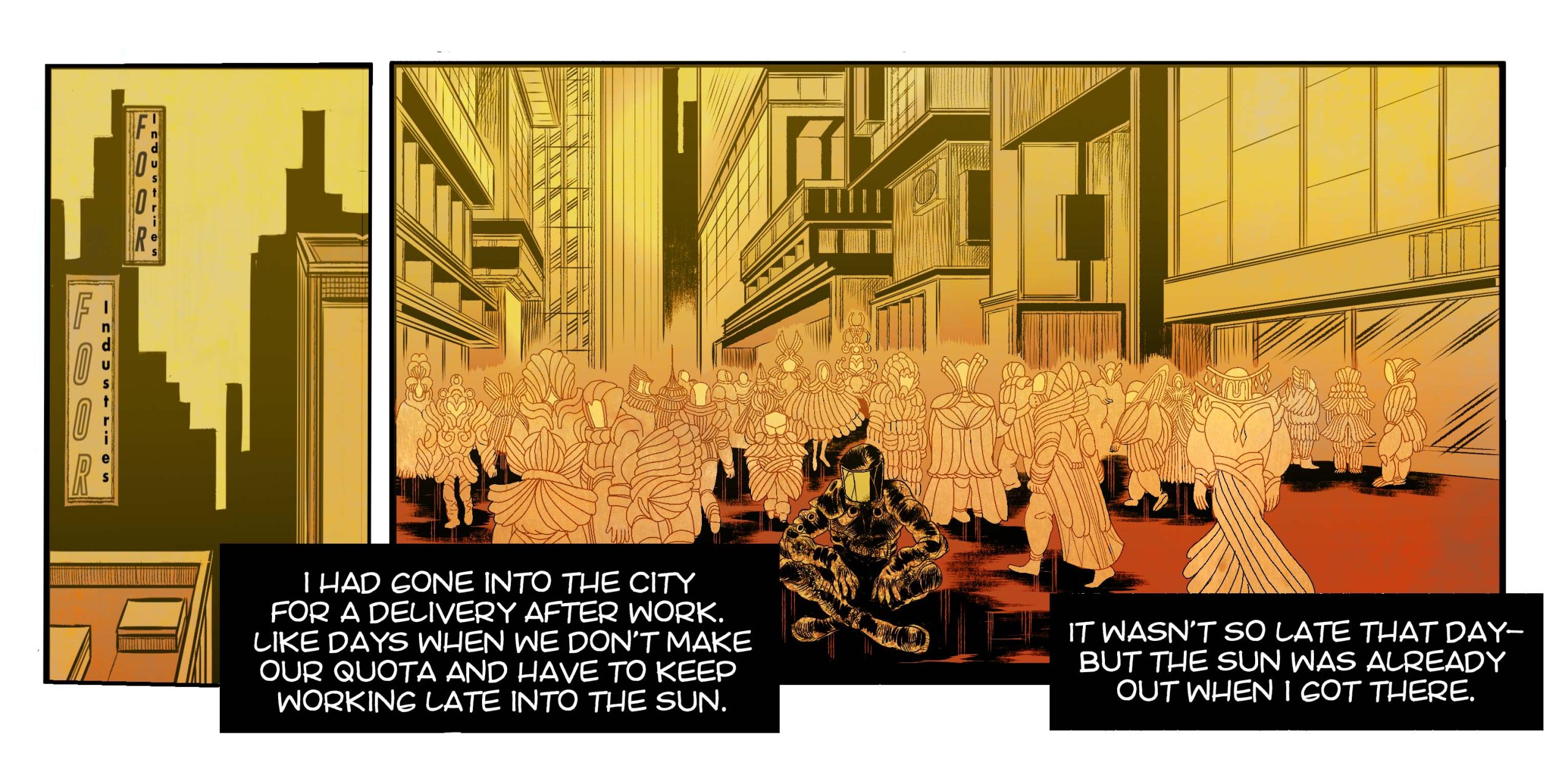
“Okay,” she said, dismounting and looking for her clothes.


“Hey, you don’t have to be like that.”


“You always keep your shirt on when we fuck. And it’s weird. I’ve never said anything about it. But it’s weird.”


“Yeah well, you talk about cartoons like they’re real.”


“They’re real to me,” she replied, realizing too late that saying this out loud would only exacerbate her humiliation. Alex, sensitive to this miscalculation, seemed for a moment like he might try to diffuse the situation, but then he turned away and began to collect his things.


“I gave you that Alaskan Thunderfuck at a wild discount,” he said, and the invocation of the central currency between them suddenly did not feel casual. Erin understood that she was meant to feel demeaned, and that was reason enough to direct her criticism where she knew it would hurt.


“You should’ve given it to me for free. Don’t think I don’t notice the discrepancy between what you sell me and what we smoke when you come over. It barely gets me high.” She took a little pleasure in the short circuiting of his face, the silence in the air as he tried to accommodate this impossibility. Then he laughed, which scared her a little, not least because he was still fully erect. He took a deep breath and pulled on his pants, his shoes.


“You know you belong here, at this school. You’re one of them. You don’t think so, but you are.”


After spending so much time fretting about how she was going to tell her manager a believable lie, it was as simple as pulling him aside during the breakfast rush and saying that there’d been a car accident. She was almost insulted by his nonchalance, by the long, irritated sigh as he retrieved his pen and snatched the shift schedule from the wall. When she finished her shift, she threw her apron over her arm, went outside, and felt the sun on her face. It occurred to her that her father actually might be dead. It was odd—in her youth she had obsessed over the mortality of her parents. She called them incessantly when they left the house, bartered earnestly with God for their safe travels to work and the grocery store. To some extent, she still felt this panic about her mother, but about three months after her father left, the fear she kept for him went out like a light.


He was eighteen years older than her mother. When they met, her mother was slim and strung out, and he was an old sailor who’d already buried two wives. They weren’t in love, but then a daughter, then a marriage. She wanted her daughter to have the father that she’d been denied. She wanted her daughter to be able to trust men, to love them without her fists half-drawn. And for a while it worked. In fact, he was closer to his daughter than he was to his wife, so much so that on the day he left, her mother just sighed and said, “I mostly can’t believe he would do this to you.


The morning of comic-con, Erin received a third urgent email from her academic advisor that she promptly ignored. She relished the opportunity to make a photogenic, labor-intensive breakfast. She washed her hair slowly, put on her face with a steady, serious hand—the slick primer, powder, and kohl. She rolled the fabric of her costume between her fingers and forgave its hot glue and crooked, sagging wings. She smoked a couple of joints, pulled on her wig, boots, and cardboard galactic gun. She boarded a city-bound bus, and when she arrived into the sea of Lycra and make-believe seething at the doors of the convention center, she was sure she was going to faint. It was pure and narcotic, the half-queasy feeling she usually got before a promising date or dreaded family engagement. A man in a Gundam suit hailed her out of the crowd, asked,  “What are you?” And she was so happy to be asked that she didn’t notice his penis, hanging flaccid through a chink in his mechanical suit.


“I’m a void witch.” She spread her arms and spun, emboldened by all the theater around her. “From the White Dwarf Chronicles? Second to last boss after you get to through the water chamber. A supermassive black hole gathers mass and density and then it—” when he started to stroke himself, she allowed herself a moment of paralysis, and then simply turned and walked in the other direction. Nothing so ordinary was going to sour her mood.


When they opened the doors, she ran to the comic-book cages. The red carpet was already soiled with mustard, glitter, and unpopular swag-bag toys, all the off-brand blockbuster heroes, meticulously hardwired mechs, and harried, plain-clothes journalists suspended in a state of ecstatic media res. She hung around in the stacks and tracked with her own eyes the transition of superheroes from silly ’60s panties to sleek post-aughts body stockings, the dewey decimal stink of expensive vintage issues thickening her throat. She hit Artist’s Alley with wild delusions of grandeur regarding her personal budget, leapt into makeshift dressing rooms, shimmied out of her cosplay into professionally sewn steampunk petticoats, and left with a handful of mismatched clocks. She watched the professional cosplayers strut between walls of polymer toys. She admired large oils and acrylics that rendered hokey two-dimensional icons with burly realism, the uncanny valley spread out before her like an odd, vaguely sexual dream.


She haggled for stickers and expansive giclée prints, already imagining how she might arrange them on her walls at home. And there were people who really did want to know who she was, some who already knew, mommies and daddies with cat-eared tots, laughing and raising their cameras, unphased by her cleavage and bloodshot eyes. Of course, there was the underarm stench, the claustrophobic cattle drive to the speed dating and gaming rooms. And then there were the panels.


The chance to see all the gods of her fantasy worlds, writers and fine artists who worked crowds like standups, guzzling water between awkward technical gaffes. There were others who were clearly too introverted to be on stage, men and women who were precious and cold, so allergic to eye contact it was hard to imagine how they managed their fame. There were voice and screen actors who moved in and out of character so fluidly that she worried over fractures in the fantasy and closed her eyes against their vocal tricks. Most importantly, among the stars of the con was Erin’s childhood idol, Haru Takahashi.


It was the first time he’d ever appeared at a con. A somewhat reclusive man of forty-five, he was notoriously awkward with fans, rumored to have a thing for dollar-store licorice and old, erotic film. Per his colleagues, he was prone to fainting in his home studio and rupturing his vocal cords for the acrobatic demands of his job, which was to be the voice of TV’s most beloved monkey god.


The Monkey in the Moon was a raucous, intergalactic animated saga that had been on the air for fifteen years, frequently alienating its multi-generational fanbase by ignoring its own rules, casually killing off fan favorites, and going on long, corny digressions about interstellar transit law. But none of that mattered to Erin, who had watched every episode more than three times, who, when newly indoctrinated into the fandom at nine years old, spent afternoons writing crude fan scripts that her cousins dutifully performed for her Fisher-Price tape recorder.


And so it was on this basis that she set out to attend his panel, maneuver her way to the front, and figure out a way to convey silently what she wanted to scream. Only just as she went to find the appropriate line, she checked her phone and found a fourth manic email from her academic advisor—whose subject line read: Get Your Shit Together, Erin!


There was no choice but to read the backlog and confirm what on some level, she already knew. She was failing out. Erin shut herself in the bathroom, ripped off her wig and considered the glitter on the toilet seat. Sweat streamed from the wig cap and into her eyes, and when she jogged back to the panel, her thighs caught on each other. Too late, she realized she’d left her galactic gun on the hand dryer. That she was still high was almost a comfort, a way to rationalize why the news felt italicized, why the floor of the con suddenly felt hostile, fluorescent, and too smelly to bear. It didn’t help matters that her wig had taken to spinning around her head, resisting every attempt she made to straighten it, until she simply gave up and parted it where it chose to sit.


With seconds to spare, she tumbled into the panel room and spilled all of her clocks. Sheepishly, she gathered them into her arms, and marched to the front of the room. She sat in the dark until it was time, fanning herself, looking around at all the mortals, the moist disarray of speedsters, expository villains, and ersatz sidekicks taking video, feeding burritos through their masks. She zeroed in on Haru, noting the way he fiddled with his notes, pushed his long, silver-streaked hair away from his eyes, and then seemed to regret his sudden exposure to the lights. He appeared as solitary as she hoped. The most subdued of all his co-panelists, when he did choose to speak, it was in that careful, golden tenor, his clipped, sarcastic answers splintering the room. It occurred to her that everyone had come for him. And so when it was time, she rushed up and planted herself directly in his line of sight. But when they passed her the microphone, her heart rose into her throat and his face swam before her eyes.


There was a prickly susurrous rising in the dark room, a titter here or there that she couldn’t quite make out over the emergency in her chest. He seemed relaxed as ever, almost disinterested, but there was a slight smile, more wary than pleased. She cleared her throat, looked down at the clock she suddenly realized was cradled against her breast. “So obviously I know you can’t spoil which level of quartz the grand ape mined from the saturnalian mine. But I need you—can you see me? I need you to know that I can’t imagine my life without your voice. The voice of the monkey king. He’s living in fear of the moon and the Luminescent Boar and I’m such a fan, and I just feel really—” She paused, and without warning, her eyes began to run like organic peanut butter, at which point she apologized, handed the microphone to small Batman standing behind her, and promptly rushed out of the room. Outside the convention center, she noticed the man in the Gundam suit—who she only now realized was not attending comic-con, but was a cousin of one of those dubious Times Square Elmos—was still out front. She bought a pretzel just for napkins to use to dry her face.


She looked around and found two Harley Quinns sobbing by the garbage, a Spiderman smoothing out a large piece of cardboard, setting up a tip cup next to a stereo. When she felt her phone buzz, a smiley, eastern European New York tour briefly engulfed her, their eyes turned skyward. Without thinking, she accepted the call. The voice on the other end was unfamiliar. Then it was too familiar. When she’d imagined this moment, she was prepared. She was steely and degreed. Sometimes she imagined she might hang up. But there his voice was now, after a year.


“How is my little girl?” the voice said, and she wanted to laugh, to scream. Because of course it was all so much better in her mind. Of the course the fantasy was in reality as casual as this—a knotted synthetic wig in her fist, a drooping falsie on her cheek, as she summoned a breath and said,“Oh, I’ve never been better.”

Share

The Illinois & Love, This I Know:

The Illinois

Frank Lloyd Wright’s mile high


skyscraper dream had 528 stories,


and atomic powered elevators.


It makes you think of a caterpillar.


Maybe we are all one caterpillar,


and our apocalypse is a chrysalis?


Love, This I Know:

My face was not my face

until it lost your trace.


Heartbreak is the power

to flower a flower.


Love is summer snow

& words are pajamas:


Fire won’t burn my hand

and miss, kiss, mere air.


Love can no more carry

my heart than a suitcase.


We have passed by

stand-ins & sentries—


There is the ‘one’

& ‘two’ or ‘three’


Never touch like we!


Walk on winter sand

we in we & in we?


(Wait, let me take a breath

& laugh today at death…)


Share

Caught

Your mama drops you off at five o’clock, rolls in with an extra-large suitcase full of clothing for all seasons, a blue balloon nightlight, a patchwork baby blanket, coloring books, picture books, an unopened box of crayons. On her arm dangles another bag with blue toothbrush, blue toothpaste, your special blue cup, the blue multivitamins you take before bed. And at her side, you—a round, far-gazed boy, one hand clutching the fabric of your mama’s jeans, the other gripped around the snout of a stuffed pig in a checkered waistcoat.


“Any problems,” your mama says, “just call.”


“Yes.” In her shadow, we both keep still while she frets and fidgets, takes out a notebook crowded with tightly coiled numbers. She was like this as a little girl too, your mama—my daughter. All fluttering hands and nervous glances. “I’ve made up your old bedroom,” I say. “Logan can sleep there.”


She tears a sheet from the notepad, folds and presses it to my chest. “There’s where you can reach me,” she says. “And that one’s Doreen, his regular sitter. And Mrs. Bogart; she’s got a spare key if there’s anything you need from the house.”


Ink seeps through the page, blackens my thumb and forefinger. “Don’t worry,” I say.


Your mama plucks you off her leg and guides your hand towards mine. She says, “I’ll pick him up Monday morning. Before preschool.”


“Yes,” I say. “Don’t worry.”


For an instant, her face becomes pinched, punctured with tension before she breathes and nods. She kneels, cups the side of your head, and kisses you goodbye.


The tears begin after she drives away. A lost look, a panicked look, and then a wail that sounds like a ship taking its first voyage away from land. Water plunges past the hull, a huge exclamation, an oil-drum symphony between my ears. You pound a tiny fist on the window, twist backward in my arms. So, we go to your room—her old room—and I barricade the door on stiff-jointed knees.


Mama! Mama! Mama!


Shriek and shriek until you’re too tired and I can hold you again. There’s a little wind-up music box on the shelf—it plays “Singin’ in the Rain,” and you like that. Twist the handle round and round, sit sprawled on the old Parisian rug sniffling the last sobs away while I go downstairs to make peanut-butter banana crackers. Your mama used to eat those the way a magpie eats ladybirds.
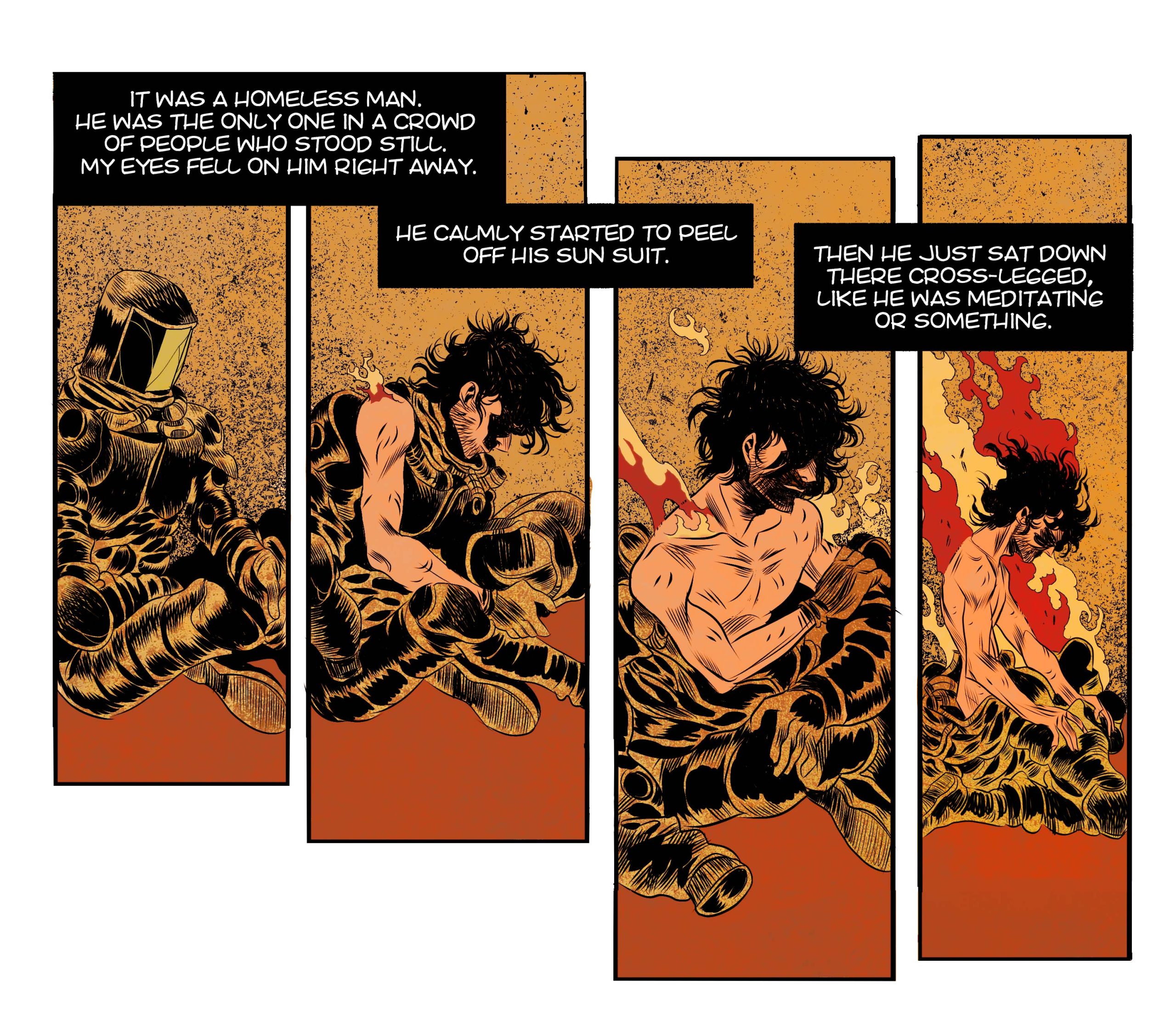


Before I turn off the lights, before I leave the room, you reach across your bed—from beneath the cotton-wool blankets already kicked into a tempest—and say “Balloon.” I plug in the nightlight. Your eyes see further than mine, to something inside the blue Kool-Aid glow.


Almost dawn now, no orange on the horizon but at least a paling of the darkness. Stars begin to fade. Air rises off the ground cold and thick, like a glass of milk fresh out of the fridge on a summer afternoon.


And the front door groans open.


I can see you from the window, Logan. I can see you teeter down the front path and onto the deserted road, little feet almost too round to balance on—that stuffed pig under your arm better dressed for the cool morning than you.


I run.


I run and leave the front door wide. Feet naked like yours, over wet grass, past the post box with its tin flag rusted upright. I run fast and hard enough to see just as you dash across the neighbors’ lawn and behind their car.


“Logan!” I yell. And then “Don’t worry. Don’t worry!”


You keep going, leave footprints in the begonias, footprints in the chrysanthemums. They’re shallow impressions, only the size of my palm. At the end of the yard, you squeeze between two loose fence boards, no wider than the stump of a cherry tree. “Logan!” I yell. The stuffed pig lies grinning, plush-and-tumble on the ground.


Run down a back alley, through another yard, and then another. The footprints this time are puppy-dog small, brown markings over a stranger’s driveway. They wobble towards an accidental patch of trees, a scraggly bunch of growth that the men with cement mixers and trucks of rubble forgot to chop down when they built this place forty years ago. Fallen branches murmur at my ankles, but I can see you now. I get closer and you get smaller, smaller—small enough to fit inside one of my winter galoshes.


“Logan!” I yell. Nearby, you laugh—because it’s all a game, cat and mouse, grandmother and grandchild—you laugh and dart between the brambles of a knee-high brown bush. Footprints span the length of my thumbnail. Thousands of inchworms hang from invisible threads, and I thrust them aside like tasseled bed curtains. Now the grass wavers where you weave through it; now it doesn’t because you’ve grown too small for even that. You laugh and laugh and laugh, and I follow that sound, follow it around twisted oak trunks, bowing evergreens, and skinny matchstick saplings. Mayflies scatter like wrong-way raindrops. Rooks chitter and fling themselves at the sky.


“Logan.” I don’t yell this time because laughter fills greenery. Somewhere close, overhead. “Logan.”


Rising light catches the trees in faint silhouette. I look up and there you are, caught in a spider’s web, caught in strands of leftover moonlight, laughing and laughing and laughing and laughing.


In my hands, fall asleep again. I carry you back: out of the trees, across the alley, through the fence, over the lawn. You grow bigger as we go, filling one palm and then two, filling the crook of my elbow and then my arms. I ease you into bed, spread blankets smooth.
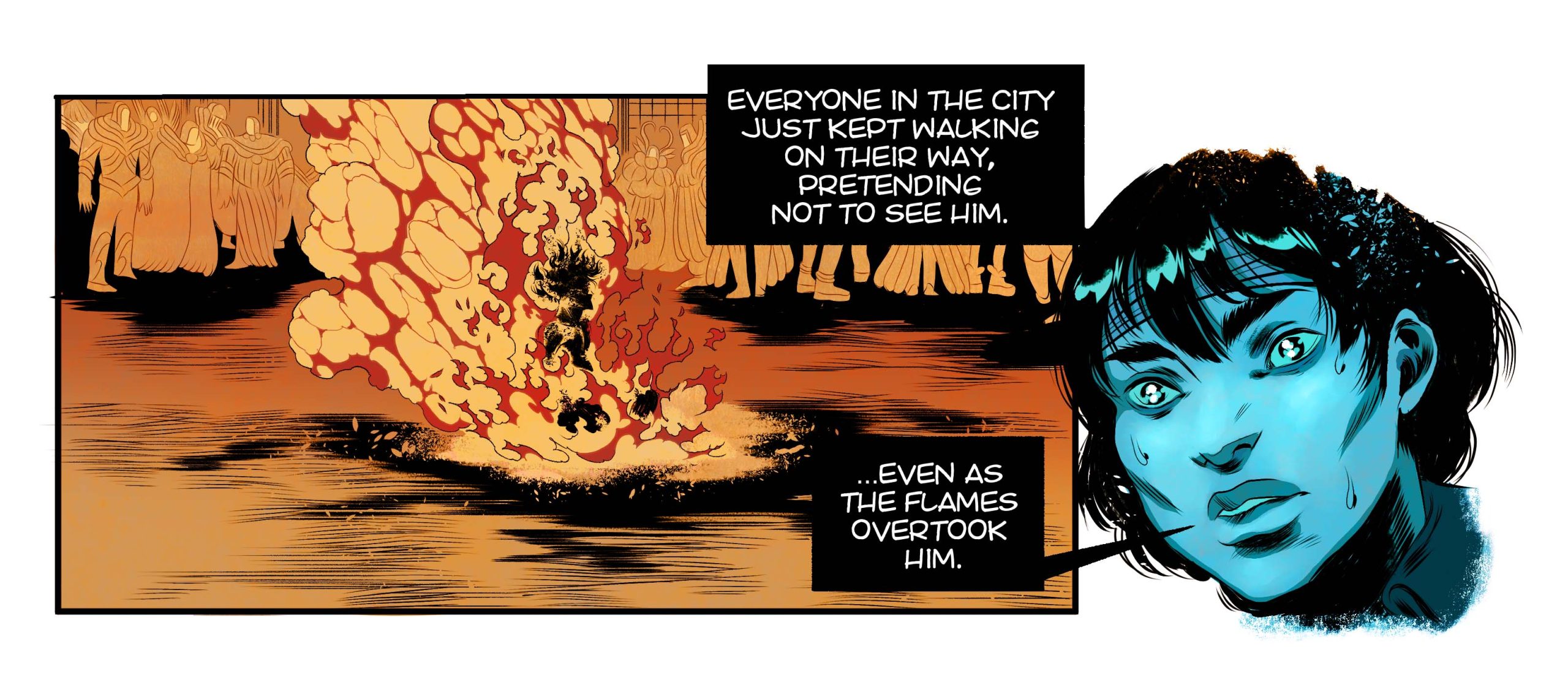
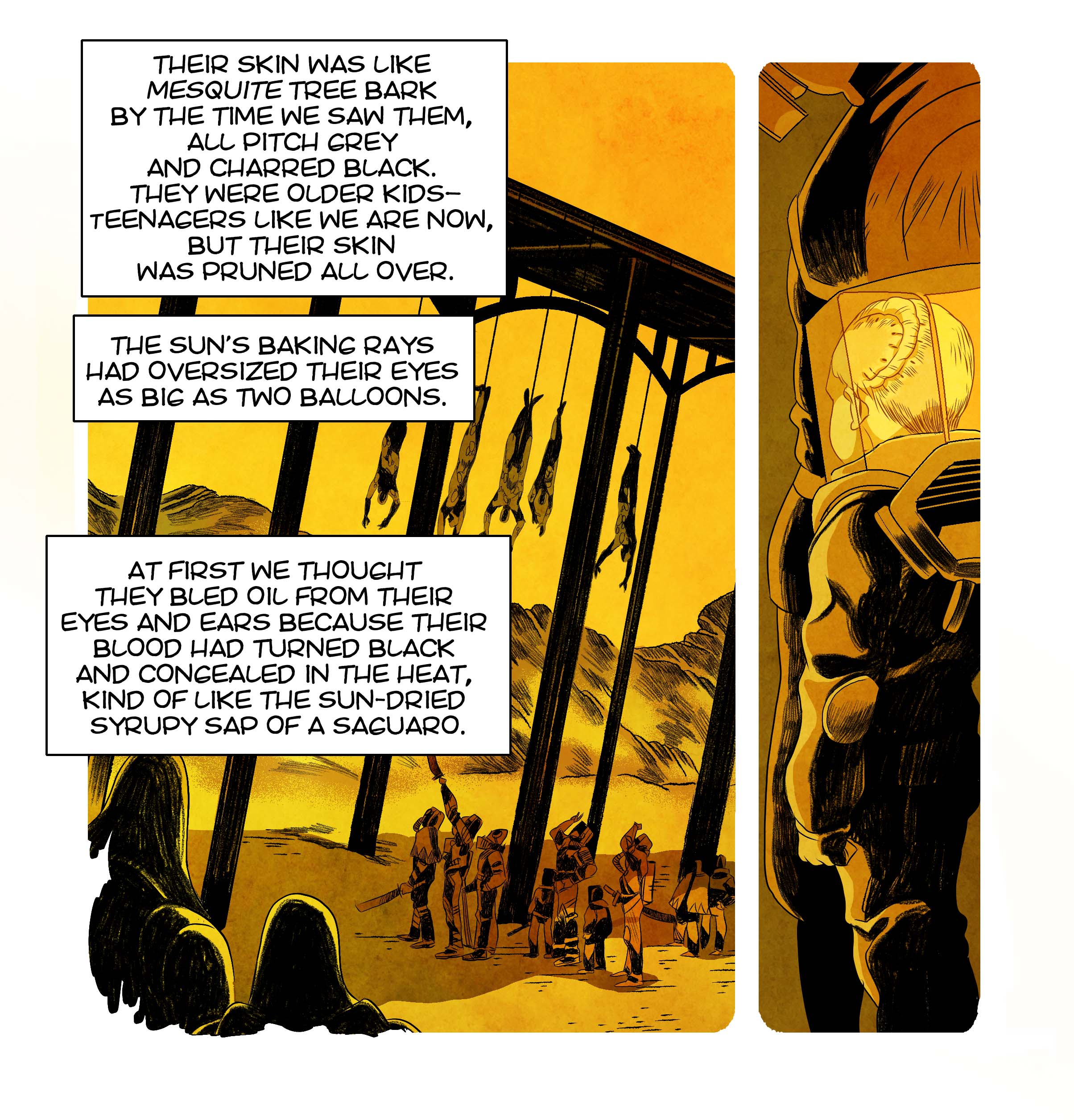
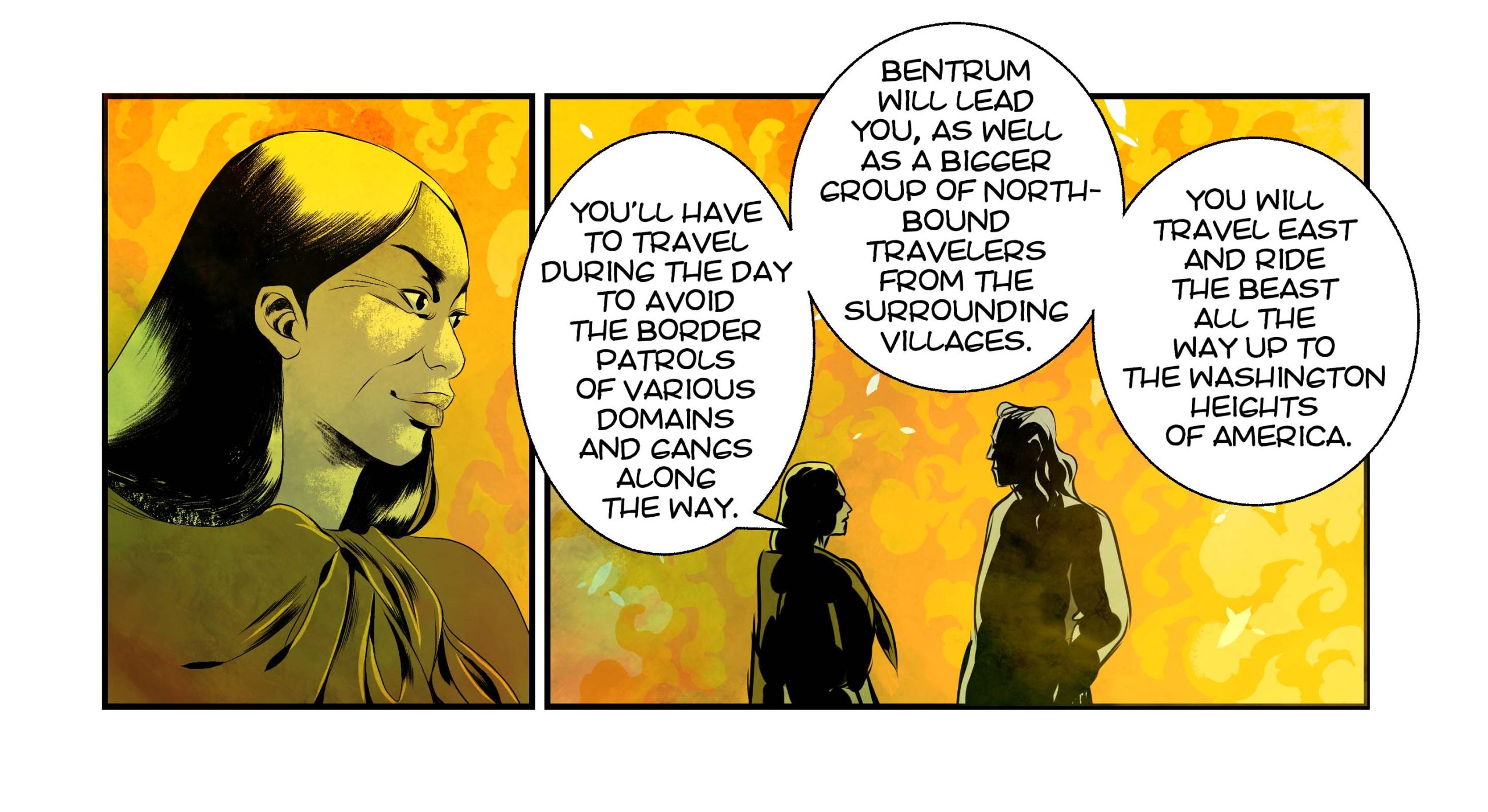
 

Tomorrow, when she comes to pick you up, your mother will look head-to-toe at you, at me. She’ll say, “Everything go alright?” And I’ll say “Yes alright. No need to worry.” Maybe you won’t say anything. Maybe you’ll laugh.


Steely spider threads tangle your hair. I pluck them free one-by-one, lay them on the pillow while you sleep until your face is crowned with silver.

Share

His First Night Home

from the hospital, I heard him cry

and lifted him from his bed

and brought him into ours,

and after his mother had fed him,

I rested him on my chest,

which rose and fell with him

until daylight.


And when I brought him home

from the hospital again,

after the social worker persuaded him

to let her call me, and after he told me

he thought he was ready to quit

using, I was afraid he might

sneak away in the night,

so I had him sleep beside me,

where all night long I heard

his labored breath, felt,

his legs beat against the sheets:


that sparrow, stunned

by the window’s false sky,

trembling in my hands,

catching its breath until

it fluttered and flew away.


Share

Two Poems on Love-Play

Roles

It was late, & you were

wearing your widow suit,

black of 1870s chic,

loaded with bustle.

I did my best Doc

Holliday—Val’s version, cock-

sure & half-goofy. You

laughed. I laughed. Val

would’ve laughed if he were here

watching me paw at your corset,

pull the strings to tighten it.

Moments like this,

we feel happiest,

field mice exploring

magnificent catacombs

of a dusty closet.

I act out in otherness;

you dress up the same:

not faces of whatever

force invented us,

but what we make

of ourselves

when we’re at play.


Let Me Be Your Dream Dunce

Bright-eyed desperado on a mission for disaster.


Snow-cap climber heading for the peak

 of Mt. Oh-no-one-goes-there-ever.


View-taker who topples over the railing of the boat

 into choppy waters you barely save me from.


Let me let go of rope, map, & stars—


I’ll walk into danger as a fawn

 not fast enough to flee the mountain lion,


tell you philosophies of nothing while we sit

 in your dream-Jacuzzi in our clothes.


Let me be clumsy, cuss, rant, & stub my toe

 on a jag in the earth,

 my forehead once more on the jeweled moon.


Share

The Flood

It was a hard winter. Everything became further away and darker. The roads battered cars; they buckled and heaved and slowed everything down to the point that I stopped wanting to go out. Every time I got in the car, I imagined my own death. I asked myself, Is where I am going worth sliding off the road into the cold water, into a dark tree, into another frozen, creeping vehicle, into the smooth blade of a state plow? So I cut back. I worked from home. I did my grocery shopping once a week, on Sunday afternoons, although by the time I left the store it was already getting dark around the edges of the mountains and I had to follow the lights of my high beams up the valley road. Other things were cut away, visiting friends, going to dinner in the bigger town, seeing a movie, shopping, going to the gym; all these were non-essentials. I imagined that that winter was like the start of the end of days, all of the good things, the extra of civilization falling off.


I saw death everywhere. People were freezing in their homes, the news channel reminded us to check on elderly people, our oil bill asked for a donation to help those who had no money for heat. People got thinner, tougher, and meaner. I didn’t make eye contact in town. I pulled my coat collar up and my hat down over my eyebrows. I kept safe at home.


Joe and I started to lock the doors when we were out. I don’t know if we ever spoke about it, or if it was just something we both felt at the same time. We locked up the poor, little cabin, and all of our poor, broken things inside of it. People were stealing dogs and selling them. People were taking the copper and gold out of the underbellies of cars. They were even carrying off firewood. We watched the long driveway for strange headlights in the dark and looked in the snow for tracks, for footprints, for signs.


The cabin we were renting sat at the base of a cliff covered with tall, straight spruce trees. A swift stream ran between the cliff and the house, always in white water, stumbling over huge boulders. The stream rattled and spilled down through the rocks, collecting in big pools, bottomed with smoothed bedrock or soft sand. Just below the house the stream flattened onto a broad flood plain, mingling with another mountain brook. The two waters came together and raced along, white, towards the Connecticut River.


The cabin was heated by a cast-iron woodstove. There was a backup propane heater in the living room and another in the bathroom downstairs, but we could never figure out how to run them because the instructions were in French and the pilot light would not stay lit—it would flicker blue and then vanish back to air. The stove ate through wood, burning fast and hot. The place had been a summer home and, looking to make money quick, our landlords had done almost nothing to winterize it. There were gaps under the doors and where the windows met the wall. There was a hole in the ceiling above our bed through which wasps spilled in the summer and in the winter the cold would come in and hover over us as we tried to pull the blankets up. Worst of all, the house was built on stilts because the stream flooded often. They had surrounded the stilts with black plastic and fencing but still the cabin sat on air, a freezing pillow of winter that reached up through the floor. The dogs would refuse to get off the couch; the cats would walk the backs of chairs, over lamps, across the windowsills to avoid having to touch it. The stove fought the cold, but the heat wouldn’t stick—it would just slip away so that even as the stovepipe glowed amber the cold sat in the bathrooms and the laundry room and the downstairs bedroom. The cold was more comfortable in that home than the heat.


That winter I lived heavily, wrapped in layers. I wore two pairs of socks and walked the floors in slippers. During the day Joe and I rationed wood. The winter was so long and cold that we were worried that it might not end, and we would be left with no fuel. We’d keep the house right above freezing, so cold that the olive oil became solid in the pantry. I lost all sense of my body. I was never naked except for the brief moments between the shower and my towel. I felt like I gained twenty pounds, but, I don’t know, it could have just been that my body became alien to me, strange, a buried thing.


I stayed inside and watched TV wrapped in a fleece blanket on the couch. I cross-stitched Christmas stockings for Joe and me and for each pet. I went to bed early and slept late, following the long darkness. I walked the dogs with a headlight. The trees rose like bodies, and the shadows behind the trees became monsters and thieves. The winter made us animals. It took away everything nice and human. We were cut back down to size by it; we were bodies that needed calories and warmth. We could have slept for days, like skunks and bears. We stopped dreaming for anything besides this life. We became smaller that winter, and less beautiful. I lost things I never got back from that cold.


The brook between the cabin and the cliffs had been frozen for months. Early in December I could see running water between the icy banks, but then I could only hear it, dark and rough. The ice grew and grew in the cold of those days. It was the only thing that got bigger. It grew like continental plates. It changed color. Sometimes it was clear, others it was white, or gray.  When there was enough sun, it was blue. The blue ice looked like a blade—it was the ice of the freezing days, when the sun appeared but had no heat, just light in which to cast the world in shadow.


When I was out in daylight, I walked the dogs along the ice banks. It was so thick that it made no sound to walk upon it. Underneath I could hear the water, rumbling. The dogs were afraid of crossing the ice in the center of the brook, where they could hear the water. The ice made sounds of its own. It groaned. It creaked and snapped, brittle pops and long breaks. It shuddered like a fallen tree settling into the earth. There were other sounds that were harder to describe, hums, wavering tunes like Tibetan chants that sat right between two notes and seemed to be trying to break the world at its weak parts. Sounds rang along it, down the cracks, through the broad flat shelves. Dripping and grinding.


That winter the animals became restless. Fox and deer and coyotes stood in the yard and locked eyes with me through the windows without fear. The cats scratched at all the furniture. On the warmest days, I would try to let them outside, but they refused to step into the deep snow. Instead they tore away the legs of our couch. They peed secretly on the loveseat in the back room. They shredded it too, turning the canvas into threads. The dogs pulled apart my books. They got onto the couch and attacked the cushions until there were no cushions left; they had all been emptied of their stuffing and flipped inside out.


By the time the dogs completely destroyed that couch, it was early spring. The light was a little longer in the morning and the evening. The sun has some force behind it. I could turn my face to it and feel something in the sky. There was a day of rain, cold, steady rain that beat the snow down. That night we dragged the couch and the loveseat outside to the backyard, tired of living with those tattered things, tired of flat pillows and torn fabric. We had to pour gasoline on them to start the fire. We waited until it was dark. The gas burst and then snaked inside the forms of the furniture, under the skirts and up the backs, twisting along the wood inside it, slow at first then smoking. Smoking horrible thick black smoke that joined the dark sky. It burnt up the smell of that winter, the animals’ fur and our skin cells, our hair.


Joe and I stood back and watched it. The light from the house stretched out to meet us like an apology. We didn’t touch, we gave each other space like the one, or the both of us might burst into flame too. The snow melted out to our feet. The flames came through from the inside of the furniture, wearing the fabric thin and then bursting out hungrily into the air. We watched it in silence. The fire ate up everything and then, gnawing on the bones, the wood, the springs, the bolts, shuddering and collapsing, like skeletons in a mass grave, all the parts mixed up. We kicked the pieces that fell out towards us back into the fire. We watched the sparks rise into the black smoke pillar, following the raindrops back up. Shivering wet through all our coats and boots and hats, we walked back up the hill to the bright house. The fire lay in coals behind us, gnawing on the hardest bits.


The ceremony of it all stayed heavy between us. That winter had been hard. Joe had picked up smoking again, standing on the porch just an arm’s length from the door as if it might be warmer near the house. When he had quit, I thought we might be moving somewhere good together. With each night he shuffled in the cold, sucking on those menthols, I didn’t know, maybe we weren’t going anywhere at all because I was slipping too. I started seeing things at the edge of light, in the shadows. My fear of driving at night was a real fear. I saw things, my death, the death of the dogs, of my sisters, huge dark primal monsters made of the hills and spruce and rock. I was scared of little things, headlights in the night. I had to understand every sound I heard, place it, or I rocked myself to sleep, trying to rationalize my terror. The ritual of burning the furniture felt like our first attempt at ridding ourselves of these things, casting the devil out. The house was emptied. We sat at the dining table, looking at where the couch used to be. It reminded me of when we had first moved in, all the blank spaces and how tender we had been with each other.


In the morning, the fire was still smoking. I took the dogs down to look at it, the bent nails and twisted springs, the feet and rollers and joints of metal all blackened. I kicked some half-burned pieces into the coals. The snow was melted, and the grass was brown around the fire pit.  The morning was warm; there were invisible walls of heat in the woods and along the driveway. The sun was rising, laying a thick haze over the cold water. It was the sort of day when you are excited for no reason. I went out to lunch; I didn’t eat what I had packed for myself. I bought a $20 bottle of wine for dinner.


Coming home, the ice along the road was still solid. I could hear the water under it from the car, running, running. At the cabin, the ice was still solid on the brook, but the water was so loud, a contained scream down the valley. The rain had loosened the sand on the hill, and snowmelt ran off it, picking up big stones and dropping them on the ice like cannon balls. The stones bounced off the ice, bounced into a tree, rattled down with the water, or punched their way through. The water ran like a trapped thing. I couldn’t hear myself think for the noise. The dogs were spooked when I took them out—the rocks had been crashing all afternoon, the water screaming, they had spent the day looking out the windows, wondering what was happening, wondering if the world were coming to an end.


The rain came again as the night settled, warm and dark in the valley. Joe and I talked about floods. Two years ago, a tropical storm had burst through these mountain streams and cut off towns for days. It took weeks to get past mudslides, washed out bridges, roads swept away. The brook we lived on had flooded; the water had risen under the house and run through the driveway. Huge rocks had bowled down the hill, knocking over trees in the front yard. Gravel and riverbed were strewn through the woods. The driveway disappeared. A big section of the hill had fallen into the river. It remained a crescent of naked sand and rock where a few trees hung. It was an ugly slash on the hillside right across from the porch; we had looked at it all summer. We also drove past a safe and a refrigerator that the flood had swept up into the trees along the driveway, mixed with river bottom and debris. The people who had been living there when it happened had been stranded; the water pushed their cars up against the pines. They had walked out over the field to the higher, paved road when it was safe to leave the house.


We talked about the cuts on the trees along the river that had been made by the flood, how high the water had been, how strong, that it would use stone and wood to cut through things like trees, riverbank, to cut away forest. All the time the noises outside got bigger. The rocks were breaking open trees on the slopes, popping, crashing, and punching through the thick ice and the hiss, the scream of the water. The dogs were looking around in terror at the noises.


We lay upstairs and listened to the ringing, crunching, breaking up. It was like a storm but not from above. It surrounded us. At some point, deep in the night, there was a strange, big sound that woke me from sleep. The dogs were sitting at the window; the puppy’s head was cocked to the side. I was too afraid to go to the window and see what they were seeing. The noise finally settled, and the night lay broad and uninterrupted after that. Sleep flattened my fear.


At dawn, we could see that the ice had broken up in the night. It was piled in tall cairns in the front yard and it pushed against the trees along the driveway. The water ran—open, seething, twisted gray and white water—so loud as to need to be yelled over. It hissed and boiled like static. With the dogs I walked around the piles of ice, some pieces a foot thick and stacked in piles six or seven feet tall. These heaps bordered the river; I had to climb to look down into the flood. Some of the ice was cut into bricks, and other pieces had been moved in huge, flat sheets, like countertops, and plowed through the yard to the distant pines. Our fire pit had been washed clean, erased; only the grass kept its char. I found pieces of the couch springs in the driveway and charcoal that had been pushed hundreds of feet away by the water.


Sometime in the night, the water had jumped out of its banks and knocked the ice back into the trees. The stream had used our driveway as a riverbed until it found its way back to the low ground by our mailbox. For some time in the night, we lived above a huge, rolling lake of ice and snowmelt, a flood, flashing through the land around us.


I found a brook trout resting on top of a stack of ice pieces like it had been placed there carefully. I took a picture of it with my phone. This beautiful, bright fish, recently dead and still colorful, six or seven inches long, ended up on top of the ice which had been its ceiling for months. I thought of its strange death, the fear of the flood, the shattering of the ice, the change of its worlds, its gasping for air in the cold night under the dark sky, raised up like an offering to the low clouds. It wasn’t transformation, the slow dawn I hoped for. The thought of the flood roaming our yard in the night scared me more than the endless cold of winter. I imagined water running under our home, under our bed, breaking through the trees, the flood erasing our coals, as if nothing we did mattered and no one would remember.

Share