
-
Wednesday, Apr 8, 2026, 7:30 p.m.
- Steinmetz Hall
- Tickets: $25 standard; $10 student tickets
- Purchase Tickets
- Jump to Program
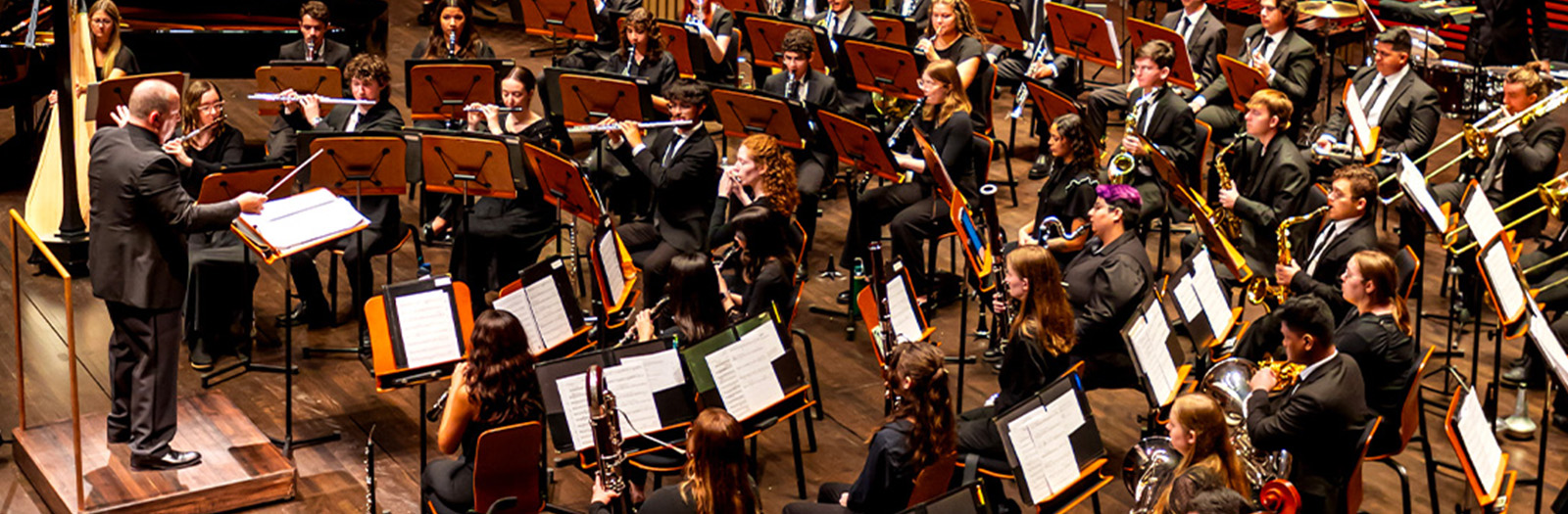
UCF Wind Ensemble, Symphonic Band and special guests perform music by some of today’s most impactful composers.
-
Wednesday, Apr 8, 2026, 7:30 p.m.
- Steinmetz Hall
- Tickets: $25 standard; $10 student tickets
- Purchase Tickets
- Jump to Program
The University of Central Florida’s top two auditioned ensembles, the UCF Wind Ensemble and Symphonic Band, present an evening of music that explores SPACE, including “Jupiter,” from Gustav Holst’s masterwork, “The Planets,” a suite of music from the original Star Wars movie Trilogy, and more. The concert will also include special performances by guest artists.
Students and UCF employees can use code bandcta26 for $10 tickets in any section. Valid UCF or student ID required.
VOYAGE THROUGH the GALAXY, and BEYOND
Featuring the UCF WIND ENSEMBLE & SYMPHONIC BAND
The University of Central Florida’s top two auditioned ensembles, the UCF Wind Ensemble and Symphonic Band, present an evening of music explores SPACE, including “Jupiter, the Bringer of Jollity,” from Gustav Holst’s masterwork, “The Planet,” a suite of music from the original “Star Wars” movie trilogy, and more. The concert will also feature special guest artists, George Weremchuk and Michael Weatherly.
UCF BANDS: WIND ENSEMBLE AND SYMPHONIC BAND
Symphonic Band, Conducted by Tremon Kizer
Return to the Moon (2022), by Henry Dehlinger (b. 1967)
Rush: Concerto for Alto Saxophone and Band (2012), by Kenneth Fughs (b. 1956)
George Weremchuk, Faculty Guest Artist
I. Evening
II. Morning
Libertadores (2010), by Oscar Navarro (b. 1981)
Wind Ensemble, Conducted by Scott Lubaroff
Jupiter, the Bringer of Jollity, from The Planets (1918), by Gustav Holst (1874-1934)
Rhapsody for Alto Saxophone and Band (2010), by Andre Waignein (1942-2015)
Michael Weatherly, Student Guest Artist
I. Virtuosic Arabesque
Star Wars Suite (1977), by John Williams (b. 1932), arr. Donald Hunsberger & Ryan Nowlin
I. The Imperial March (Darth Vader’s Theme)
II. Princess Leia’s Theme
III. Battle in the Forest
IV. Yoda’s Theme
V. Star Wars (Main Theme)
VI. Throne Room and End Title
SYMPHONIC BAND PROGRAM DETAILS
Return to the Moon
American composer Henry Dehlinger is hailed by Gramophone as “a master of myriad styles.” His vocal, choral, and symphonic works are widely, standing out for their rich, tonal expression and modal harmonic language. “Dehlinger’s music does wonders,” says The Washington Post, which praises his lush, orchestral soundscapes as “an unexpected emotional punch.” His vocal works,” Gramophone adds, “are diverse in atmosphere and harmonic language, as befits the narratives, and the writing is rich, often rapturous.” Dehlinger’s Return to the Moon is a fanfare for brass ensemble with timpani and percussion. This new anthem heralds NASA’s historic Artemis missions, which will lead humanity back to the moon and prepare for the exploration of Mars. It is dedicated to the NASA astronauts, scientist, engineers, administrators, support staff, and international partners who are enabling this new era of human exploration. Return to the Moon made its world premiere on March 17, 2022, at the space agency’s televised rollout ceremony with the UCF Symphonic Band brass and percussion performing. It has two broad sections: Stately and Solemn and Majestic and Triumphant, and its finale evokes the descent to the lunar surface before sweeping to a triumphant fortissimo conclusion.
Rush: Concerto for Alto Saxophone and Band
American composer Kenneth Fuchs is widely recognized for music that blends lyrical expression with vibrant rhythms and colorful orchestration. A graduate of the Juilliard School of Music, where he later served on the faculty, Fuchs has earned numerous honors, including a Grammy Award for recordings of his orchestral works. His music is known for its tonal clarity, radiant sonorities, and strong sense of melodic line. Rush was commissioned by Ryan Janus, principal saxophonist with the United States Air Force Academy Band and a consortium of saxophonists and ensemble conductors. It is set in two movements connected by an extended cadenza for the soloist. The formal structure is like that of Aaron Copland’s Clarinet Concerto. The first movement, which first introduces the work’s thematic material through a short, is a rhapsodic adagio with transparent textures. The second movement, which begins with an extended cadenza containing blues notes into the harmonic language, is cast in the form of a jazz-inflected passacaglia with seven variations. The band eventually takes up the theme, and with the soloist, weaves an elaborate tapestry of seven variations before itsthe composition’s rousing conclusion.
Libertadores
Libertadores was commissioned for the 39th Wind Ensemble International Competition, “Vila d’ Altea” and “Cultures of America,” and its performance was mandatory for all competing ensembles. It undoubtedly earned the spotlight at the festival. It is divided in two sections, the first part inspired by the Amazon River and the second by the so-called “separatist leaders” of South America, Simon Bolivar and Jose San Martin. The first section attempts to introduce us to the heart of the Amazon Forest and its most characteristic landscapes, indigenous tribes, and sounds. The use of voice and hand percussion become indispensable in emulating tribal chants. The second section is fully devoted to portraying the separatist leaders, in the form of a march-fanfare. The main theme of this section, very martial and triumphant in character, explores all of the different instrument voices of the ensemble.
WIND ENSEMBLE PROGRAM DETAILS
Jupiter, Bringer of Jollity
Jupiter, the Bringer of Jollity is introduced through an enthusiastic syncopated dance, appropriate since happiness and joy permeate the entire work. Holst’s love of English folk song and dance is readily demonstrated in Jupiter, its middle section providing a rich contrast – majestic and flowing in triple meter (Holst later used this legato theme for his patriotic song, I Vow to Thee, My Country). The Jupiter and Mars movements of Holst’s orchestral masterwork, The Planets, were both arranged for band by two of his own students, L. Pay and George Smith, for a concert at London’s Kneller Hall on October 3, 1924. Kneller Hall houses the Royal Military School of Music, training musicians for the British Army. It is possible, though not definitively known, that Holst himself had an active role in the creation of these arrangements.
Rhapsody for Alto Saxophone
Rhapsody is not a programmatic work, but one that spontaneously turns into a natural musical journey. André Waignein showcases and explores both the technical capabilities and the expressive nature of the saxophone. Each of its movements take the soloist from a virtuosic arabesque to a lyrical and expressive intermezzo, before closing with a lively tarantella. Michael Weatherly is a student of Professor George Weremchuk and a member of the UCF Wind Ensemble, and was named runner up in both the UCF Department of Music’s Concerto and Performance Excellence Award Competitions.
Star Wars Suite
John Williams has rightfully earned a place in the hearts of film lovers with his many brilliant scores to some of the best movies of the last fifty years. Equally adept at writing music ranging from tender, intimate introspections to galactic battles, Williams carefully constructs each score as a separate, freestanding entity, not just as background snippets. In 1977, George Lucas’s highly imaginative Star Wars first transported an audience to an unknown galaxy thousands of light years from Earth, blending contemporary science fiction with the romantic fantasies of sword and sorcery. The first five movements of the this evening’s suite were brilliantly set for wind band by Donald Hunsberger to display the excitement, beauty, and contrast in Williams’s soundtracks for the first three films of what has since grown to include nine chapters, and more recently, current conductor of The United States Marine Band: The President’s Own, Lt. Col. Ryan Nowlin, contributed this magnificent setting of the Throne Room and End Title. Together, these six musical episodes triumphantly celebrate the music of this monumental cinematic serial while showcasing the colorful, technical, and expressive potential of the modern wind ensemble.
Flute
Angie Tucci*
Elaina Phelps
Emma Forrrester
Reece Martin
Faith Henry
Miriam Soto
Oboe
David Alim*
Gwen Freeman
Bassoon
Karissa Sibley*
Isabella Polvinale
Clarinet
Juan Ochoa Castillo*
Hunter Ancelet
Gabriel Chin Roberti
Alexa Byrd
Claudine Pader
Bass Clarinet
Dominic Valerio
Micah Rice
Alto Saxophone
Andrew Almuhtaseb*
Sarah Porter
Tenor Saxophone
Isabelle Robertson
Baritone Saxophone
Richard Brassell
Trumpet
Kevin Love*
Ryan Gordon
Isaac Lockington
Marco DiNobile
Ivan Contreras
Horn
Benjamin Mairs*
Amelia Coberly
Eleanora Wunsch
Omar Bohorquez
Trombone
Max Rodiguez*
Ashley Murray
Phoebe Jones
Bass Trombone
Jonathan Malpica-Gibbs
Euphonium
Emily Corliss*
Diego Torres
Jayden Stork
Tuba
Lev Mia*
Carter Thorell
Faith Kidwell
Percussion
Emily Hayberg*
Macayle Carlile
Simon Giacalone
Emmaline Kealoha
Grace Singh
Bella Worsham
Harp
Gabrielle Coppala
Piano
Aidan Banks
*denotes Principal
Flute
Emily Mack*
Jia High
Mason Ohlin
Owen Rigney
Victoria Dowling
Oboe
Christina Taylor*
Olivia McGarvey
Nicholas Buckler
Bassoon
Hazell Alonso*
Brenna Hellhake
Caden Lourdel
Clarinet
Taylor Windish*
Cody Hale
Katherine Nilaj
Joseph Versluis
Sophie Bennett
Jonathan Steltzer
Allison Rookey
Bass Clarinet
Laura Diaz
Alto Saxophone
Diego Meraz*
Michael Weatherly
Tenor Saxophone
Jadyn Erickson
Baritone Saxophone
Aiden Schatteman
Trumpet
Dante Jaramillo-Vasconez*
Ayden Perez-Prada
Chris O’Neal
Logan Eslinger
Ethan Sock
Adam Hunt
Horn
Ignacio Souchet*
Christopher Wagner
Stephen Evans
Paige Rogalski
Fernando Ferragut
Trombone
Christian Estades*
Marli Myles
Asher Scoggins
Bass Trombone
Harrison Cloninger
Euphonium
Nishanth Shodavaram*
Diego Jimenez
Tuba
Taylor Ribaric*
Cameron Bailey
Joseph Negron
Contrabass
Eleanor Capps
Percussion
Ben Laufer*
Matthew Brandt
Gal-Lee Maron
Caleb Schmaus
Jacob Timothy Suarez
Sam Flores
Rhys Jones
Harp
Gabrielle Coppala
Piano
Linda Joy Shishan
*denotes Principal
Profile: Scott Lubaroff
 Scott Lubaroff is Professor of Music and UCF Director of Bands. He conducts the UCF Wind Ensemble and oversees all areas of the university’s comprehensive band program, guides the graduate program in instrumental conducting, and teaches undergraduate and graduate courses in conducting and music education. Under his leadership the UCF Wind Ensemble has twice been selected to perform for the College Band Directors National Association (CBDNA) Southern Division Conference and have released two commercial recordings via the Flying Horse Records label with a third forthcoming via the Klavier label. They have been engaged in the commissioning and premieres of man new works, composer and artist residencies, and special events, including the UCF Conductors Symposium, Knights Rising Honor Bands, and Music for All UCF-Orlando Concert Band Invitational. Previously, Dr. Lubaroff served as Director of Bands (2005-2017) and Chair of the Department of Music (2014-2017) at the University of Central Missouri, where his Wind Ensemble performed twice in Carnegie Hall, made three appearances at Missouri Music Educators Association Conferences, and performed for the 2014 CBDNA Southwest Division Conference. In 2014, Dr. Lubaroff was recognized with the Governor’s Award for Excellence in Education, and was awarded the 2009 UCM College of Arts, Humanities & Social Sciences New Faculty Achievement Award. Dr. Lubaroff earned his DMA from Michigan State University, and MFA, MA, and BM degrees from The University of Iowa. He is very active as a conductor and clinician throughout the United States and internationally, including conducting and conference presentation engagements in Thailand, South Korea, and the Czech Republic.
Profile: Tremon Kizer
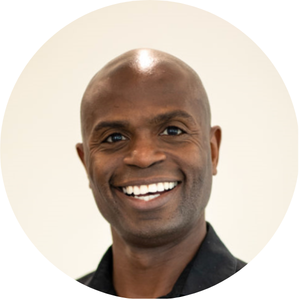 Tremon Kizer is UCF Associate Director of Bands and Director of Athletic Bands, where he oversees all aspects of the athletic band program, including the direction of the UCF Marching Knights. He also conducts the UCF Symphonic Band and teaches courses in music education and conducting. Additionally, He serves as an Associate Director of the UCF School of Performing Arts. Dr. Kizer is an active guest conductor, adjudicator, and leadership consultant throughout the United States and abroad. As a guest conductor, he has conducted district and regional honor bands and is a champion for improving leadership skills for high school and college students. He has been on staff for numerous music camps, drum major clinics, and collegiate and high school concert and marching band camps. He has presented at the Midwest International Band & Orchestra Clinics, Southern Division Conferences of the College Band Directors National Association (CBDNA), and the CBDNA Athletic Bands Symposium, and he has conducted the Kansas All-State Band as well as internationally in South Africa. Dr. Kizer makes many clinic and adjudication appearances annually across the United States. He earned his bachelors degree in music education from Kansas State University, a masters degree in wind conducting from the University of Central Missouri, and DMA in wind conducting from the University of South Carolina. He served previously on the music faculty at the University of Dayton, taught courses at the University of Central Missouri, served as Director of Bands at Coffeyville (KS) College, and taught 5-12 instrumental music in Goodland, Kansas.
Profile: George Weremchuk
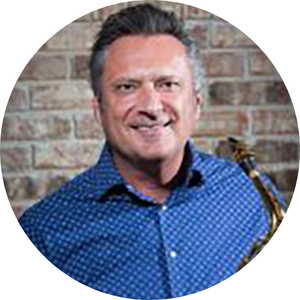 George Weremchuk is Professor of Saxophone in UCF’s School of Performing Arts. Dr. Weremchuk has performed and recorded with such diverse groups as the New World Symphony, under the direction of Michael Tilson Thomas, and the Sam Rivers Rivbea Orchestra. He is featured on the New World Symphony’s recording entitled New World Jazz (RCA Red Seal), and has performed with Sam Rivers at the Chicago Jazz Festival, Matosinhos Jazz Festival in Portugal, and at Lincoln Center in New York. He has appeared as a soloist with the Florida West Coast Symphony, Brevard Symphony Orchestra, the Florida Space Coast Symphony, and with the University of Miami Wind Ensemble. Dr. Weremchuk performs regularly with the Orlando Philharmonic Orchestra, The Florida Orchestra, and he has performed with the London Symphony Orchestra, under the direction of Marin Alsop, during their residency in Daytona Beach. He is featured with the University of Miami Wind Ensemble on the world premiere recording of Urban Requiem by Michael Colgrass. Recent recordings include Trilogy with Sam Rivers and the Rivbea Orchestra (Mosaic Records) and You Just Made My Day with the Orlando Jazz Orchestra. He holds the Doctor of Music degree from the University of Miami, is a magna cum laude graduate of the University of Massachusetts and Indiana University, where he received the Master of Music degree. His teachers include Eugene Rousseau, Lynn Klock, Gary Keller, and Daniel Deffayet.

Thank You to Our Supporters




Thank You to Our Festival Partners
- Dr. Phillips Center for the Performing Arts
- National Young Composers Challenge
- Orlando Family Stage
- Orlando Shakes
- Orlando Philharmonic Orchestra
- UCF Alumni
- UCF College of Health Professions and Sciences
- UCF School of Modeling, Simulation and Training