Active Students (as of Fall 2025)*
Undergrad majors: 40
Undergrad minors: 264
Undergrad certificates: 162
Graduate students: 40
Graduate certificates: 16
2025-26 Student Credit Hours: 31,201
*All active students with declared CAH programs are included in the enrollment counts.
In a world where communication and cultural understanding are more important than ever, the Department of Modern Languages and Literatures continues to equip students with the skills to thrive across borders, industries, and communities. During the 2025–26 academic year, through a combination of forward-looking curriculum development, distinguished faculty achievement, ongoing exploration of innovative teaching practices, and engagement with the local and international community, MLL continued to position language education as essential to preparing informed, globally adept graduates.
This year came with a number of changes to the MLL team. We welcomed two new members to our faculty, Assistant Professor of Spanish Jesse Rothbard and Lecturer in French Sanaa Mahroug, and were joined by two new members of our administrative staff, Administrative Assistant Brianna Holliday and Administrative Coordinator Crystal May. We also said goodbye and wished happy retirement to Pegasus Professor of Spanish Humberto López Cruz and to our longtime Administrative Coordinator, Susan Jefferson. In May, we paused to celebrate the lives of two of MLL’s most cherished colleagues — Professor Emeritus Paolo Giordano and Senior Instructor Maria Grazia Spina — both of whom we sadly lost in Fall 2025.
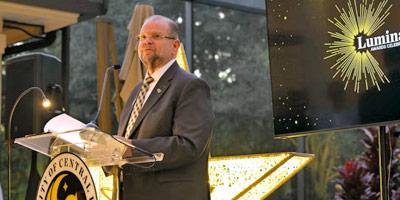
 MLL faculty remained at the forefront of teaching, research, and creative activity across over a dozen languages and areas of specialty that span the globe. They produced books, articles, and translations, while sharing their expertise at many conferences and invited talks at national and international venues. Once again, our faculty were well represented among college and university-level awardees, with recognition including three Teaching Incentive Program awards, three Research Incentive Awards, two CAH Excellence in Undergraduate Teaching awards, a highly coveted Luminary award, and five faculty members featured in UCF’s 2026 Author Celebration. Our faculty also actively mentored students in their research, overseeing more than a dozen graduate and undergraduate theses and other independent research projects, and including their students as co-presenters at conferences. An undergraduate student mentored by Professor Alla Kourova went on to be named a Post-Secondary Russian Scholar Laureate by the American Council of Teachers of Russian, evidence that the reach of our student research extends well beyond the walls of MLL.
Our faculty’s work garnered support in the form of external funding that augmented our research and programming capacity. New grants included awards from the Albertine Foundation and the French Embassy to support cultural programming and student engagement, as well as international funding from the Italian Ministry of Foreign Affairs to sustain increased Italian language instruction. Faculty also continued progress on major, multi-year federally funded projects, including a $2.5 million U.S. Department of Education grant supporting English-learner teacher preparation and a $295,000 research grant focused on gaming and virtual reality in language learning.
As always, MLL’s primary focus was students, and ways to enhance their classroom experience and extracurricular opportunities through innovation. As technology reshapes the educational landscape, MLL faculty are leading the way in exploring new tools for language learning and cultural immersion. For example, increasingly available virtual exchange programs connected UCF students with peers in countries such as Senegal, France, Russia, Guatemala, and Japan, many of which were integrated into course curricula through Collaborative Online International Learning initiatives. One standout interdisciplinary project, developed in collaboration with Computer Science students, is Spanish Pronunciation Pro — an adaptive, AI-powered tool designed to help students refine their speaking skills. Once completed, this resource will be freely available to students. Faculty also expanded the use of adaptive learning platforms and participated in professional development focused on effective uses of AI in the classroom.
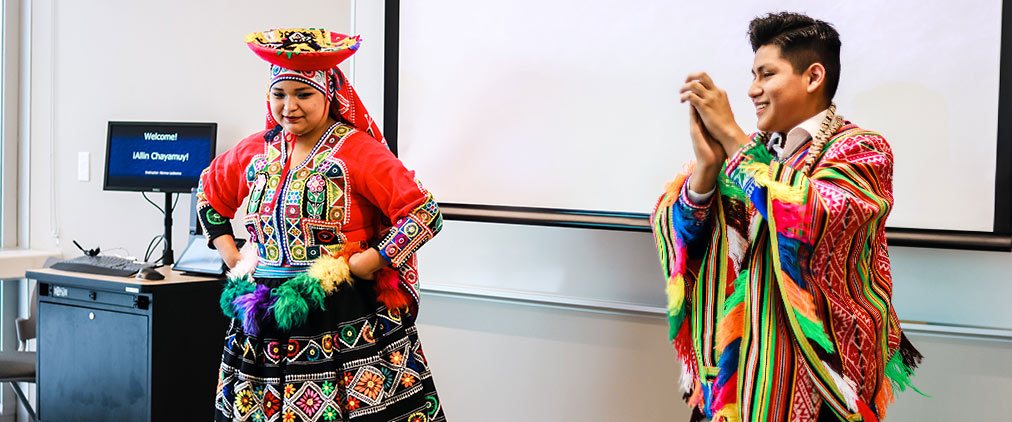
Beyond the classroom, MLL students engaged in a range of immersive linguistic and cultural experiences at home and abroad. Faculty-led study abroad programs took students to Florence, Berlin, Paris, and Barcelona, and for the first time, Japan. We were pleased to be able to make these life-changing opportunities accessible to more students with scholarship support totaling $9,500. At the same time, on-campus activities further fostered students’ global perspective, with conversation and culture hours in languages including Portuguese, French, Russian, and Italian, and cultural programming such as calligraphy workshops, holiday celebrations, and our annual “Language Speed Dating” event that invites participants to sample language learning in a fun and festive setting.
MLL has undertaken practical initiatives to support student success. This year marked a major step forward with the launch of a fully integrated Spanish Placement Test, the culmination of a multi-year effort that involved many different units across campus. The placement process reflects our commitment to supporting students’ achievement from their very first course, allowing them to maximize their learning experience and make efficient and timely progress through their programs. Further expanding the potential impact of language study, six introductory language courses have been added to UCF’s General Education Program, reinforcing the value of language learning across disciplines. MLL has also made it a priority to explore and adopt low- or no-cost materials for our courses. Numerous faculty members were recognized this year by UCF’s Affordable Instructional Materials initiative for reducing student costs to $20 or less per credit hour, using Open Educational Resources, innovative implementation of educational technologies, and materials developed in-house. A noteworthy achievement in this area was the state-level Open Florida Zero Textbook Cost Champion Award earned by a team of faculty in our Spanish section for their sustained work to lower textbook costs for students.
 MLL was also active in engagement with the broader community through public-facing events held on campus and beyond, many of which also highlighted international collaborations. Events included a visit and discussion with two German authors as part of the Goethe-Institut’s special US program, Among Friends: On the Road, and a bilingual reading of a faculty member’s novel. Our Euliano Chair in Italian Studies lecture series welcomed documentary film-maker Peter Miller for a screening and discussion of Marcella, on the life of the groundbreaking Italian chef, Marcella Hazan. We were also delighted to co-sponsor UCF’s Fifth Annual Latin American Film Festival, launch a newly created Asian Movie Festival, and host Spanish Cinema Now + 2025, a movie series co-presented by MLL and the Cultural Office of the Embassy of Spain. MLL was also proud to be part of UCF Celebrates the Arts, offering a concert by a Spanish musician in partnership with the Embassy of Spain in Miami as well as the Korean Arirang Festival in collaboration with the Orlando Korean Culture Center and the UCF Korean Culture Club. The Japanese section was active in outreach activities including organizing student volunteers to support the Orlando Japan Festival and hosting the Mid-Florida Japanese Speech & Skit Contest alongside local high schools and universities, the Association of Florida Teachers of Japanese, and the Consulate General of Japan in Miami. Our faculty also invited members of the central Florida language teaching community to campus, hosting day-long meetings and workshops for the Florida chapter of the American Association of Teachers of French and the Florida Foreign Language Association. Finally, the department’s Futures in Languages podcast continues to connect students and alumni, showcasing the real-world impact of language study. With seventy-nine episodes and thousands of downloads, and listeners tuning in from ninety-four different countries, the podcast highlights alumni success stories, our international reach, and the real-world value of multilingual and cross-cultural expertise.
As this department continues to evolve, we remain focused on our core mission: fostering communication, cultural understanding, and the ability to navigate an increasingly complex global landscape. This mission will be shepherded by a new department chair starting in August 2026, when Chair Geri Smith hands over the reins to Yamile Silva, who will be joining UCF from the University of Scranton. Said Smith: “It has been my honor to serve as chair for the past decade, and I look forward to working with Dr. Silva and the whole MLL team as we continue to advance the goals of the college and the university and prepare our students for productive futures in a globalized world.”