University Writing Center
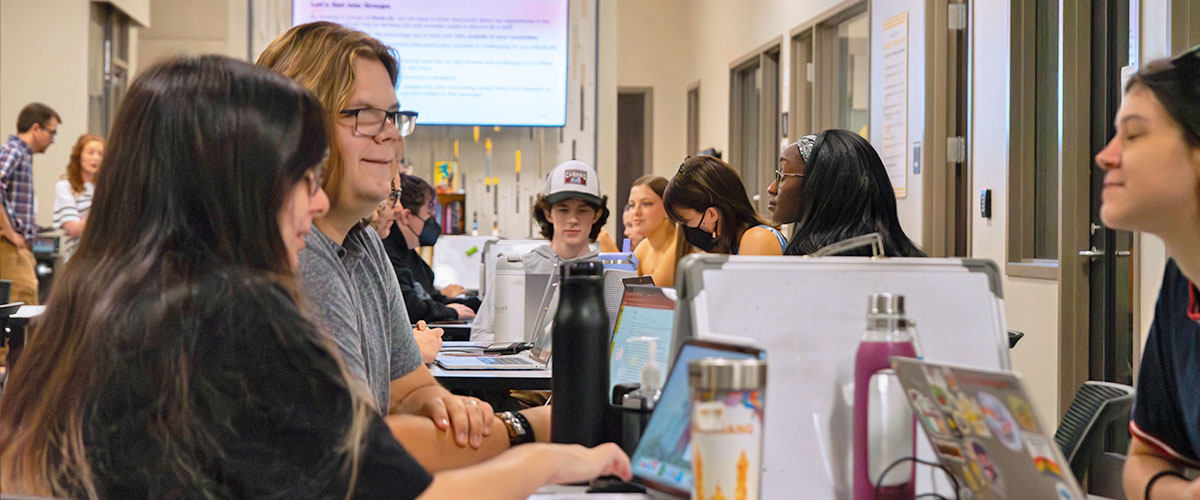
Center website Amy Cicchino, directorThis year, the University Writing Center (UWC) continued its work as a central partner in UCF’s commitment to student success and wellbeing, supporting writers across contexts through high-volume, high-quality in-person and online consultations. Alongside this sustained demand in peer consultations, the center expanded its reach through scalable programs such as writing groups, workshops, and interdisciplinary graduate initiatives. In total, the UWC increased its contact by 22%, engaging over 12,500 members of the UCF community, including a slight increase in consultations. In addition to the details below, you can learn more about our work this year by viewing the 2025–26 UWC program brief.
A highlight of this year’s growth was the launch of ENC 1102: Composition II TEACH ME online writing groups, part of a multi-institutional U.S. Department of Education National Institute for Student Success grant, which incorporates non-generative AI technology via a chatbot that nudges writers in hopes of better supporting students’ academic success and students’ sense of belonging. Online writing groups, led by Matthew Bryan and five UWC graduate tutors, served 1,069 students in composition classes. Beyond reinforcing course content, the weekly 50-minute sessions created space for students to build confidence as writers, connect with peers, and navigate their transition into the UCF community.
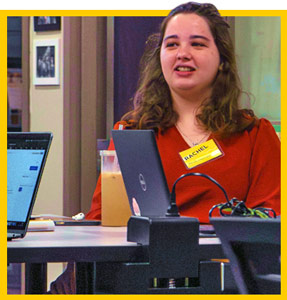 Partnerships across campus further amplified the center’s impact through co-hosted writing workshops and events. The UWC collaborated with the Writing Across the Curriculum program and the College of Graduate Studies to cohost “Writing Across Borders: Academic Support for International Graduate Students” and “Lunch & Learn: AI in Research and Academic Writing.” Additional workshops included research poster design for the Knights Write Showcase, “Turning Your Poster into a Publication” in partnership with the Office of Undergraduate Research, and thesis development sessions for the Burnett Honors College. The center also worked directly with student organizations, including Delta Pi Sigma and the Master of Social Work Student Association, extending writing support into co-curricular spaces where students lead and collaborate. The UWC is excited to continue to expand its partnerships and encourages departments, offices, and organizations interested in cohosting writing events to reach out to us!
Our tutors also achieved accomplishments as leaders and writers, contributing to an episode of Create.Share.Engage on portfolios and writing centers, and presenting at three external conferences on writing center-related topics (the Online Writing Centers Association, the Southeastern Writing Center Association, and the Global Society of Online Literacy Educators) and five regional or UCF-specific events.
Taken together, this work points to the University Writing Center’s place within the larger network of support that helps students learn and thrive as writers and communicators at UCF.
Spending time in the UWC is rarely just about completing a single writing assignment. It is something writers return to as part of how they work through ideas and test their writing. The writers we see most often are curious, thoughtful, and willing to keep developing their writing over time. Our tutors model these qualities in and beyond the center, often completing theses, presenting at conferences, publishing research, and pushing themselves to revise and refine their writing for their courses. For those who have not yet visited, we welcome you to take a look at what we offer. You might attend a workshop, explore our online resources, or schedule a consultation. The UWC is a place to ask questions, think alongside others, and take part in the ongoing work of writing at UCF.
Writing Across the Curriculum
Center website Laurie A. Pinkert, directorUCF’s Writing Across the Curriculum (WAC) program offers a range of programs that help faculty and students hone the strategies that best suit specific fields, disciplines, and professions. We focus on meaningful engagement with writers and teachers of writing at varied scales that can support both long-term writing development and just-in-time writing needs.
Stakeholders across UCF remain interested in understanding the ways that AI is impacting our students’ experiences with writing. WAC plays a key role in fostering conversation and in supporting research that can aid our knowledge. Through our WAC Wednesday professional development series, we continue to emphasize the importance of thoughtful engagement with writing pedagogy as related to artificial intelligence and critical AI literacy. The series featured workshops like “Preparing Writers to Disclose AI Use,” “Exploring the Cognitive Impacts of AI-Use on Writers,” and “Considering AI-Refusal in Writing Contexts.” These sessions highlight the role that interdisciplinary writing research can play in helping faculty and staff to innovate their teaching strategies and is provided in a fully online format and open to all UCF-affiliated attendees.
This year, the program also mentored 8 WAC AI Fellows who were nominated as leaders among their peers. The group met bi-weekly in the WAC space to discuss, study, and apply emerging best practices as the landscapes of higher education shift amid the availability of AI-powered text generators and other AI technologies. This cohort representing the UCF’s Colleges of Sciences, Engineering and Computer Sciences, Community Innovation and Education, and Arts and Humanities presented their work at the annual UCF FCTL Summer Institute and many of them will continue to transform their teaching and their academic programs with the work they’ve done as fellows.
 WAC also continues to lead UCF’s National Day on Writing celebration. The National Day on Writing, celebrated annually in October, underscores the roles that writing plays in our everyday lives. Through our “Write Here, Write Now, Write On” station, Lissa Pompos Mansfield engaged over 100 students in sharing their experiences with and reasons for writing. Through our “Writing with Comics” workshop, Nathan Holic engaged writers across disciplines in exploring and creating collaborative visual narratives. WAC also collaborated with the University Writing Center and College of Graduate Studies to offer workshops and retreats for graduate writers. Shared events like these not only demonstrate that everyone can benefit from writing engagement but also showcase our collaborative passion for students and for creating spaces beyond the curriculum where we can learn, discuss, and engage with writing.
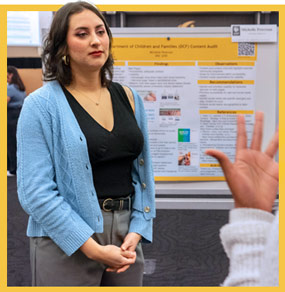
This year, WAC contributed more centrally to the Department of Writing and Rhetoric’s annual Knights Write Showcase, with Laurie Pinkert taking on a leadership role at the event. It was rewarding to collaborate with colleagues across the Department of Writing and Rhetoric and the university at large to feature poster and panel presentations by writers from the first-year composition courses through undergraduate writing classes and into graduate programs alongside a nationally recognized keynote speaker. And our UCF community showed up in droves to learn from the presenters and support their work — we had a banner year with well over 800 attendees throughout the day. Knights Write highlights just how transformative writing and the study of writing can be and reminds us of the role we all play in creating a culture of writing excellence at UCF.