From popular streaming documentaries to online conspiracy movements, conversations about cults and new religious groups are increasingly part of popular culture. But who gets to decide whether a group is a cult, a religion or something in between?
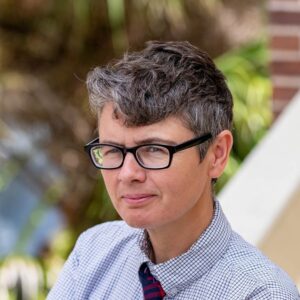
For Ann Gleig, professor of religion and cultural studies at the University of Central Florida, answering that question requires looking beyond popular assumptions and examining the people, beliefs and experiences behind these groups.
Next spring, Gleig will teach REL 3076: Cults, Minority Religions and New Religious Movements, a course designed to help students critically examine how religious groups are understood, portrayed and classified.
In the course, students will explore why religious studies scholars often consider the term “cult” problematic and instead use terms such as “new religious movement” (NRM) and “minority religion.”
“We will examine the history of the ‘Cult Wars,’ a battle between concerned parents, former members, and cultic studies experts on one side and NRM members and religious studies scholars on the other,” Gleig said.
Students will consider the strengths and limitations of these opposing perspectives while exploring issues such as religious freedom, charismatic authority and abuse in religious contexts.
The course will also examine several 20th-century new religious movements, including UFO religions, the Nation of Islam, Transcendental Meditation and Scientology. Students will also explore the emergence of “conspirituality,” an online-driven combination of conspiracy theories, spirituality and wellness culture.
Through these examples, students will consider questions about who determines whether a group is recognized as a legitimate religion, how science and technology influence religious movements and how individuals and communities create meaning in their lives.
Looking beyond popular portrayals
With the popularity of cult documentaries on streaming platforms such as Netflix and Hulu, students may already recognize some of the groups and stories discussed in the course. However, Gleig said these productions vary in how responsibly they portray their subjects.
Some documentaries give survivors an opportunity to share experiences that have been overlooked or silenced. The 2024 documentary Children of the Cult, for example,
examines the abuse and exploitation of children within the Bhagwan Shree Rajneesh, or Osho, community.
Similarly, the 2026 documentary Trust Me: The False Prophet examines a breakaway Fundamentalist Church of Jesus Christ of Latter-Day Saints group led by Samuel Bateman, whose criminal case involved child sexual abuse and human trafficking.
Other productions have faced criticism for sensationalizing trauma. The Deep End (2022), which follows New Age teacher Teal Swan, has been criticized for its dramatic editing and portrayal of trauma.
Gleig wants students to recognize these differences and consider how media narratives shape public understanding of religious groups.
For their final project, students will analyze a cult documentary and evaluate how it portrays the group and its members. The assignment also draws on religious studies scholar Catherine Wessinger’s work examining how stereotypical media coverage contributed to the escalation of the 1993 standoff between the Branch Davidians and federal agents in Waco, Texas.
Understanding the experiences behind the label
For Gleig, the study of new religious movements is especially relevant as awareness grows around abuse in both religious and secular communities.
The course examines how psychological processes, group dynamics and organizational structures can contribute to abuse, while also considering the strengths and limitations of Cultic Studies, a field that examines potentially harmful group dynamics.
Gleig’s interest in these questions also informs her recently published book, *Talking About Cults: Abuse and the Study of New Religions*. In the book, she argues that scholars of new religious movements have often neglected the perspectives of survivors of abuse.
She believes the field needs to take survivors’ experiences more seriously and engage with the insights of Cultic Studies rather than automatically dismissing them.
The course also addresses discrimination against religious minorities, particularly communities that are labeled as cults and may be denied the same religious freedoms and protections afforded to more dominant religious groups.
Ultimately, Gleig hopes students leave the course better equipped to engage in thoughtful conversations about religious groups and the assumptions surrounding them.
A former UCF student who took the course in spring 2025 shared how the lessons continued to influence their understanding of emerging ideological groups.
“I’ve had several opportunities to use what I’ve learned in the cult/NRM class simply while engaging people online,” the graduate wrote. “Today’s online climate provides many opportunities to consider the positives and negatives of new ideological groups forming in real time.”
For Gleig, that ability to question simplified views of religious groups, whether they are being romanticized or demonized, is one of the most important lessons students can take away.