African American World War I Soldiers in Orlando: Where did they live?

Posted on

Entry Composed by Tyler Campbell
Find the original post here.


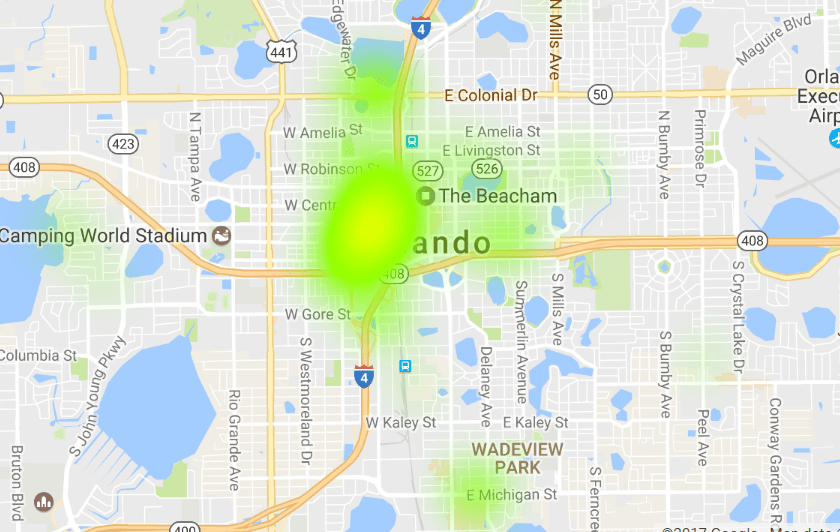
As a part of the World War I in Florida project we have been looked at the service cards for all soldiers in the state to see what those cards can tell us about the larger social, racial, political, economic and cultural aspects of Florida in this period. The question was presented to a few of us in to group asking where the African American soldiers that served lived in Orlando. (Orlando was our pilot city so we have quite a bit of information on Orlando) This was a questions we had not thought of before and decided to dig a little deeper. On each service card it lists the soldier’s residence. In many cases, this included their street address. Placing these addresses spatially was as simple as plugging the addresses into a google sheets file and running it through google fusion tables. See below.

When the information was collected and applied to the fusion table, we found a clear concentration of their residence within the Paramore area. Some screenshots of those maps are presented below:
The exact residence of these soldiers are pinpointed in this second map that shows the clustering in specific buildings and specific sections of the Paramore community.
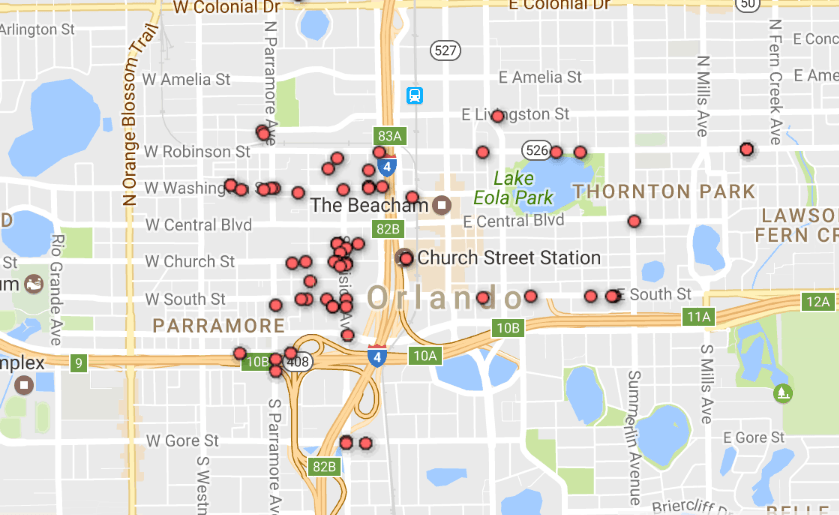
The results of this pilot study show the racial divide that existed in Orlando during the World War I era. The Paramore community was active in the effort to get men to enlist from their community. See our Orlando in World War I page for more information on the Orlando community as a whole. These maps provoke a larger discussion of African American involvement in World War I and the racial conflicts of this period. In the future we hope to be able to compare this to the White soldiers addresses for the city of Orlando to create a comparative study of where people were living in the city during this period.

In the end, this was just another great area of study that can come from utilizing this rich primary source material. If you have any questions about the Florida in World War I site or the database, check out our website HERE. or contact me via email HERE.

Orlando during World War I: A General Overview

Posted on

Entry Composed by Tyler Campbell and Kayla Campana

717fa5_38d3e1fa6d0b49dea2520b32f715c9ea-mv1
This map represents the birthplaces of all soldiers that served in World War I from Orlando.

The second decade of the twentieth century saw Orlando develop from a small community to a thriving city. The city began to grow, its population rising from just under four thousand in 1910 to roughly 8,000 ten years later. During this decade, Orlando saw a rise of the automobile, the founding of the Lake Eola fountain and an expansion of the citrus industry bringing many people to “The City Beautiful”. City streets were being paved, streetlights erected, and buildings popping up all over Church Street, Orange Avenue and others.

When President Woodrow Wilson declared war on Germany on April 6, 1917, Orlando entered into another phase of its early development. Registration for the draft began on June 5, 1917 and in total, 780 men registered for the draft. Both African American and white men served from Orlando, totaling around six hundred men.

On the home front, the State Bank and other banks sold out of Liberty Bonds immediately after obtaining releasing them. Many women gathered to learn canning techniques to preserve food, the Red Cross put forth large campaigns to raise money and local theaters closed on certain weekdays to preserve fuel.

The influenza epidemic hit Orlando in October of 1918, crippling the city for a period of ten days. The city fared well in the epidemic with the death toll of only ten people.

The African American community of Orlando actively participated in the war effort as well. They held parades in honor of the war effort. The Black Pythians, an African American baseball team, met with the community in Orlando in May of 1918 and pledged to fight for their country and die for the American flag, promoting their active role in the war effort. In total over one hundred and fifty African American men served from the city of Orlando and many more from the surrounding community. Of the one hundred and fifty plus soldiers that served, a little under half served overseas. Several historians studying the time period have discussed the racial divide between African American Soldiers and White soldiers servicing in Europe and the repercussions of that service. Historian Chad Williams argues in his work Torchbearers of Democracy that African American soldiers’ experiences overseas relate to their post-service experiences and feelings towards government and American society. This can be seen in the Orlando area through a letter written by a gentleman name E.F. Bellows, which states that African Americans should not have been required for service as their labor was needed on the home front.

Overall, Orlando was a booming city that was affected by the war in ways similar to other cities of its size during the First World War period. There were shortages of resources, but the city benefited by the need for goods, specifically goods needed by the armed forces, such as citrus and cattle. The beginnings of race relation issues that would become a strong challenge in the post-war period, is seen through this period on the home front, but most importantly in those that served.