Author: Rhiannon O’Neil

  • Growing Money

    Growing Money

    Brandon Plumlee // AMH 4110.0M01 – Colonial America, 1607-1763

    Nowadays, we say that money doesn’t grow on trees. In colonial Virginia it didn’t grow on trees either, but it did grow on gold-green shrubs. As can be seen in the Glassford and Henderson accounts, clients to the Colchester store (1760-1761) overwhelmingly used tobacco to purchase
    their goods and services, far more so than cash. In fact, it has been estimated that by the time of the American Revolution, a full two-thirds of the population of the Tidewater and Piedmont regions of Virginia grew tobacco, even after a move to grow more wheat.[1] The people of colonial Virginia, both in the Tidewater and Piedmont regions, were literally growing their own money. So pervasive was the use of tobacco as currency that one observer in 1740 stated that “they have not the least occasion for paper money.”[2]

    A depiction of the enslaved preparing a hogshead of tobacco. From The New York Public Library, UUID: fb320ec0-c600-012f-ed2b-58d385a7bc34.

    Today we pay for goods and services with cash, but don’t really pay any attention to how exactly that cash is minted or printed. So, how did they grow their money? First things first, it was a very labor intensive process requiring many workers, usually enslaved, at very specific times throughout the growing season. The first step was to germinate the plants in small seedbeds until the plants were big and strong enough to transplant into the fields. Before the tobacco plants could be planted, field hands had to build earthen mounds about a foot or two high and approximately three to four feet apart. This task was the most time consuming and labor intensive since the mounds often required being rebuilt several times throughout the season. After ensuring that the seedlings wouldn’t be choked by weeds, the growing plants would have to be “primed,” meaning the lowest hanging leaves were removed to improve overall tobacco quality. Tobacco had to be constantly monitored for pests and disease, as it is highly susceptible; field hands went out daily to check for tobacco worms.[3]

    Assuming the tobacco survived all of these growing challenges, the harvesting season usually occurred in late summer during the dog-days of August and September. The problem was that each individual plant would be ready at a different time, meaning hands had to go out to the fields many times and gather up all the plants ready for harvest. However, if they waited too long, an early frost might kill whatever plants were left in the field. After the plant was cut, it was taken to a barn or similar place and  hung up to be “cured.” In the very early days, the farmers would simply leave the tobacco on the ground and cover it with hay or straw, but they quickly learned that hanging the leaves was far more effective. The process of curing took about a month to complete, assuming that it was done properly and mold didn’t damage any of the tobacco. It was then “prized,” or put into large casks called hogsheads. A hogshead’s weight varied slightly but was officially 1000 pounds of tobacco.[4] It is at this point that the tobacco would have been inspected and a tobacco note issued. This note would have been given to Henderson, or one of his employees, for store credit.

    Benoni Halley’s credit account, which he used to pay his debts with four hogsheads of tobacco (folio 023C).

    These hogsheads of tobacco were what were used as currency in just about any store in the colonial Chesapeake region. The credit pages of Glassford and Henderson’s ledgers abound with information on the various weights of the hogsheads. For example, a customer of the Colchester store, Benoni Halley, paid the store a total of 4 hogsheads for purchases in the store – that’s roughly 2 tons of tobacco![5] Henderson gave him a little over £22 sterling worth of credit.[6] To put this into perspective, the annual income of American colonists was £15.6, which means that Mr. Halley would have been able to live quite comfortably off of his tobacco for that year.[7] With his credit, Mr. Halley was able to buy goods ranging from cloth to rum to gunpowder.[8] It is safe to say that people throughout the colonial Chesapeake were growing their own money.

    Benoni Halley used his four hogsheads of tobacco to purchase various goods, such as different fabrics, alcohol, and gunpowder, as well as items such as women’s shoes, combs, and bridles (folio 023D).


    [1] Drew A. Swanson, A Golden Weed: Tobacco and Environment in the Piedmont South (New Haven: Yale University Press, 2014), 20.

    [2] William Keith, “A Discourse on the Medium of Commerce,” in Collection of Papers and Other Tracts, Written Ocasionally on Various Subjects: To Which Is Prefixed,
    by Way of Preface, an Essay on the Nature of a Publick Spirit
    (London: Printed by and for J. Mechell, 1740), 209,
    http://galenet.galegroup.com.ezproxy.net.ucf.edu/servlet/Sabin?dd=0&locID=orla57816&d1-
    SABCP01767900&srchtp=b&c=19&df=f&d2=1&docNum=CY3802082052&b0=tobacco+planting&h2=1&vrsn=1.0&b
    1=0X&db=Title+Page&d6=1&ste=10&stp=DateAscend&d4=0.33&n=10&d5=d6.

    [3] “Tobacco: Colonial Cultivation Methods,” National Park Service Historic Jamestown, last modified unknown, accessed March 20, 2017, https://www.nps.gov/jame/learn/historyculture/tobacco-colonial-cultivation-methods.htm.

    [4] National Park Service, “Tobacco: Colonial Cultivation Methods.”

    [5] Alexander Henderson, et. al. Ledger 1760-1761, Colchester, Virginia folio 23 Credit, from the John Glassford and Company Records, Manuscript Division, Library of Congress, Washington D.C., Microfilm Reel 58 (owned by the Mount Vernon Ladies’ Association).

    [6] Henderson, et. al. Ledger 1760-1761 folio 23 Credit.

    [7] Peter H. Lindert and Jeffery G. Williamson, “American Colonial Incomes, 1650-1774,” Economic History Review 69, no. 1 (2014): 57.

    [8] Henderson, et. al. Ledger 1760-1761 folio 23 Debit.
  • Tobacco on the Occoquan: A Smooth Sailing Economy

    Tobacco on the Occoquan: A Smooth Sailing Economy

    Mercy Alexander // AMH4110.0M01 – Colonial America, 1607-1763

    Tobacco was the foundation of the Chesapeake’s economic prosperity throughout the eighteenth century. By the late 1780s, Virginia and Maryland were exporting some 80,000 hogsheads worth of tobacco yearly to Great Britain, the primary port of destination. In London, Chesapeake planters exchanged their produce for manufactured goods or consigned it for papered bills.[1]

    Tobacco was so valuable at that time that it was often used in place of currency. In Glassford and Henderson’s Colchester store ledger for 1760-1761, tobacco was both a commodity to be bought and a form of payment for purchasing material goods available at the store.

    Tobacco used as payment for the purchase of goods at the Glassford and Henderson Store, August 1761. Folio 59C

    However, despite its importance to the economy of Virginia, the plant proved to lend itself to an unstable market. The value of tobacco often fluctuated depending on the harvest yield, popular demand, and other unforeseen and uncontrollable variables. In 1727, oversaturation of the market and the decline in prices sunk the worth of tobacco so low that planters found it difficult to make a living from its production.[2] Virginia Governor William Gooch, hoping to relieve the colony’s economic woes, set into motion a series of laws which would come to be known as the Tobacco Inspection Act of 1730. The laws were designed to reduce the number of inferior grades of tobacco being sold to Britain, thereby preventing chronic overproduction and allowing for an increase in market price. The act called for the construction of several warehouses throughout the colony where planters would be required to send their tobacco for inspection prior to its exportation to Britain.[3]

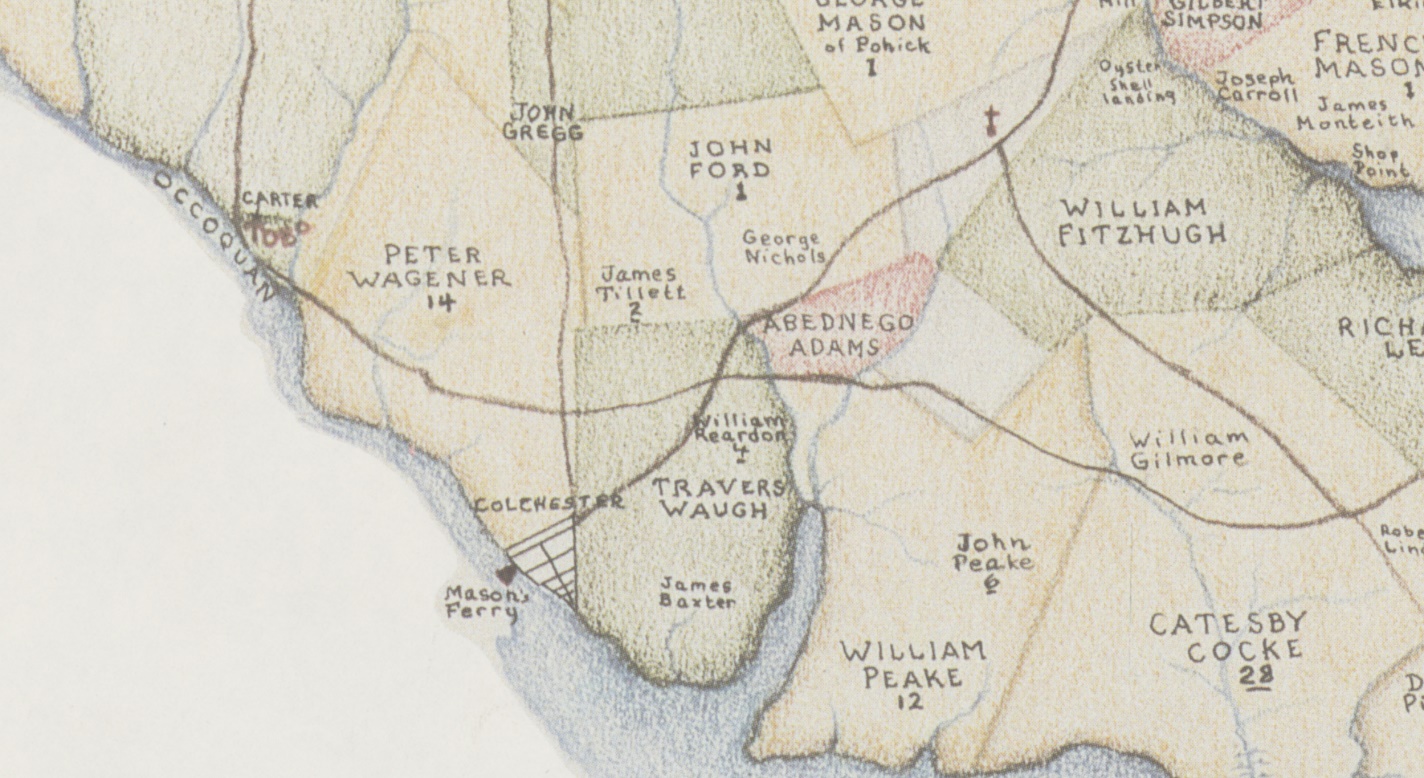
    At Glassford and Henderson’s store in Colchester, any written record of the transaction of tobacco was generally accompanied by the name of the location of a warehouse. From the 1760-1761 store ledger, it appears much of the tobacco bought and sold within the store stemmed from a warehouse located along the Occoquan River.[4] While little other information regarding the warehouse is given within the ledger itself, it can be inferred that Glassford and Henderson’s customers likely exchanged most of their tobacco from here due to the warehouse’s relative proximity to the store.

    Map Showing the Distance Between the town of Colchester and the Occoquan Warehouse in 1760.
    “An Interoperative Historical Map of Fairfax County Virginia in 1760” – © Beth Mitchell – Published by Office of
    Comprehensive Planning, County of Fairfax, 1987.

    The first mention of a warehouse being built on the Occoquan comes in 1734 when authorities established one on land previously used as the site of a copper mine owned by a man named Carter.[5] The construction of the warehouse along the river and the creation of Prince William County in 1731 (south of the Occoquan River) led local landowners north of the Occoquan River to petition the Virginia Assembly for the founding of a new town and county. In 1742, the County of Fairfax was officially created, named in honor of Thomas, Sixth Lord of Fairfax, and composing some 399 square miles.[6] Eleven years later in 1753, The General Council laid the foundation of what would become Colchester, Virginia, when they called for the surveying of land “lying and being on Occoquan river in the county of Fairfax…beginning on the upper side of the ferry landing, and extending down the said river…”[7] Located near the bustling north bank of the Occoquan River, Colchester became a prominent tobacco port town and the site for Glassford and Henderson’s store.

    Map showing the property owned by Benjamin Grayson where the new warehouse would be built.
    “An Interoperative Historical Map of Fairfax County Virginia in 1760” – © Beth Mitchell – Published by Office of
    Comprehensive Planning, County of Fairfax, 1987.

    In 1762, further legislation passed by the Virginia General Assembly had the Occoquan warehouse discontinued, citing the “ruinous” conditions of the building and its inconvenient location so far removed from the county’s main port of trade—Colchester. The new warehouse was to be established in the town Colchester on the property of a local resident, Benjamin Grayson, where it would remain until the end of the Revolutionary War.[8]

    The Occoquan River warehouse was just one of many such buildings erected throughout Virginia on the south side of the Potomac River and its tributaries. These public warehouses were overseen by inspectors, generally themselves planters, who were appointed yearly by the justices of Virginia’s county courts.[9] With two inspectors assigned to every one warehouse, these men were charged with assuring the quality of the tobacco being sold within the market.[10] Planters whose tobacco passed inspection were given crop notes or transfer notes which could be exchanged for goods.[11] These notes were used as a form of money and created a system of exchange based upon the value of tobacco.[12] Any tobacco that failed to pass the inspector’s judgment was burned.[13]

    Example of a transfer tobacco Note, 1777. Courtesy of the Colonial Williamsburg Foundation.

    At Glassford and Henderson’s Colchester, Virginia, one sees numerous credit accounts in which customers purchased their goods either through the use of notes or, more commonly, via transactions of hogsheads full of tobacco. The overwhelming majority of these containers had their origins listed as being from “on the Occoquan” likely in reference to the warehouses where the crop had been inspected.

    Tobacco was at the heart of the Virginia economy, and in that sense, it was the lifeblood of the Glassford and Henderson store. The passing of the Tobacco Inspection Act of 1730 led to an explosion in the productivity and value of the tobacco trade. The subsequent establishment of the Occoquan Warehouse and the tobacco ports culminated in the founding of both Fairfax County and the important trading town of Colchester, Virginia. Tobacco allowed Virginians a means of purchasing British manufactured goods, exchanging bills, notes, and hogsheads as an alternative form of currency which could be used to buy nails, linen, glass, china, rum, salt, and other popular or necessary commodities from local shops like the Colchester store.


    [1] “Description of Virginia Commerce,” The William and Mary Quarterly 4, no. 2 (Oct. 1906): 88.

    [2] Stacy L. Lorenz, “To Do Justice to His Majesty, the Merchant and the Planter: Governor William Gooch and the
    Virginia Tobacco Inspection Act of 1730,” The Virginia Magazine of History and Biography 108, no. 4 (2000): 345.

    [3] Lorenz, “To Do Justice to His Majesty, the Merchant and the Planter,” 363.

    [4] “Description of Virginia Commerce,” 90.

    [5] Earnie Porta, Images of America: Occoquan (Charleston, South Carolina: Arcadia Publishing, 2010), 8.

    [6] Office of the Sherriff, Fairfax County, Virginia: 1742-2001 (Nashville, Tennessee: Turner Publishing Company,
    2002), 16.

    [7] William Waller Hening, The Statutes at Large: Being a Collection of all Laws of Virginia, from the First Session of
    Legislature, in the Year 1619
    (Richmond, Virginia: Franklin Press – W.W Gray, Prints, 1819), Vol. 6, Ch. XXII, 396, accessed May 2, 2018, http://vagenweb.org/hening/vol06-18.htm.

    [8] Hening, The Statutes at Large, Vol. 7, Ch. II, 530-531, http://vagenweb.org/hening/vol07-24.htm.

    [9] Ibid., Vol. 4, Ch. III, 247-271, http://vagenweb.org/hening/vol04-13.htm.

    [10] “Description of Virginia Commerce,” 90.

    [11] John C. Rainbolt, “The Case of the Poor Planters in Virginia under the Law for Inspecting and Burning Tobacco,”
    The Virginia Magazine of History and Biography, 79, no. 3 (July 1971): 315.

    [12] Lorenz, “To Do Justice to His Majesty, the Merchant and the Planter,” 376.

    [13] Rainbolt, “The Case of the Poor Planters in Virginia,” 315.

  • Slave Consumption

    Slave Consumption

    Glenmore Bachman // AMH 4110.0M01 – Colonial America, 1607-1763

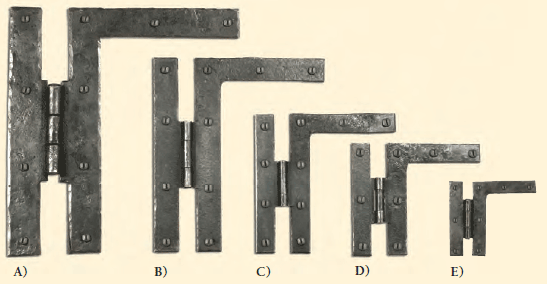
    At the Glassford and Henderson Colchester store (1760-1761) in Fairfax County, Virginia, evidence of slaves in the records was mostly through indirect mentions (“by your negro wench”) or by the purchase of items used mostly by those enslaved (osnaburg, a fabric used to make clothing). Negro Jack was an exception; he was a slave belonging to Mr. Linton’s estate and yet, had his own account in the store. Jack visited the store once in 1760 (November 9) and four times in 1761 (February 3, August 22, September 16, and December 4). Jack purchased mostly rum.[1] These purchases appear to be in line with the thinking of the time, as “colonial Americans, at least many of them, believed alcohol could cure the sick, strengthen the weak, enliven the aged, and generally make the world a better place.”[2] Was Jack suffering from an illness that drew him to rum? In addition to alcohol, another of Jack’s purchases was a bottle of Turlington’s Balsam of Life, a patent medicine created by Robert Turlington in 1744.[3] It was said to treat “kidney and bladder stones, cholic, and inward weakness,” in addition to many other ailments.[4] Beyond liquids, Jack also purchased building materials: nails and HL hinges that were used for doors or cabinets, depending on their size.[5]

    HL hinges in a variety of sizes from Historic Housefitters Co.

    The only other slave with her own account was Negro Sue who belonged to Mr. Benjamin Grayson. Sue visited the store three times: once to purchase a chest lock (November 22, 1760) and twice to pay her bill through selling to the store chickens, ducks, and cabbages (December 10, 1760 and December 1761).[6] Purchasing a chest lock indicates she owned something she chose to keep to herself, as well as a chest to keep those things. Being able to sell chickens, ducks, and cabbages to the store indicates she had the ability and space to tend a garden and maintain her own animals, separate from Mr. Grayson. Sue may not have been free, but she had the freedom to create something that enabled her to have a little spending money of her own.

    Negro Sue’s account at the Glassford and Henderson Colchester Store, 1760-1761 (folio 079D).
    Negro Sue used chickens and cabbages to pay off her account at the store (folio 079C).

    Both of these individuals’ accounts paint a more detailed picture of slavery in colonial America. Slaves with the relative autonomy to make and spend their own money show that the social atmosphere, at least in 1760-61 Virginia, might have been much more relaxed towards the enslaved. Not only did store manager, Alexander Henderson, cultivate relationships with Fairfax County’s white residents, but its enslaved population as well. What Negro Jack and Sue mean for understanding the complex social ties of the time is that relations with slaves from the colonial period up to the Civil War were likely more complicated and more diverse than might be believed.


    [1] Alexander Henderson, et. al. Ledger 1760-1761, Colchester, Virginia folio 114 Debit, from the John Glassford and Company Records, Manuscript Division, Library of Congress, Washington, D.C., Microfilm Reel 58 (owned by the Mount Vernon Ladies’ Association).

    [2] Ed Crews, “Rattle-Skull, Stonewall, Bogus, Blackstrap, Bombo, Mimbo, Whistle Belly, Syllabub, Sling, Toddy, and Flip: Drinking in Colonial America,” Trend & Tradition: The Magazine of Colonial Williamsburg (Holiday 2007), accessed March 15, 2017, http://www.history.org/foundation/journal/holiday07/drink.cfm.

    [3] Alexander Henderson, et. al. Ledger 1760-1761 folio 114 Debit;
    Kate Kelly, Old World and New: Early Medical Care, 1700-1840, The History of Medicine (New York: Infobase Publishing, 2010), 98.

    [4] George B. Griffenhagen and James Harvey Young, Old English Patent Medicines in America (Washington, D.C.: Smithsonian Institution, 2009), accessed March 29, 2018, http://www.gutenberg.org/files/30162/30162-h/30162-h.htm.

    [5] “H & HL Hinge Hardware,” Historic Housefitters Co., accessed March 16, 2017,
    https://www.historichousefitters.com/Hand%20Forged%20Iron/H%20HL%20HINGE%20HARDWARE.

    [6] Henderson, et. al. Ledger 1760-1761, folio 79 Debit/Credit.

  • Paper Currency – Not a Modern Idea

    Paper Currency – Not a Modern Idea

    Robyn Doran // AMH 4110.0M01 – Colonial America, 1607-1763

    When one thinks of the world of the eighteenth century, especially related to trade and commerce, one may think of small stores with raw goods, the sale of tobacco, or gold and silver coins being scooped up by a store merchant. What one might not consider when first recalling such a time is other types of currency that circulated throughout the British colonies during the 1700s. British sterling (pounds, shillings, and pence) were, of course, prominent in the colonies but they were not the only type of currency available. Spanish pistoles, silver dollars, commodity goods, and currency from individual colonies were also distributed throughout the British colonies during the seventeenth and eighteenth centuries.

    In the seventeenth and eighteenth centuries, Britain’s American colonies were thriving. However, that did not mean that there was a surplus of British sterling for them to use. When Britain founded the colonies in North America, the economic belief of mercantilism produced the idea that the colonies were there to create a surplus of goods for the mother country, not to drain the precious metal from the homeland.[1] While the British system of monetary units—such as pound, shilling, and pence—continued in the North American colonies, there was a deficit of British sterling in any of the colonies.[2] Because of this deficit, the colonies turned to other types of monetary units to use for payment.

    One type of money the colonies used was foreign coins. Some examples were Spanish pistoles and silver dollars. Most of these coins were imported from the Spanish colonies of Mexico and Peru.[3] Their worth compared to British sterling fluctuated quite a bit throughout the colonies and over time. However, just like several other types of colonial currency (such as the individual paper currency of each colony) they remained less valuable than British sterling.[4] Unfortunately, the age-old problem endured. There were not enough precious metals to go around. This was due to the philosophy of mercantilism—the belief that a country should accumulate and hold as much money (precious metal) as possible.[5] As a result of this philosophy, precious metals were not as readily available in colonies belonging to any country.[6]

    Another way colonists traded with each other was commodity goods. These were items such as tobacco or various animal skins that could be used within the colonies as currency.[7] Due to the unwieldy nature of commodity goods, the colonies devised another form of exchange: paper currency uniquely created by each colony.

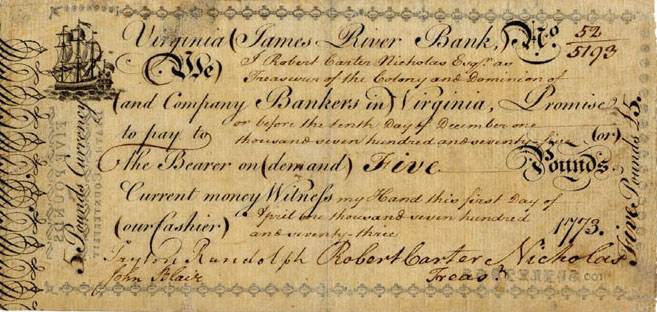
    The first paper currency printed in the colonies was in December 1690. The Massachusetts Bay Colony needed to pay for military expenses from King William’s War but did not have the money to do so. Finding this to be successful, Massachusetts created legislation that would be the start of paper currency in that colony.[8] Other colonies followed suit throughout the eighteenth century, with Virginia being one of the last and most reluctant to do so in 1755.[9] The primary reason Virginia started printing money is because of the economic demands of the French and Indian War.[10] This type of exchange became prominent in all economies of the British colonies, although this locally printed paper currency was still considered less valuable than British sterling. In 1748, Virginia’s local currency had an exchange rate with British sterling of 10 to 1.[11] Here, you can see an image of a Virginian 5 pound James River Bank currency note issued in 1773.[12]

    An example of Virginia currency from 1773. Image courtesy of the American Revolution Museum at Yorktown.

    As the paper currency of the colonies became more widespread, it started showing up in store ledgers. The Colchester store in Virginia belonging to John Glassford and managed by Alexander Henderson was one such store where paper currency became very prominent. Merchandise was sold to customers in both Virginia currency and British sterling; customers paid for their merchandise with both forms of money, as well as commodity goods like tobacco. Below, a folio from the Colchester ledger (1760-1761) shows a client paying for all his purchases from November 1760 to March 1761 in Virginia paper currency.[13] British sterling was not included in any of his transactions. While there are many purchases in the ledger that were made in British sterling, it is obvious from this image that local currency was important to trade.

    Customer paying with cash at the Colchester store November 1760-March 1761 (folio 043C).

    Printed currency was an important form of payment in the British colonies. It kept trade thriving without the need of coins and allowed colonies to pay their debts and stay afloat. Of course, the colonies’ ability to create new money whenever needed was dangerous as it led to inflation, especially in times of war.[14] However, the benefits outweighed the risks as the colonies found a way to overcome the deficit of precious metals in North America. Paper currency became vital to the survival of America until the British colonies became the United States.


    [1] Louis Jordan, “The Value of Money in Colonial America,” Colonial Currency, last edited February 1, 1998,
    accessed March 21, 2017, https://coins.nd.edu/ColCurrency/CurrencyIntros/IntroValue.html.

    [2] Jordan, “Value of Money in Colonial America.”

    [3] Ibid.

    [4] Ron Michener, “Money in the American Colonies,” EH.net Encyclopedia, last modified January 13, 2011, accessed March 23, 2017, https://eh.net/encyclopedia/money-in-the-american-colonies/.

    [5] Encyclopedia Britannica Online, “Mercantilism,” accessed April 18, 2017, https://www.britannica.com/topic/mercantilism.

    [6] Encyclopedia Britannica Online, “Mercantilism.”

    [7] Jordan, “Value of Money in Colonial America.”

    [8] Louis Jordan, “The First Printed Currency – 1690,” Colonial Currency, last edited February 1, 1998, accessed March 23, 2017, https://coins.nd.edu/ColCurrency/CurrencyIntros/IntroEarliest.html.

    [9] Thomas E. Davidson, “Colonial Paper Money,” American Revolution Museum at Yorktown Galleries, accessed April 20, 2017, https://www.historyisfun.org/exhibitions/collections-and-exhibitions/yorktown-victory-center-
    galleries/colonial-paper-money/.

    [10] Omohundro Institute of Early American History and Culture, “Paper Money in Colonial Virginia,” The William and Mary Quarterly 20, no. 4 (April 1912): 228.

    [11] Omohundro Institute, “Paper Money in Colonial Virginia,” 252.

    [12] Davidson, “Colonial Paper Money.”

    [13] Alexander Henderson, et. al. Ledger 1760-1761, Colchester, Virginia folio 43 Credit, from the John Glassford and Company Records, Manuscript Division, Library of Congress, Washington, D.C., Microfilm Reel 58 (owned by the Mount Vernon Ladies’ Association).

    [14] Roger W. Weiss, “The Issue of Paper Money in the American Colonies, 1720-1774,” Journal of Economic History 30, no. 4 (December 1970): 772.

  • The Fairfax Arms: The Place to Be

    The Fairfax Arms: The Place to Be

    Raymond Nye // AMH 4110-0M01 – Colonial America, 1607-1763

    The town of Colchester, established in 1753 by the Virginia Assembly, was laid out in a triangular shape and consisted of forty-one lots and a marketplace.[1] Colchester quickly became a thriving port town, shipping tobacco to Great Britain.[2] One of the earliest businesses to be established in the port town were ordinaries or taverns that provided a place where merchants, craftsmen, and planters could go and enjoy good fare, talk about life or business, all in a warm and friendly environment.

    Layout of Colchester in 1760 – “An Interoperative Historical Map of Fairfax County Virginia in 1760.” Published by Office of Comprehensive Planning, County of Fairfax, 1987.

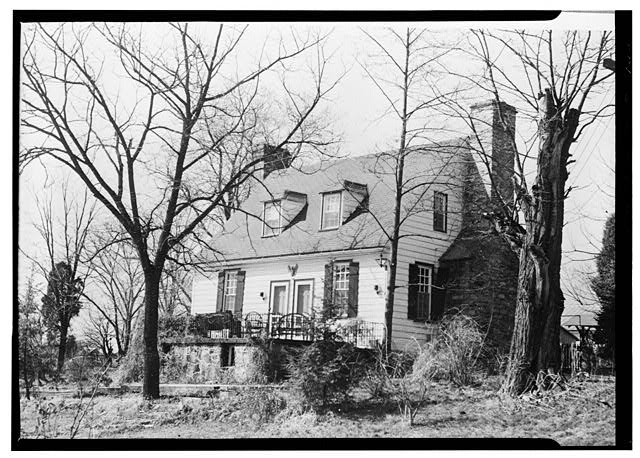
    Situated approximately three hundred meters from the Occoquan River along Essex Street (formerly known as the King’s Highway) stood the Colchester Inn, commonly known as the Fairfax Arms Tavern.[3] On May 17, 1756, lot 21 was one of six lots purchased by Benjamin Grayson that became the Fairfax Arms Tavern.[4] William Linton rented the property from Grayson and was granted a license to run an ordinary at the premises on July 21, 1761, which was renewed on February 15, 1763.[5] Linton was financially backed by Hugh West, a local attorney and prominent land owner, who had made his wealth through inheritance and tobacco.[6]

    Undated photograph of the Fairfax Arms Tavern. Library of Congress, Prints & Photographs Division, HABS, Reproduction number HABS VA,30-COLCH,1-3

    Evidence of the Colchester Inn can be found in the accounts of the Colchester store of the mercantile firm of John Glassford & Company, established in Colchester in 1758.[7] As can be seen in the account below, the tavern keeper William Linton made several purchases from Henderson’s Colchester store in 1761.[8] The purchase of the tea kettle suggests that, even in the American colonies, the English still enjoyed a nice cup of hot tea when they were away from home. The candlesticks infer that there was an inviting, cozy atmosphere for the patrons of the Fairfax Arms.

    Purchases made at the Colchester store in 1761, by the Tavern kept by William Linton (the Fairfax Arms Tavern), from Glassford and Henderson’s Colchester, Virginia store (folio 141D).

    Benjamin Grayson ran into some financial troubles in 1762 and was forced to mortgage the property, and eventually put the property up for sale in 1767. Hector Ross purchased it in 1772 but sold it again a year later to Alexander Henderson, the manager and owner of the Colchester store where William Linton made his purchases in 1761.[9]

    During the late 1770s, the Fairfax Arms started to provide another important service for the residents of Colchester. Alexander Henderson and William Thompson were the town’s postmasters, and it is believed that they operated their postal business from the premises. Henderson sold the property to Thompson who in July 1784 tried to put the property up for sale in the Virginia Journal and Alexandria Advertiser. However, he was unable to sell the property and held onto it until his death in 1800. According to the listing, excerpted below, the property by that time included a stable and a meat house.[10]

    A large and convenient dwelling with excellent cellar, four rooms on a floor with a fireplace to each and three rooms above. Good kitchen with oven adjacent to the fireplace, a room at one end with a planked floor, lathed and plastered, glass windows, was intended for a housekeeper or white servant; stable for eight horses and a meathouse, garden and about one acre adjacent in grass well inclosed.[11]

    What makes this tavern extra interesting is that it is one of only two original buildings built in Colchester in the 1760s still standing today. Now a private residence, the building represents an important part of colonial America in Virginia. Because of its value to the port town of Colchester, the Fairfax Arms was included in the Historic American Buildings Survey in 1933 and was listed on the National Register of Historical Places in 1979.[12]

    April 1959 image of the building that once housed the Fairfax Arms Tavern. Library of Congress, Prints & Photographs Division, HABS, Reproduction number HABS VA,30-COLCH,1-3.

    Fairfax Arms Infographic


    [1] Thomas M. Slade, “National Register of Historic Places Inventory – Nomination Form,” Virginia Department of Historic Resources, accessed March 23, 2017, http://www.dhr.virginia.gov/registers/Counties/Fairfax/029-
    0043_Fairfax_Arms_1979_Final_Nomination.pdf.

    [2] Slade, “NRHP Inventory – Nomination Form.”

    [3] Historical Marker Database, “Colchester Historical Marker,” HMdb.org, accessed April 20, 2017,
    http://www.hmdb.org/marker.asp?marker=206 ; John R. Maass, “‘An Elegant Seat and Situation’: Mount Vernon and Vicinity,” in George Washington’s Virginia (Charleston, SC: History Press, 2017), 98.

    [4] Slade, “NRHP Inventory – Nomination Form.”

    [5] Beth Mitchell, Fairfax County Road Orders 1749-1800 (Charlottesville, VA: Virginia Transportation Research Council, June 2003), accessed March 23, 2017, http://www.virginiadot.org/vtrc/main/online_reports/pdf/03-r19.pdf.

    [6] Jim Bish, “Hugh West and the West Family’s Momentous Role in Founding and Developing Alexandria and Fairfax and Loudoun Counties, Virginia,” The Alexandria Chronicle (Spring 2010): 2,
    https://alexandriahistoricalsociety.wildapricot.org/resources/Documents/The_Chronicle/2010_Sp_Chronicle.pdf.

    [7] Slade, “NRHP Inventory – Nomination Form.”

    [8] Alexander Henderson, et. al. Ledger 1760-1761, Colchester, Virginia folio 141 Debit, from the John Glassford and Company Records, Manuscript Division, Library of Congress, Washington, D.C., Microfilm Reel 58 (owned by the Mount Vernon Ladies’ Association).

    [9] Slade, “NRHP Inventory – Nomination Form.”

    [10] Ibid.

    [11] Ibid.

    [12] HABS and John Davis, “Colchester Inn”; Slade, “NRHP Inventory – Nomination Form.”

  • Momentos Mori: The Materials of Mourning

    Momentos Mori: The Materials of Mourning

    Casey Wolf // AMH 4110.0M01 – Colonial America, 1607-1763

    On 22 November 1761, death had come to the Gunston Hall Plantation in Fairfax County, Virginia. The deceased was Sempha Rosa Enfield Mason Dinwiddie Bronaugh—mother to Captain William Bronaugh and the daughter of George Mason II.[1] Prior to marrying Jeremiah Bronaugh, she was the widow of John Dinwiddie—a successful merchant on the Rappahannock River and brother of Robert Dinwiddie, Virginia’s lieutenant governor from 1751 to 1758.[2] In the days following her death, Captain William Bronaugh visited Alexander Henderson at his Colchester store to purchase items to begin the process of burial and mourning: bombasine, black buckles, crape, alamode, fine shalloon, black satin ribbon, linen, worsted ferret, black stockings, black thread, handkerchiefs, sheeting, and ties.[3] Much as in life, the purchase and display of material goods would proclaim the wealth and status of the well-born, well-bred, and well-connected Sempha Rose. So, how were material goods used to part with the dearly departed?

    On the 24th and 28th of November, Captain William Bronaugh purchased items to bury his mother and to mourn her passing (folio 159D).

    Unlike death, the practices and processes of confronting it in eighteenth-century colonial America are not certain. Partially informed by fashions and traditions from England, funeral and mourning customs were shaped by local factors as well. As a result, customs varied significantly throughout colonial America.[4] These variations reflected aspects of the colonists who participated in them.

    For the dead

    In the eighteenth century, the deceased were not often buried in their clothes as clothing was both laborious to make and a significant expenditure. Clothing in colonial America was often passed down to and altered for younger generations of a family. Instead, most people were buried in shrouds. Shrouds were robes split down the back with ribbons or strings at the openings for the hands and the feet, essentially enclosing the deceased within the shroud. The quality of the shroud and the material of which it was made depended on the wealth of the deceased.[5] Sempha Rose’s shroud was most likely constructed with the sheeting and tied with the twists that Bronaugh purchased. Rough cheap fabrics were used when burying the poor while higher quality fabrics—embellished with ruffles or pleats—were used to inter the wealthier. For those who needed to be buried promptly or who did not have a family to attend to their burial, winding sheets—usually of osnaburg—were wound around the body before it was placed into the grave.[6]

    For the living

    Interpreters wearing eighteenth-century mourning dress. Image courtesy of the Colonial Williamsburg Foundation.

    Many colonists wore specific outfits to outwardly express their feelings of grief and mourning. Although varied, mourning clothes were plain, usually consisting of dull material without embellishment.[7] Trimmed with white linen or black crape, dresses were made of bombasine—a  blend of wool and silk—with either button or black ribbon closures.[8] On the head, hoods, veils, caps, or any combination of the three were made of and embellished with crape and silk.[9] Accessories included handkerchiefs or fans.[10]

    For men, mourning suits were made of woollen material most likely broad cloth, shalloon, or a combination of the two—with crape wrapped around the band of the hat.[11] Depending on the wealth of the family, servants would also receive mourning clothes—although of lesser quality and often only a few pieces. Bronaugh’s order of materials already dyed black are a statement of his wealth. The wealthy could afford to have a set of clothes made specifically for mourning purposes while the poor dyed their everyday wear to serve as mourning clothes.[12]

    As the development of Atlantic trade facilitated easier means of exchange between Europe and the colonies, colonists began to use displays of material goods to project declarations of wealth traditionally limited to the wealthy.[13] Mourning materials made available to increasingly wealthier colonists allowed them to participate in traditions previously reserved for European aristocracy.[14]


    [1] Michele Lee, “Simpha Rosa Ann Field Mason,” George Mason’s Gunston Hall, last updated May 18, 2011, accessed March 23, 2017, http://www.gunstonhall.org/library/masonweb/p1.htm#i8.

    [2] Pamela C. Copeland and Richard K. McNaster, The Five George Masons: Patriots and Planters of Virginia and Maryland (Fairfax County, VA: George Mason University Press, 2016), chap. 2.

    [3] Alexander Henderson, et. al. Ledger 1760-1761, Colchester, Virginia folio 159 Debit, from the John Glassford and Company Records, Manuscript Division, Library of Congress, Washington, D.C., Microfilm Reel 58 (owned by the Mount Vernon Ladies’ Association); History Revealed, Inc. Glassford and Henderson glossary.

    [4] Kelly Arehart, interview by Harmony Hunter, “The Business of Death,” Past & Present (MP3 broadcast), Colonial Williamsburg, uploaded March 30, 2015, accessed March 23, 2017,
    http://podcast.history.org/2015/03/30/the-business-of-death/.

    [5] Arehart and Hunter, “The Business of Death.”

    [6] Ibid.

    [7] Kirstin Olsen, Daily Life in 18th-century England (Westport, Connecticut: Greenwood Publishing, 1999), 108.

    [8] Linda Baumgarten, What Clothes Reveal: The Language of Clothing in Colonial and Federal America, the Colonial Williamsburg Collection (New Haven, CT: Yale University Press, 2002), 177-78;
    Lou Taylor, Mourning Dress: A Costume and Social History (New York, NY: Routledge, 1983), 78.

    [9] Baumgarten, What Clothes Reveal, 177; Taylor, Mourning Dress, 78, 81-2.

    [10] Baumgarten, What Clothes Reveal, 180; Taylor, Mourning Dress, 82.

    [11] Taylor, Mourning Dress, 78-9.

    [12] Olsen, Daily Life, 108.

    [13] Lorena S. Walsh, “Urban Amenities and Rural Sufficiency: Living Standards and Consumer Behavior in the Colonial Chesapeake, 1643-1777,” The Journal of Economic History 43, no. 1 (March 1983): 117.

    [14] Taylor, Mourning Dress, 78.