Welcome to CAH CMS Admin site Sites. This is your first post. Edit or delete it, then start writing!
Author: cahcmsadmin
-
Hitting the Nail on the Head: The importance of cast iron nails in the colonial economy
Caroline Cook // AMH 4112.001 – The Atlantic World, 1400-1900
Before currency was regulated in America, purchasing items on debit and credit was a common practice. This not only eliminated currency conversion between colonies, but would also spread out different types of goods within different areas. Many items fluctuated in popularity and could be seasonal, but tools were necessary in any capacity throughout colonial America. The nail was an invaluable tool within the colonial economy that would be traded consistently, helping build the blossoming country’s foundation.[1]
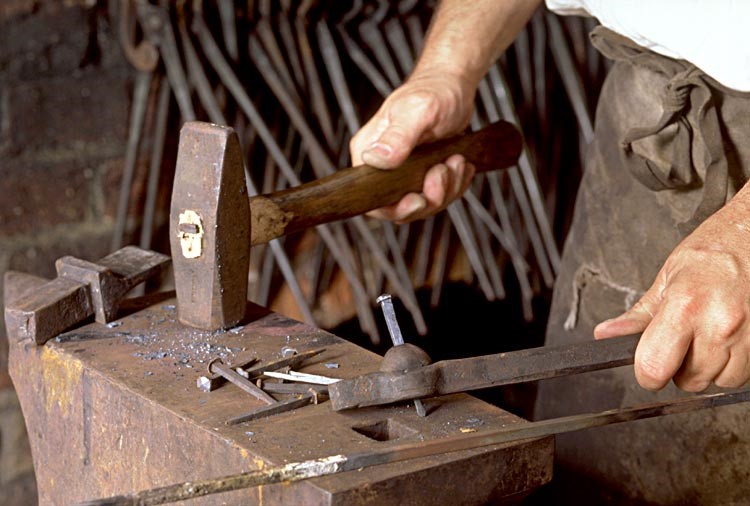
Nails are used primarily for one obvious reason: to build. This means to expand and create new buildings, nails had to be forged of a material that was not only durable, but also easy to find. Most nails were made of cast iron by blacksmiths. Though these cast iron nails were produced and sold by the dozen, nails weren’t cheap. Blacksmiths still had to forge nails individually, since the colonies were not prevented from creating large scale operations due to Britain’s protective trade law. Great Britain had factories and workers that could produce standardized nails quickly and efficiently. This means that nails were typically imported from England into the colonies, bringing more product in at a more affordable rate.[2] Nails being made at the blacksmith shop at Colonial Williamsburg in Williamsburg, Virginia.
Image courtesy of the Colonial Williamsburg Journal.Though not all nails were created equally, blacksmiths would typically produce a nail specific to their own style. Back in England, different blacksmiths would produce different size nails, depending on their client’s needs. [3] For example, some smiths would make their nails more malleable for coffin nails. Other smiths would use different forging techniques for decorative nails. Different ways of producing different nails transferred over into the Americas, showing in the recovery of excavated sites. American nails were usually more crudely fashioned, with less refined edges due to the tools with which they were produced.[4]
At the Glassford & Henderson Colchester Store from 1760-1761, nails were usually sold by the hundred. In the Ready Money account in 1761, as many as 1500 nails were purchased at a time with the count varying from as few as 50 nails to as many as 1500. There were as many as 33 purchases of nails in that year with cash.[5] Though this may seem like a small amount, nails as a whole were too expensive to buy in really large quantities with cash – 1500 8 pennyweight nails costed 13 shillings and 6 pence. The people purchasing these nails may have needed them for small projects.

Nails purchased at the Glassford and Henderson Colchester store in August 1761 (folio 12).
Nails are one of the most commonly found artifacts at historic sites.[6] But how important were they to a colonial economy? It seems that nails were an import that show up time and again, being unearthed frequently in archaeological digs. A small piece of economic prosperity, nails would be produced in the Americas at an increasing rate over the next hundred years.
[1] Gregory LeFever. “Forged and Cut Iron Nails.” Early American Life. June 2008. Pp. 60-69. Accessed November 6, 2016. http://www.gregorylefever.com/pdfs/Early Nails 2.pdf.
[2] Ibid.; Kenneth Schwarz. “The Nail Market During the Colonial Period.” Making History. 2011. Accessed November 8, 2016. http://makinghistorynow.com/2011/06/the-nail-market-during-the-colonial-period/.
[3] Edward J. Lenik. “A Study of Cast Iron Nails.” Historical Archaeology 11 (1977): 45-47. http://www.jstor.org/stable/25615315.
[4] LeFever, “Forged and Cut Iron Nails,” 65.
[5] Alexander Henderson, et. al. Ledger 1760-1761, Colchester, Virginia folio 11-13 Debit/Credit, from the John Glassford and Company Records, Manuscript Division, Library of Congress, Washington, D.C., Microfilm Reel 58 (owned by the Mount Vernon Ladies’ Association).
[6] Tom Wells. “Nail Chronology: The Use of Technologically Derived Features.” Historical Archaeology 32, no. 2 (1998): 78-99. http://www.jstor.org/stable/25616605.
-
Hitting the Nail on the Head: The importance of cast iron nails in the colonial economy
Caroline Cook // AMH 4112.001 – The Atlantic World, 1400-1900
Before currency was regulated in America, purchasing items on debit and credit was a common practice. This not only eliminated currency conversion between colonies, but would also spread out different types of goods within different areas. Many items fluctuated in popularity and could be seasonal, but tools were necessary in any capacity throughout colonial America. The nail was an invaluable tool within the colonial economy that would be traded consistently, helping build the blossoming country’s foundation.[1]
Nails are used primarily for one obvious reason: to build. This means to expand and create new buildings, nails had to be forged of a material that was not only durable, but also easy to find. Most nails were made of cast iron by blacksmiths. Though these cast iron nails were produced and sold by the dozen, nails weren’t cheap. Blacksmiths still had to forge nails individually, since the colonies were not prevented from creating large scale operations due to Britain’s protective trade law. Great Britain had factories and workers that could produce standardized nails quickly and efficiently. This means that nails were typically imported from England into the colonies, bringing more product in at a more affordable rate.[2]Nails being made at the blacksmith shop at Colonial Williamsburg in Williamsburg, Virginia.
Image courtesy of the Colonial Williamsburg Journal.Though not all nails were created equally, blacksmiths would typically produce a nail specific to their own style. Back in England, different blacksmiths would produce different size nails, depending on their client’s needs. [3] For example, some smiths would make their nails more malleable for coffin nails. Other smiths would use different forging techniques for decorative nails. Different ways of producing different nails transferred over into the Americas, showing in the recovery of excavated sites. American nails were usually more crudely fashioned, with less refined edges due to the tools with which they were produced.[4]
At the Glassford & Henderson Colchester Store from 1760-1761, nails were usually sold by the hundred. In the Ready Money account in 1761, as many as 1500 nails were purchased at a time with the count varying from as few as 50 nails to as many as 1500. There were as many as 33 purchases of nails in that year with cash.[5] Though this may seem like a small amount, nails as a whole were too expensive to buy in really large quantities with cash – 1500 8 pennyweight nails costed 13 shillings and 6 pence. The people purchasing these nails may have needed them for small projects.
Nails purchased at the Glassford and Henderson Colchester store in August 1761 (folio 12).
Nails are one of the most commonly found artifacts at historic sites.[6] But how important were they to a colonial economy? It seems that nails were an import that show up time and again, being unearthed frequently in archaeological digs. A small piece of economic prosperity, nails would be produced in the Americas at an increasing rate over the next hundred years.
[1] Gregory LeFever. “Forged and Cut Iron Nails.” Early American Life. June 2008. Pp. 60-69. Accessed November 6, 2016. http://www.gregorylefever.com/pdfs/Early Nails 2.pdf.
[2] Ibid.; Kenneth Schwarz. “The Nail Market During the Colonial Period.” Making History. 2011. Accessed November 8, 2016. http://makinghistorynow.com/2011/06/the-nail-market-during-the-colonial-period/.
[3] Edward J. Lenik. “A Study of Cast Iron Nails.” Historical Archaeology 11 (1977): 45-47. http://www.jstor.org/stable/25615315.
[4] LeFever, “Forged and Cut Iron Nails,” 65.
[5] Alexander Henderson, et. al. Ledger 1760-1761, Colchester, Virginia folio 11-13 Debit/Credit, from the John Glassford and Company Records, Manuscript Division, Library of Congress, Washington, D.C., Microfilm Reel 58 (owned by the Mount Vernon Ladies’ Association).
[6] Tom Wells. “Nail Chronology: The Use of Technologically Derived Features.” Historical Archaeology 32, no. 2 (1998): 78-99. http://www.jstor.org/stable/25616605.
-
Button, Button, Who’s Got the Button?
Aaron Chapman // AMH 4112.001 – The Atlantic World, 1400-1900
The button. In the eighteenth century, buttons were an essential part of some articles of clothing, though not the same ones we might see today. On women’s clothing, buttons were an unlikely sight.[1] Primarily, you would expect to find buttons prominently featured on a man’s coat, waistcoat, and on his sleeves.

Waistcoat with buttons from “A Colonial Gentlemen’s Clothing: A Glossary of Terms” on www.history.org. In particular, the waistcoat was a consistent article that featured buttons, which were at times closely spaced in order to display quite a number of them at once for the purpose of style.[2] The initial layer, consisted of a long shirt which would not itself be buttoned but rather worn loose or perhaps tied or cinched if necessary. In public, the waistcoat was worn over this shirt as part of a cultural understanding of what constituted being fully dressed.[3] Buttons would also be present on the longer coat, the outermost layer of clothing, which reached to the knee and was an essential piece of fashion for many.[4]
In the Glassford and Henderson’s Colchester ledger for 1760-1761 in the Ready Money accounts, buttons showed up consistently, with usually two or three purchases a month, though there were a couple months where they didn’t show up at all. It is hardly surprising given that buttons were the sort of thing you may need at any point in the year, rather than an item that was seasonally motivated. With a few exceptions – such as sleeve buttons, which were sold in pairs – buttons were listed as sold by the dozen or, less often, the half-dozen. This suggests that not only were they an item that could be needed at any time, but they were an item on which one would likely “stock up” in preparation for the sewing of new clothing and in anticipation of needing replacements, rather than one which would be purchased only at the time of need.[5]

Buttons sold in the Ready Money account at Glassford and Henderson’s Colchester store (folio 13). For the most part, the ledger lists the buttons sold without any further description. There are a few instances of gilt, “mettle,” or glass button transactions listed, and occasionally it is indicated that the buttons are either “large” or “small,” but by and large, buttons are called simply that and nothing more. It is therefore difficult to say for sure exactly what material type of buttons were typically sold, though wood or bone are perhaps reasonable guesses if the few instances of “mettle” listed indicate that metal was a minority in button material and not the norm.[6]

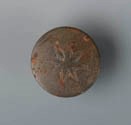
Button identified archaeologically at George Washington’s Mount Vernon. Image courtesy of the Mount Vernon’s Midden Project. The cost of buttons was small, the average was about one shilling for a dozen buttons, as long as they weren’t of a special material like gilt. The cost could vary wildly from transaction to transaction. In the Ready Money transactions for September 1761, for instance, three transactions adjacent to each other in the ledger list prices of 2 shillings 3 pence for a dozen buttons, then 1 shilling for a dozen buttons, and finally 1 shilling and 6 pence for two dozen buttons. This is a pretty significant swing in price within a short space of time. Perhaps some buyers were more adept at bargaining with Henderson than others or the purchase price variation represented different types of buttons?[7]
The button. Something most people hardly think about, yet it’s an essential component of many garments, both today and in the past. For the colonial Englishman, it could be both a statement of fashion and a functional means to hold a coat or waistcoat closed. Fortunately for us, it was also something that needed to be replaced often enough that we are blessed with the opportunity to see a glimpse of its purchase.
[1] “Men’s Clothing from the 1770’s” Dress-up Activity, Memorial Hall Museum Online, accessed November 10, 2016, http://memorialhall.mass.edu/activities/dressup/1770_man.html
[2] Ibid.
[3] “A Colonial Gentlemen’s Clothing: A Glossary of Terms,” Colonial Williamsburg history.org, accessed November 10, 2016, http://www.history.org/history/clothing/men/mglossary.cfm
[4] Ibid.
[5] Alexander Henderson, et. al. Ledger 1760-1761, Colchester, Virginia folio 10-13 Debit/Credit, from the John Glassford and Company Records, Manuscript Division, Library of Congress, Washington, D.C., Microfilm Reel 58 (owned by the Mount Vernon Ladies’ Association).
[6] Henderson, et. al. Ledger 1760-1761, Colchester, Virginia Folio 10 Credit, 11 Debit, 12 Debit, 13 Debit/Credit.
[7] Henderson, et. al. Ledger 1760-1761, Colchester, Virginia Folio 13 Debit.
-
Brandy in the 1760s
Austin Browning // AMH 4112.001 – The Atlantic World, 1400-1900
As many may already know, water wasn’t always clean or fit for human consumption in colonial America which required another source for beverages: alcohol. By the 1750s, rum became a large import to the colonies as the primary beverage of choice.[1] We saw this consumption of rum exemplified well in the Ready Money transactions from 1760-1761 at Glassford and Henderson’s Colchester store.
Brandy was also purchased, but may have been used in a somewhat different manner than rum. Looking at the Ready Money account, it was not purchased until December.[2] This suggests to me that brandy consumption was saved for the holiday season. Sales extend through March with two additional pints purchased in May. It was possible that brandy was not in supply year round due to it only appearing in the Ready Money accounts primarily from December through March. Additionally, it is worth noting the brandy was likely made locally and not imported.[3]

Brandy purchased at the Glassford and Henderson Colchester store from the Ready Money account in December 1760 and January 1761 (folio 11). 
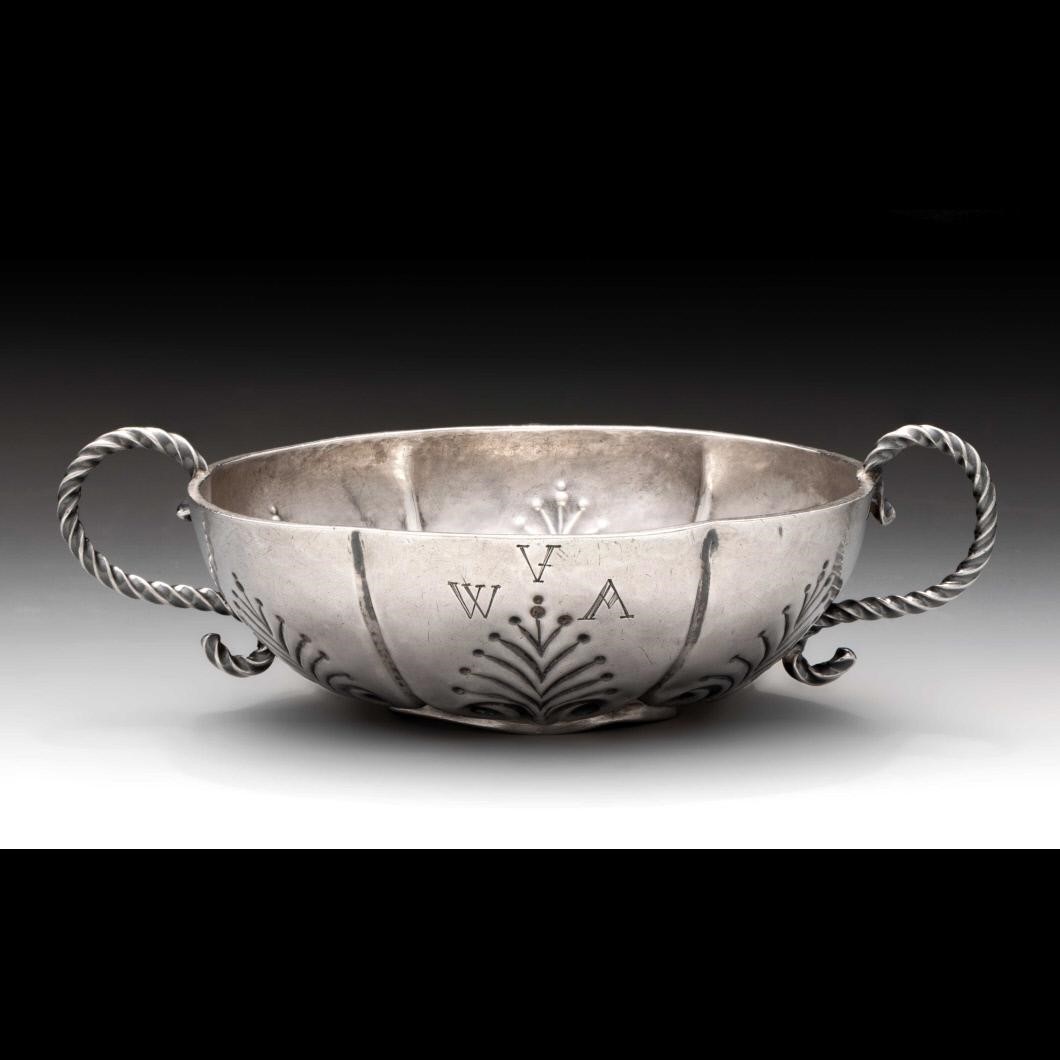
Brandy would have been served in specialized bowls that could be passed around the table (or room). Image courtesy of the collections of The Colonial Williamsburg Foundation (Acc. No. 2016-59). A striking observation was the relatively small amounts of brandy purchased as compared to rum. While rum was often purchased by the gallon, brandy was usually bought in smaller amounts, usually in one or two pints. This purchasing trend shows that massive amounts of brandy were not being consumed in one sitting, and adds credence to my theory that brandy was saved for special occasions and holidays rather than as a daily drink.
Purchasing brandy would have been done by almost anyone looking to celebrate special occasions, especially in the winter months. I think primarily the sale of brandy in Colchester, Virginia, showed an affinity for decadence and celebration. I imagine the average Virginian grew tired of rum which was consumed in massive amounts throughout the rest of the year. Brandy may have been a good change of pace and provide a good tasting alcoholic beverage for the entire family to enjoy.
[1] David C. Klingaman. “The Development of Coast-wise Trade of Virginia in the Late Colonial Period.” Virginia Magazine of History and Biography, vol. 77, no. 1, part 1 (January 1969), pp. 26-45.
[2] Alexander Henderson, et. al. Ledger 1760-1761, Colchester, Virginia folio 10 Credit, from the John Glassford and Company Records, Manuscript Division, Library of Congress, Washington, D.C., Microfilm Reel 58 (owned by the Mount Vernon Ladies’ Association).
[3] Sarah Hand Meacham. “‘They Will Be Adjudged by Their Drink, What Kinde of Housewives They Are’: Gender, Technology, and Household Cidering in England and the Chesapeake, 1690 to 1760.” The Virginia Magazine of History and Biography, Vol. 111, No. 2 (2003), pp. 117-150.
-
Linen, The Body Fiber
Matthew Gray // AMH 4112.001 – The Atlantic World, 1400-1900

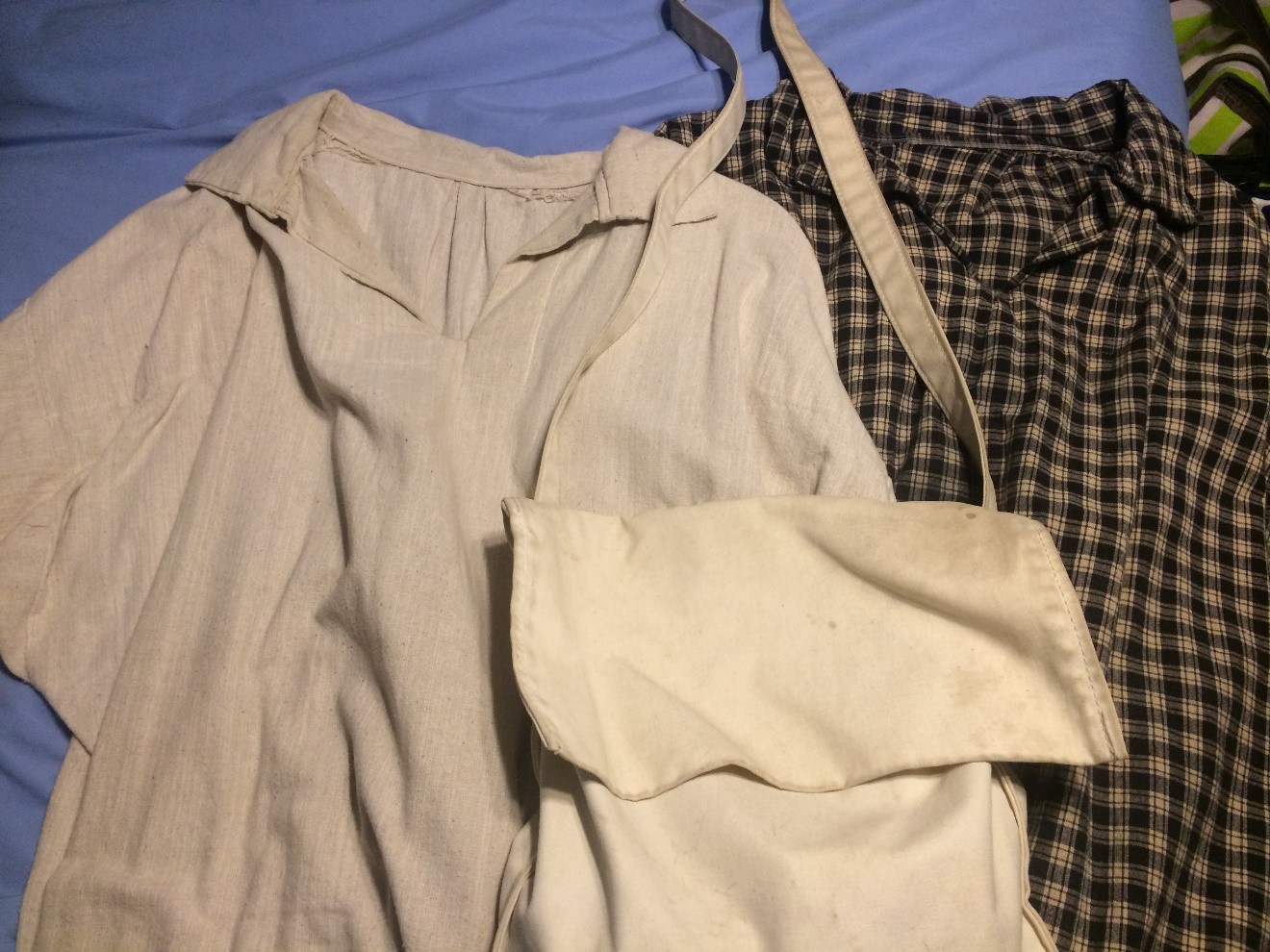
Linen shirt and Haversack. From the personal collection of Matthew Gray. Imagine you wake up one day in colonial America, with no idea why you are there or how you got there. What is the first thing you need to do? Get some clothes so that you fit in and not draw people’s unwanted attention. You would not want to be mistaken for some sort of witch or warlock in this time period. So, how would you do it? Walk down to the local general store and buy yourself a pair of pants, a shirt and some shoes? Good luck finding them already made. You’re most likely going to have to make your own clothing or find someone to make them for you. In order to make your clothing, you will need to buy material such as linen from a store like Glassford and Henderson’s Colchester store in Virginia.[1]
Linen is a type of fabric woven from the plant fibers of flax. This plant is grown in wet climates and requires nutrient rich soil to grow. The plant produces a two to three foot stalk that is allowed to rot and then thrashed in order to obtain the long thin fibers used to spin into thread to make the clothing.[2] This process is very time consuming and requires a lot of skilled and unskilled labor to produce.[3] Fine linen is tightly woven and feels comfortable on a person’s skin, which costs more money than coarser linen that would itch and irritate the wearer.[4]
A factor in determining the price for linen was whether it was shipped to the colony or made in the colony. The price for linen would also be affected if it was imported from a country other than Britain, because Britain maintained a strict monopoly on manufactured trade in the colonies. In order for a foreign good to enter the system, it had to pay extra taxes directly to England on top of other fees in order to legally get the product into the American market.[5]

Examples of “Linnen” purchased by Peter Carter in April 1761, recorded in the Colchester store of Glassford and Henderson (folio 62). The price for linen at the Colchester store varied depending on the length sold, as well as the type. Linen was described as Princess, Russian, Irish, fine, red, white, as well as with no additional description. Its price varied from one shilling and one pence for only ¼ yard (with no additional descriptor) to 8 ½ yards sold for thirty-five shillings and three pence for fine linen.[6]

Example of “princess Linnen” recorded in James Doyle’s account on 26 October 1760 in the Colchester store of Glassford and Henderson (folio 48). Linen could be considered a mainstay item in colonial times given its high number of purchases recorded in the Glassford & Henderson ledger and as most clothing was made from it.[7] A lot of people made their own clothing using it, as well as many other fabric-based items such as sails, bed sheets, tents, covers, jackets, haversacks and many other items. Linen would last for many years and wore well through a lot of hard usage.
[1] Alexander Henderson, et. al. Ledger 1760-1761, Colchester, Virginia folio 10-13 Debit/Credit, from the John Glassford and Company Records, Manuscript Division, Library of Congress, Washington, D.C., Microfilm Reel 58 (owned by the Mount Vernon Ladies’ Association).
[2] National Park Services. Historic Jamestown: Flax Production in the Seventeenth Century. https://www.nps.gov/jame/learn/historyculture/flax-production-in-the-seventeenth-century.htm (accessed November 9, 2016).
[3] Ibid.
[4] Ibid.
[5] Thomas Benjamin. The Atlantic World: Europeans, Africans, Indians, and their Shared History, 1400-1900. Cambridge: Cambridge University Press, 2009.
[6] Henderson, et. al. Folio 61 Debit, Folio 10 Credit.
[7] Richard Lyman Bushman “Markets and Composite Farms in Early America.” The William and Mary Quarterly, vol. 55, no. 3, 1998, pp. 351–374. www.jstor.org/stable/2674528; Henderson et.al.
-
Sophistication in Colonial America: Combs
Jason FitzGerald // AMH 4112.001 – The Atlantic World, 1400-1900
The concept of colonial America being a rural environment when compared to a richly expanding British empire probably sticks in most people’s minds when discussing the finer things of life and items made with elaborate materials. The comb, a very common instrument, holds little value today and is often taken for granted. Some new perspectives have been highlighted when comparing and contrasting certain items in use during the eighteenth century with the help of the Glassford and Henderson Colchester store 1760-1761 ledger located in the Library of Congress collections.

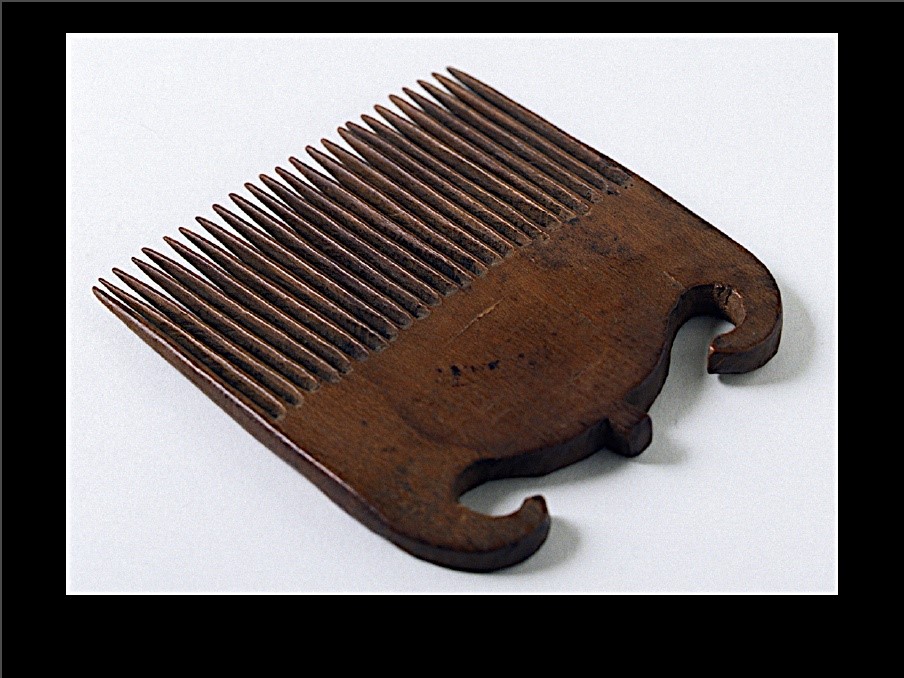
Examples of Comb purchases in the January 1761 Ready Money Pages of the Colchester store of Glassford and Henderson (folio 11). There were many different uses for combs in the eighteenth century. Combs were used for grooming horses, for separating wool fibers, and for bug infestations as well as for decoration and fashion.[1] A letter by Mann Page to John Norton mentions currycombs, often used for brushing down horses, in a list of items purchased with tobacco.[2] Another use for combs was in the process of making thread from wool.[3] Different combs with different teeth configurations, which determined the thickness and texture of the threads, were employed for such tasks.[4] And finally, the dreaded infestation of lice apparently was at the top of the list for fine-toothed combs, which families today may appreciate the frustrations of the ever-elusive hair mite. What then, might you ask could entice a scholar to examine types of combs purchased from Glassford and Henderson?

Wooden comb used for dressing a woman’s hair. Image courtesy of The 18th-Century Material Culture Center. The quality in which combs were made may very well have identified a need for higher quality items not available in what many may have been considered a dank and dirty back water. From October 1760 through December 1761, less than 45 combs were purchased with ready money.[5] Now, it wasn’t because there was a lack of population in need of combs, the inability to fashion a comb in colonial America, or the lack of biting mites. The combs purchased in the ledger, which were made of ivory, horn, or nondescript materials, very well could have represented an item of status sought by higher society. And the fact that these individuals possessed coined money could also have represented the ability to afford lavish items.
The combs purchased in the Glassford & Henderson ledger ranged anywhere from three pence to one shilling and eight pence with the most expensive combs being described as ivory. A further examination into other eighteenth century ledgers could potential lead to similar trends.

Examples of Ivory Combs recorded in the April 1760 Ready Money Pages of the Colchester store of Glassford and Henderson (folio 11). One thing for certain is that the want or need for extravagant items existed in eighteenth century Virginia. An individual living in the twenty-first century can easily identify with a Rolex or a Michael Kors handbag, conceivably an item equivalent to that of an eighteenth-century ivory comb. Perhaps a rural environment when compared to a richly expanding empire was not so rural after all.

[1] Karen Clancy, “At the Spinning Wheel,” interviewed by Harmony Hunter, accessed November 9, 2016, http://podcast.history.org/2012/11/12/at-the-spinning-wheel/; David Robinson, “The Bugs that Bugged the Colonists,” accessed November 9, 2016, http://www.history.org/foundation/journal/autumn07/bugs.
[2] “A Page in the Life: Episode Six, Patsy Grenville’s Day,” Colonial Williamsburg, accessed November 9, 2016, http://www.history.org/history/teaching/dayinthelife/pdf/ADITL_Episode6.pdf; Hunter, “At the Spinning Wheel.”
[3] Clancy, “At the Spinning Wheel.”
[4] Clancy, “At the Spinning Wheel.”
[5] Alexander Henderson, et. al. Ledger 1760-1761, Colchester, Virginia folio 10 Debit, 11-13 Debit/Credit, from the John Glassford and Company Records, Manuscript Division, Library of Congress, Washington, D.C., Microfilm Reel 58 (owned by the Mount Vernon Ladies’ Association).
-
Stay Salty America
Canon Jones // AMH 4112.001 – The Atlantic World, 1400-1900
You never hear salt talked about like other spices used in the 18th century. You never hear some high-class socialite talking in his diary about the shipment of salt he got from some exotic place and how expensive it was. No, you do not hear salt given the credit it respects or deserves. But, I bet you could go anywhere in 18th-century America and find that everyone used salt. This magnificent spice was not just used for cooking or seasoning but had many uses, including as a preservative – let’s see cinnamon or rosemary do that. That’s why you see people buy salt by the barrel or bushel in the Glassford and Henderson Colchester store ledger for 1760-1761.

Examples of Salt purchases in the April 1761 Ready Money Pages of the Colchester store of Glassford and Henderson (folio 11). According to the Ready Money accounts, between October 1760 and December 1761, salt was bought every month.[1] The reason so much salt was ordered and sold was because it was a god send for preserving food. The 18th century did not have the modern refrigeration that we have now, so they had to get creative with how to keep meats and other foods edible longer. Salt helps stabilize the food keeping it fresh for a longer time, especially in the spring and summer.[2] Much of the salt was purchased more in the warmer months because meat goes bad faster when it’s hot, unlike in the cold when you could keep it chilled with the cooler temperatures and that’s how it stayed fresh. The month of October in 1761 there was one bushel of salt bought compared to April of 1761 there were thirteen bushels sold which was the beginning of the hotter months[3].
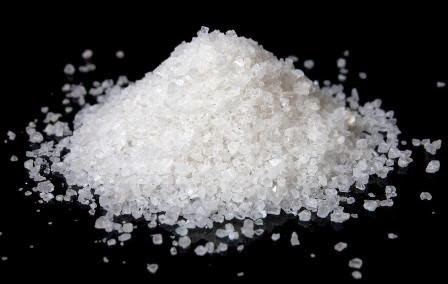
Now, the salt you see when you open your spice cabinet or look on the counter was not exactly the salt that the 18th century knew. Your Morton’s salt is baby salt compared to this salt. When customers bought salt, it was more like today’s rock salt, salt that was gravel-sized. If you wanted more dainty crushed up salt for cooking, you had to do it yourself. It could be done with a cloth and a mortar and pestle.

Rock salt could be grounded into a finer salt with a mortar and pestle. Image from http://images.wisegeek.com/rock-salt.jpg (Accessed 1 December 2016). By the turn of the 19th century, salt no longer needed to be imported from Europe as “salt was produced between 1790 and 1860, in Louisiana, Michigan, Pennsylvania, Indiana and Missouri by boiling brine in salt furnaces,” since no salt mines had yet been discovered.[4] They did not need to be dependent on getting their salt from Europe, mining it themselves or boiling it was much easier. Regardless of how we got the salt in the 18th century, one of the most common things in the world is (and was) one of the most important. Just remember to stay salty America.
[1] Alexander Henderson, et. al. Ledger 1760-1761, Colchester, Virginia folio 10-13 Debit/Credit, from the John Glassford and Company Records, Manuscript Division, Library of Congress, Washington, D.C., Microfilm Reel 58 (owned by the Mount Vernon Ladies’ Association).
[2] Mickey Parish. “How Do Salt and Sugar Prevent Microbial Spoilage?” Scientific American. 2006. Accessed December 05, 2016. https://www.scientificamerican.com/article/how-do-salt-and-sugar-pre/.
[3] Henderson, et. al. Folio 10 Debit, 11 Credit.
[4] “History of Salt,” History of Salt | SaltWorks®. Accessed November 07, 2016, https://www.seasalt.com/salt-101/history-of-salt.
-

Salt Sold at Glassford and Henderson’s Colchester Store (1760)
Ayla Lupien // AMH 4112.001 – The Atlantic World, 1400-1900
By looking back on the ledgers written by Alexander Henderson, a merchant for a store in Colchester, Virginia, in the 1700s, we can learn a lot about the way people lived, the necessities that they purchased, and luxuries that only the wealthy could afford.[1] We can see how people from this time lived, simply from their purchases, as well as find out the names of people living during that era and what kinds of jobs they may have had. Many of the items sold also tell their own story.

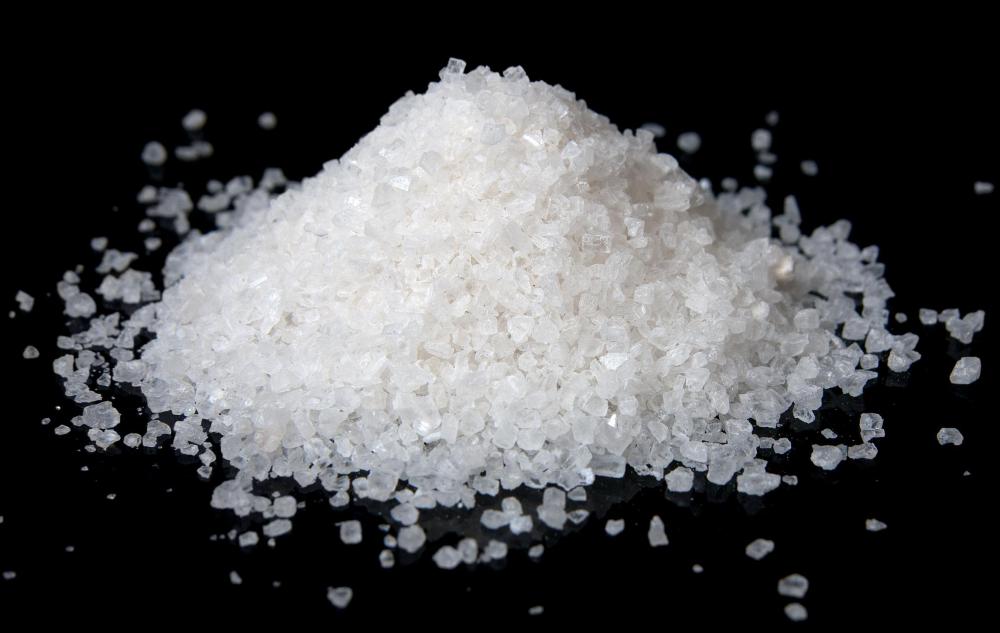
Coarse rock salt could be grounded into a fine table salt with a mortar and pestle. Image from http://thepaleodiet.com/tag/salt/. (Accessed 1 December 2016). The item I chose to research was salt, a household good used by many during the 1760s; it was purchased regularly at Glassford and Henderson’s store according to the 1760-1761 ledger. A bushel of salt is approximately 64 pints of salt. The salt was in larger chunks that would have to be broken up by the people who purchased it, unlike the fine-grained table salt we use today.[2] The average day-to-day person regularly purchased bushels of salt, but looking at the other accounts, it is clear to see that the salt is most regularly purchased in the fall and spring months by both men, as well as women, such as Elizabeth Fallen who was a seamstress working for the store and being paid in merchandise, like salt.[3]
Salt was a necessity in the lives of nearly everyone living at the time because it was one of the easiest ways to help preserve food. Based on the Ready Money accounts from the Colchester store, there does not seem to be much price variation regarding the salt purchased, however it was purchased in different quantities from half of a bushel up to as much as 5 bushels. Bushels of salt were purchased on 66 separate occasions throughout the year of 1760-1761. The most common months to buy salt were October 1760 (six purchases), December 1760 (nine purchases), January 1761 (eight purchases), March 1761 (six purchases), and April 1761 (fourteen purchases). March and April purchases line up with when the fisheries began operating again as the fish migrated upstream, which means that the people were likely buying the salt to preserve fish for eating later in the year. In April, we begin to see a spike in the purchases of salt, some buying as much as three bushels at once. In addition, in fall and early winter, harvests were coming in and preservation processes were happening to make sure food was kept through the winter.[4] Hogs were also slaughtered at the end of fall or early winter, and would be preserved with salt for use throughout the coming year.

Examples of Salt purchases in the December 1760 Ready Money Pages of the Colchester store of Glassford and Henderson (folio 10). We also see a price hike in the cost of salt as the demand increased. Rather than being 2 shillings and 6 pence, bushels of salt in the spring months cost 3 full shillings. This was likely due to the demand for salt by nearly everyone visiting the store. Because it was purchased during the late fall and spring months, it is widely believed that the salt was predominantly used for preserving foods such as fish and other meats.[5]

Salted smelt. Image from http://rakuten.com. By studying the purchases of the people who visited Glassford and Henderson’s Colchester store, we can develop a better understanding of their habits and way of life, which in turn can help us unlock various mysteries of our history.

[1] Alexander Henderson, et. al. Ledger 1760-1761, Colchester, Virginia, from the John Glassford and Company Records, Manuscript Division, Library of Congress, Washington, D.C., Microfilm Reel 58 (owned by the Mount Vernon Ladies’ Association).
[2] “History of Salt,” History of Salt | SaltWorks®. Accessed November 8, 2016, https://www.seasalt.com/salt-101/history-of-salt.
[3] Henderson, et. al. Folio 42.
[4] Rumble, Victoria. “Early American Food and Drink.” Colonial America: The Simple Life. August 2009. Accessed November 09, 2016. http://colonial-american-life.blogspot.com/2009/08/early-american-food-and drink.html
[5] Mickey Parish. “How Do Salt and Sugar Prevent Microbial Spoilage?” Scientific American. 2006. Accessed December 05, 2016. https://www.scientificamerican.com/article/how-do-salt-and-sugar-pre/
-
Black Powder and Hot Lead: A brief history of colonial munitions in mercantile and imports
Christain Ragar // AMH 4112.001 – The Atlantic World, 1400-1900
The commodities of gunpowder and shot (lead ammunition) were not only common staples in eighteenth-century American households. These two items were versatile and pragmatic. Gunpowder and shot were certainly used to place food on the table; however, they also were significant for personal protection in an untamed wilderness and, later, in building a new nation. To further understand these necessities, primary and secondary sources have been consulted to materialize these items, to explore who was purchasing them, their purchasing status as a household staple, and the manufacturing and importation process that led to their arrival in the New World.

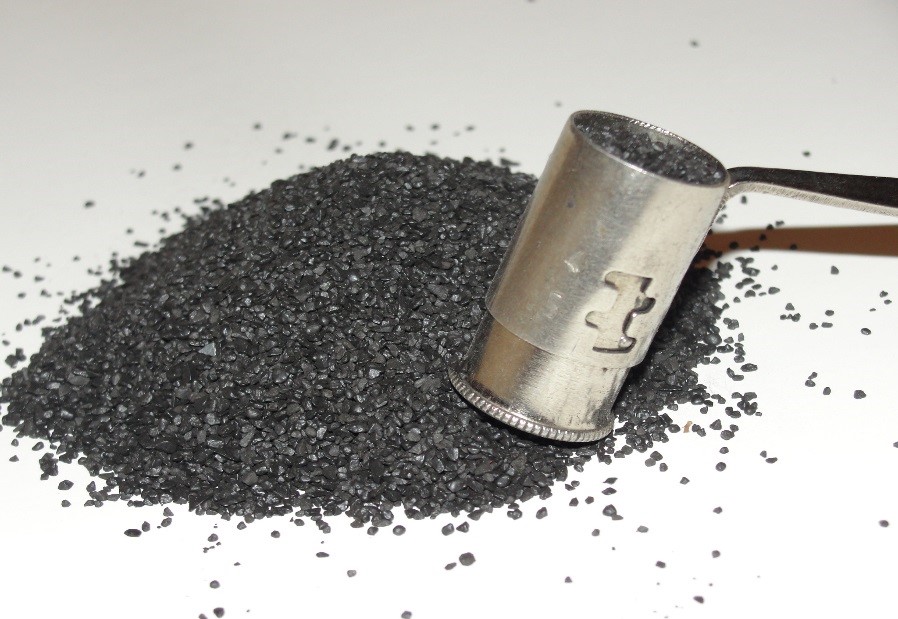
Black powder and measure, similar to how the powder sold at the Glassford & Henderson store would appear. Image courtesy of Wikimedia Commons, Lord Mountbatten. Gunpowder and shot were imported to the English colonies directly from Great Britain. In the early years of colonization, it was both more cost and time effective to import these items from already established manufactory hubs across the Atlantic than constructing new plants locally.[1] Physically, gunpowder appears to be the shavings of a metallic substance, dark in color and flaky to the touch. Shot (ammunition) conversely, came in the form of round lead balls that varied in size due to the variance of musket caliber or gauges (the diameter of the bore of the rifle). By the latter end of the 1700s, the British Empire had established a quasi-standardization of musket balls due to their dependence on the Brown Bess musket (.71 caliber).[2] Shipments of gunpowder were transported across the Atlantic in large barrels only to be divvied and distributed amongst consumers. The personal transportation of gunpowder for consumption came in the version of a smaller more convenient container. The use of powder horns was common place in the 18th century.[3] These horns would be the hollowed horn of an animal and filled with gunpowder with a plug to enclose the powder and a small opening at the opposite end to feed powder to the matchlock of the rifle.
Upon studying the mercantile ledger from Glassford and Henderson’s Colchester store’s Ready Money account for 1760-1761, this is perhaps the most enlightening resource in uncovering the enigmas of gunpowder and shot. In those accounts, the ledger specified a vague sense of the cost of the ammunition and the volumes of purchases for cash. For example, the Ready Money account entry for the month of September, 1761, has five purchases of powder and shot together, and one purchase each of powder or shot. Based on this sample, powder appears to be valued at about two shillings and six pence per pound, while shot was less expensive at only 6 pence per pound. The most common purchase was for ½ pound of powder to every 2 pounds of shot. [4] This example presupposes that the commodity of gunpowder and shot was relatively affordable to a citizen of the New World that might have arrived as a homesteader, trapper, or entrepreneur. It becomes obvious to the reader that these items were used in daily life and from the frequency of the purchases which implies various applications and steady use.

Examples of “Shott” and “Powder” which were purchased together as well as separately recorded in the September 1761 Ready Money Pages of the Colchester store of Glassford and Henderson (folio 13). [1] Jimmy, Dick, “The Gunpowder Shortage” Journal of the American Revolution, https://allthingsliberty.com/2013/09/the-gunpowder-shortage/.September 9, 2013, accessed November 10, 2016,
[2] “The Price of Freedom: Brown Bess Musket,” accessed November 10, 2016, http://amhistory.si.edu/militaryhistory/collection/object.asp?ID=88.
[3] National Park Service. “15th – 18th Century Powder Horns and Flasks,” Valley Forge National Park, accessed December 1, 2016, https://www.nps.gov/vafo/learn/historyculture/upload/PowderHorns-with-arrowhead.pdf.
[4] Alexander Henderson, et. al. Ledger 1760-1761, Colchester, Virginia folio 13 Debit, from the John Glassford and Company Records, Manuscript Division, Library of Congress, Washington, D.C., Microfilm Reel 58 (owned by the Mount Vernon Ladies’ Association)




 Infographic on Shot